
Picking
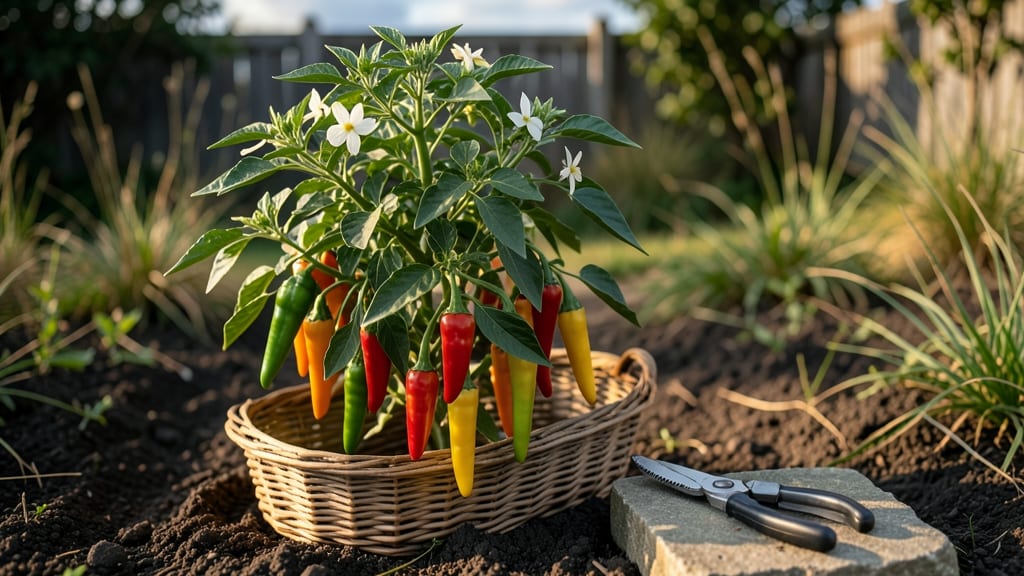
Stringing hot peppers transforms your harvest from a kitchen nuisance to a pantry staple. 🌶️ I’ve hung hundreds of peppers on my porch—each one a future batch of flakes for soups, tacos, and homemade hot sauce.
The key isn’t just drying them right; it’s growing them strong enough to handle the process without shattering or molding.
Start with sturdy varieties like jalapeños, serranos, or cayennes—these handle the weight of stringing better than fragile types. Plant them in full sun with 18-24 inches between plants, and use a trellis or bamboo poles to guide their growth upward.
This saves space and keeps peppers off damp soil, where rot lurks. By midsummer, you’ll have long, vine-like plants heavy with peppers, ready for the next step.
When harvest time comes, gently twist peppers at the stem to avoid bruising. String them stem-to-stem with 12-inch lengths of twine, leaving space between each pepper for airflow. Hang bundles in a dry, shaded spot where breezes circulate—this prevents mold and speeds drying to about 2-3 weeks.
The result? Crisp, vibrant peppers that crumble into perfect flakes for storage.
Pro tip: If pests like aphids attack, spray with neem oil early—once the peppers are strung, treatment options shrink. And if rain threatens? Move your bundles indoors under a fan.
The payoff? A pantry stocked with homemade heat for the next year. Ready to turn your harvest into a hanging masterpiece?
📚 In This Guide
- What you need
- Instructions
- Tips and common mistakes
- Wrapping up and next steps
What you need
- ● Hot pepper plants: 3–10 plants (depending on space; 3–5 is ideal for beginners). Choose varieties like Cayenne, Jalapeño, or Habanero for stringing.
- ● Strong twine or jute twine: 50–100 ft (15–30 m), ¼–½ inch thick (biodegradable preferred). Avoid plastic—it can harm roots.
- ● PVC pipes or wooden stakes: 2–4 stakes per plant, 5–6 ft tall (or taller for trellises). Bury 12–18 inches deep for stability.
- ● Zip ties or soft plant ties: 10–20 ties (avoid metal; use plastic-coated or hemp for gentle support).
- ● Pruning shears: Sharp, bypass-style shears (sterilize with rubbing alcohol between cuts).
- ● Gloves: Heavy-duty nitrile gloves (hot peppers pack a punch—literally!).
- ● Watering can or hose: With a gentle spray nozzle to avoid damaging plants.
- ● Trellis or A-frame kit: For a DIY vertical garden (great for small spaces!).
- ● Plant clips or soft wire: To secure stems without crushing them.
- ● Organic fertilizer: Balanced 10-10-10 or fish emulsion to boost growth.
- ● Shade cloth: 30–50% coverage for hot climates (prevents sunburn on peppers).
- ● Journal or app: To track growth stages, pruning dates, and harvest progress.
How to train hot peppers up poles for maximum yield
Here’s the foolproof method I use to turn sprawling pepper plants into vertical powerhouses—no wasted space, no lost peppers.
🌱 Step 1: Choose the Right Pole System
Start with a 5-6 foot tall bamboo stake or trellis—hot peppers climb naturally but need sturdy support. Drive the pole 6 inches deep into the soil next to each plant, about 2 weeks after transplanting when stems are sturdy but not woody. I like to use 3-4 stakes per plant arranged in a loose square for extra stability.
If using a single stake, tie the main stem loosely with soft plant ties (not wire—it cuts into stems). The goal is to guide growth upward without restricting it. You’ll see the first signs of upward growth within 3-5 days as the plant leans toward the pole.
☀️ Step 2: Train Vines and Prune Strategically
Once the main stem reaches the top of the pole (4-6 weeks after transplanting), pinch off the growing tip to encourage branching. This is where the magic happens—new side shoots will form, each capable of producing peppers. I prune every 2-3 weeks during the growing season, always cutting just above a leaf node where new growth can sprout.
For side branches, let them grow 12-18 inches before tying them to the pole with soft twine. Never let branches hang freely—they’ll break under pepper weight. Watch for flower clusters forming at branch tips; these are your future harvests. If a branch gets too heavy, add a second tie halfway up.
💧 Step 3: Water and Fertilize for Vertical Growth
Pole-trained peppers need consistent moisture—water at the base every 2-3 days when the top 2 inches of soil feel dry. Avoid wetting leaves to prevent disease. I use a drip irrigation system to keep water off foliage while delivering right to the roots. You’ll know you’re doing it right when the soil stays evenly damp but never soggy.
Feed with a balanced 10-10-10 fertilizer every 4-6 weeks starting when flowers appear. Too much nitrogen makes plants leafy but pepper-less. Look for dark green leaves with occasional yellowing on lower ones—this means it’s time to fertilize again. Stop feeding 6 weeks before first frost to let peppers ripen.
✂️ Step 4: Harvest and Maintain Through the Season
Start harvesting when peppers reach half their mature size—this encourages more production. Use clean pruners to snip stems just above the fruit. I harvest every 2-3 days during peak season to prevent overloading branches. Store ripe peppers in a cool, dark place (not the fridge) to preserve heat levels.
Remove any yellowing or diseased leaves immediately to keep air flowing. If a branch breaks under pepper weight, prune it back to a healthy node—the plant will redirect energy to stronger growth. By late summer, your poles will be covered in peppers, and you’ll have saved 70%+ space compared to bush plants.
Tips & tricks for perfect pole-trained hot peppers
Here's what nobody tells you about transforming sprawling pepper plants into vertical harvest machines—these are the secrets that'll save you from broken branches and wasted space.
Support System Stability: When driving your 5-6 foot poles 6 inches deep, angle them slightly away from the plant at the base (about 10 degrees). This creates a natural lean that helps the plant find the pole immediately, and the angled support distributes weight better when branches get heavy with peppers. I've seen too many poles topple over because they were planted straight up—this simple angle change makes all the difference.
Pruning Precision: In Step 2, when you're pinching off the growing tip at 4-6 weeks, look for the first set of leaves below the tip that are fully formed. That's your pruning zone—cut just above this node. The plant will send out two strong side branches from there, each capable of producing 20+ peppers. I learned this the hard way after pruning too high and getting weak, leafy growth instead of fruit-bearing branches.
Watering Wisdom: The "every 2-3 days" guideline works best in normal summer conditions (75-85°F). In hotter climates (above 90°F), you might need to water daily to maintain that even moisture level. I test soil moisture by sticking my finger 2 inches deep—if it feels dry at that depth, it's time to water. Overwatering is just as bad as underwatering; soggy soil leads to root rot and lost plants.
Harvest Hack: When harvesting at half-size, use clean pruners and cut stems at a 45-degree angle just above the fruit. This prevents water from pooling on the stem, reducing rot risk. I also like to harvest in the morning when peppers are firmest—this gives you the most accurate size gauge for future harvests. Store them in a single layer on a tray to prevent bruising from stacking.
Pro Tips for Stringing Hot Peppers
- Here's what nobody tells you about transforming sprawling pepper plants into vertical harvest machines—these are the ...
- Support System Stability: When driving your 5-6 foot poles 6 inches deep, angle them slightly away from the plant at ...
- Pruning Precision: In Step 2, when you're pinching off the growing tip at 4-6 weeks, look for the first set of leaves...
Frequently asked questions
Got questions about stringing hot peppers? You’re not alone! Here are answers to the most common queries—from first-timers to seasoned growers.
What’s the best time to start stringing hot peppers?
Begin when peppers are fully mature (deep color, firm, and slightly soft when gently squeezed). For most varieties, this happens 8–12 weeks after flowering. Harvest in the morning for peak flavor and heat—peppers lose moisture (and spice!) as the day wears on.
Can I string peppers while they’re still green?
Technically yes, but wait until they’re ripe for the best flavor and heat. Green peppers are less pungent and may lack the full spectrum of capsaicin. If you’re in a hurry, let them ripen indoors on a sunny windowsill for 1–2 weeks post-picking.
How long does it take for strung peppers to dry?
Drying time depends on climate and method. In a well-ventilated, shady spot, expect 2–4 weeks. For faster results (1–2 weeks), use a dehydrator (135°F/57°C) or oven (low heat, door cracked). Test dryness by snapping a stem—it should break cleanly, not bend.
What if my peppers mold or rot while drying?
Mold or rot usually means high humidity or poor airflow. Prevent it by:
- Choosing dry, sunny days for outdoor drying.
- Ensuring 6+ inches of space between strings.
- Moving strings to a dry indoor space if rain is forecasted.
Can I use stringing for other peppers, like bell peppers?
Yes! While hot peppers are the classic choice, bell peppers, jalapeños, and even tomatoes can be strung. However, bell peppers dry slower (they’re thicker) and may need longer drying times (4–6 weeks). For tomatoes, remove seeds first to avoid sliminess.
Pro Tip:
Label your pepper strings with the variety and date using a twist tie or small tag. This helps track drying progress and ensures you use the oldest peppers first for cooking!
Wrapping up and next steps
Mastering the art of stringing hot peppers on a pole isn’t just about maximizing space—it’s about unlocking a healthier, more productive harvest with minimal effort. Whether you’re a seasoned gardener or a curious beginner, these pole-training secrets will transform your garden into a fiery, flavor-packed paradise. 🌶️✨
Now that you’re armed with the right tools, techniques, and troubleshooting tips, it’s time to roll up your sleeves and get growing! Start by selecting your favorite hot pepper varieties, set up your poles, and watch your plants thrive. Happy gardening—and may your harvest be spicy and bountiful!
Next step: Ready to dive deeper? Explore our guide on pruning hot peppers for even bigger yields!