
Pests
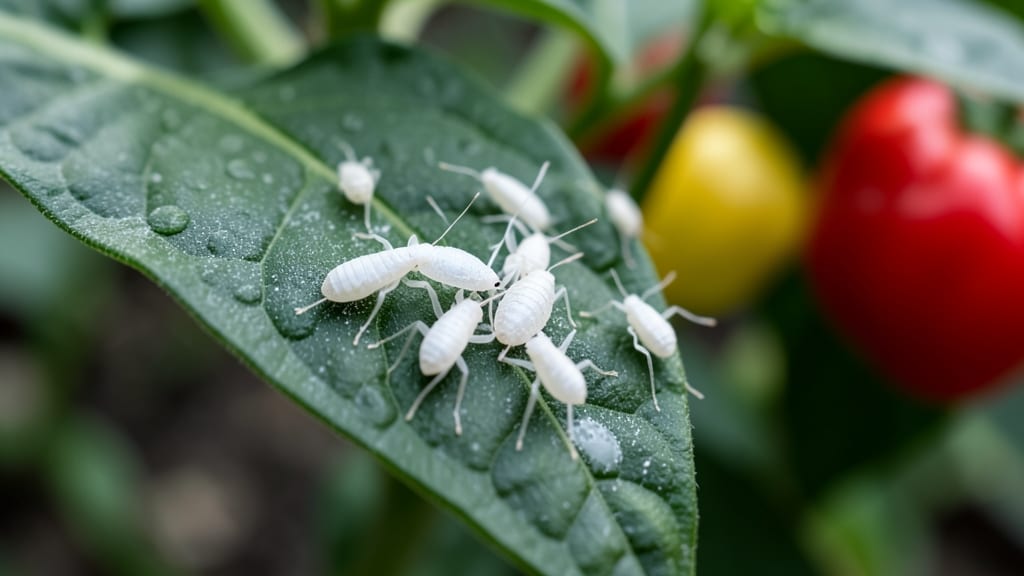
Those tiny white bugs on your pepper plants are likely whiteflies, aphids, or mealybugs—and they’re sucking the life out of your harvest. 🌿 I’ve battled these pests every summer, and the key to saving your plants is acting fast with the right organic solutions before they multiply beyond control.
The damage starts small but spreads quickly: sticky residue on leaves (honeydew), curled or yellowing foliage, and stunted growth. These bugs thrive in warm, dry conditions, so checking the undersides of leaves is where you’ll find them clustered. My first mistake was waiting too long—don’t make that error.
With neem oil, insecticidal soap, or a homemade spray of water and dish soap, you can knock out 90% of them in 2-3 treatments. The secret is consistency: spray early in the morning or evening when bugs are active, and repeat every 3-5 days until they’re gone.
Your peppers will bounce back stronger than ever.
Once they’re eliminated, keep an eye out for new eggs or adults. Yellow sticky traps near plants catch stragglers, and introducing beneficial insects like ladybugs or lacewings gives your garden long-term protection.
If the infestation keeps coming back, it might be time to call in a pro—especially if you’ve tried everything else.
📚 In This Guide
- What you need
- Instructions
- Tips and common mistakes
- Wrapping up and next steps
What you need
- ● Hand lens or magnifying glass (10x magnification recommended) – for close-up bug inspections.
- ● Garden spray bottle (16 oz or larger) – for DIY organic sprays.
- ● Neem oil (16 oz bottle) – a natural pesticide and fungicide.
- ● Insecticidal soap (16 oz spray) – effective for soft-bodied pests.
- ○ Horticultural oil (optional, 16 oz) – smothers bugs and disrupts their life cycle.
- ● Yellow sticky traps (5–10 traps) – to monitor and catch flying insects.
- ● Pruning shears – for trimming heavily infested leaves or stems.
- ● Gloves (1 pair) – to protect your hands from oils and sap.
- ● Spray nozzle or garden hose with adjustable tip – for rinsing plants.
- ● Diatomaceous earth (food-grade) (1 lb bag) – sprinkle lightly on soil or plant surfaces (reapply after rain).
- ● Beneficial nematodes (e.g., Steinernema carpocapsae) – for soil-dwelling pest control (follow package instructions).
- ● Compost or mulch – to improve soil health and attract beneficial insects.
- ● Camera or phone with macro mode – for documenting the bugs before treatment.
How to identify and remove tiny white bugs from pepper plants
Here's the straightforward method I've used to save my pepper plants from these pests—no chemicals, just targeted action.
🔍 Step 1: Confirm the Pests Are Mealybugs or Aphids
First, examine the bugs closely with a magnifying glass or phone camera. Mealybugs appear as tiny, white cottony clusters along stems and leaf undersides, while aphids are small, pear-shaped white insects clustered on new growth. Tap a leaf over a white paper towel—if tiny white specks fall, that's your confirmation.
Mealybugs leave behind a sticky residue called honeydew, which attracts sooty mold. If you see black fungal spots on leaves, that's your clue these pests have been feeding for a while. Don't wait—they multiply fast, especially in warm, dry conditions.
💧 Step 2: Isolate and Clean Infested Plants Immediately
Move the pepper plant to a quarantine location away from other garden plants. These bugs spread quickly through contact and flying ants. Remove any heavily infested leaves with clean pruning shears, dropping them into a sealed plastic bag for disposal.
Wipe down stems and leaves with a damp cloth dipped in 70% isopropyl alcohol—this dissolves the waxy coating that protects mealybugs. For aphids, a strong spray of water from the hose often knocks them loose. Repeat this process every 2-3 days until no new bugs appear.
🌿 Step 3: Apply Organic Sprays for Eradication
Mix a solution of 1 tablespoon dish soap (like Dawn) with 1 quart water in a spray bottle. Shake well and apply directly to infested areas, focusing on leaf undersides and stem crevices. The soap disrupts their protective coating and dehydrates them. Spray in the early morning so the plant has time to dry before evening.
For stubborn infestations, add 1 tablespoon neem oil to the mix. Neem oil suffocates bugs and interferes with their life cycle. Test on a small leaf first—some pepper varieties are sensitive to oils. Reapply every 5-7 days until no more bugs are visible for at least 2 weeks.
✂️ Step 4: Introduce Beneficial Insects for Long-Term Control
Purchase or attract ladybugs or lacewings from a garden center—they're natural predators of both mealybugs and aphids. Release them in the evening when temperatures are cooler, as they're sensitive to direct sunlight. For best results, introduce them after you've already reduced the pest population with sprays.
Plant marigolds or basil nearby—these act as trap crops and attract beneficial insects. Avoid using chemical pesticides, as they'll kill the predators too. Check your plants weekly for signs of reinfestation, especially after heavy rains or when new leaves emerge.
🌱 Step 5: Prevent Future Infestations with Cultural Practices
Keep your pepper plants well-watered but not soggy—these bugs thrive in dry conditions. Water at the base in the morning to reduce humidity on leaves. Remove any fallen leaves or plant debris from around the base, as these provide hiding spots for bugs.
Inspect new plants before bringing them indoors or into the garden. Quarantine them for 2 weeks in a separate location. Healthy plants with strong growth are less susceptible to infestations, so prune regularly to improve airflow and remove crowded growth where pests hide.
Tips & tricks for swiftly eliminating tiny white bugs from pepper plants
Real talk: These bugs spread faster than you think, so acting fast is everything. Here's what nobody tells you about making this process foolproof.
Timing is Critical: In Step 2, when you're isolating your plant, don't rush the quarantine process. These bugs can jump to nearby plants in just a few hours, so move it immediately—even if you're not done cleaning yet. I've seen infestations spread to entire gardens within 24 hours when people waited. Also, that 2-3 day cleaning schedule is non-negotiable; skipping days gives them time to rebound.
The Alcohol Secret: For Step 2's alcohol wipe, I've found that using a mix of 70% isopropyl alcohol and a few drops of water (about 1:1 ratio) works even better. The water helps it spread more evenly across the leaves without evaporating instantly. Just dip your cloth and wipe thoroughly—don't be shy with it. The key is getting it into those hard-to-reach crevices where bugs hide.
Spray Technique: When applying your soap spray in Step 3, here's what I learned the hard way: Always spray until the solution drips off the leaves. The bugs hide underneath, so you need complete coverage. I used to spray lightly and wondered why some always survived—turns out they were shielded by the leaf surfaces. Also, shake that bottle vigorously before each use; the ingredients separate over time. And for stubborn cases, add a drop of cayenne pepper to the mix—it acts as a natural irritant that repels them.
Beneficial Insect Strategy: In Step 4, timing matters when introducing ladybugs or lacewings. Wait until you've already knocked down the main infestation with your sprays—these predators need a manageable population to handle. Also, release them in the evening when temperatures drop below 85°F; they're more active in cooler conditions. Pro tip: Keep a small container of water with a sponge in it nearby—they'll drink from it while hunting your pests.
Pro Tips for Tiny White Bugs On Pepper Plants
- Real talk: These bugs spread faster than you think, so acting fast is everything. Here's what nobody tells you about ...
- Timing is Critical: In Step 2, when you're isolating your plant, don't rush the quarantine process. These bugs can ju...
- The Alcohol Secret: For Step 2's alcohol wipe, I've found that using a mix of 70% isopropyl alcohol and a few drops o...
Frequently asked questions
about tiny white bugs on pepper plants—because even the most patient gardeners need quick answers! Here’s what you’ve been wondering:What are these tiny white bugs on my pepper plants?
Most likely, you’re dealing with aphids, whiteflies, or mealybugs. Aphids cluster on stems/leaves, while whiteflies flutter when disturbed. Mealybugs leave cottony residue. Check our ID guide to confirm!
How fast will my pepper plants recover after treatment?
Recovery depends on the pest and severity. Mild infestations (aphids/whiteflies) may show improvement in 3–7 days with consistent organic sprays (neem/soapy water). Heavy mealybug damage could take 2–4 weeks to fully bounce back. Prune affected areas to speed healing!
Can I still harvest peppers if bugs are present?
Yes, but act fast! Wash peppers thoroughly before eating to remove pests. Avoid harvesting from heavily infested plants—focus on treating first. Note: Some pests (like aphids) won’t harm fruit directly, but their droppings can spread disease.
What’s the best organic spray for stubborn infestations?
Combine neem oil (1 tsp + 1 tsp mild soap per quart of water) with kaolin clay (1 tbsp per gallon) for a double defense. Spray every 5–7 days until pests vanish. See our full recipe for DIY success!
Why do bugs keep coming back after treatment?
Common causes:
- Incomplete coverage—spray undersides of leaves too!
- New eggs—repeat treatments weekly for 2–3 weeks.
- Adjacent plants—inspect nearby greens (tomatoes, herbs) for hitchhikers.
Wrapping up and next steps
Don’t let those tiny white bugs on pepper plants steal your harvest! 🌱 With the right identification (aphids, whiteflies, or fungus gnats) and organic solutions (neem oil, soapy water, or companion planting), you’re now armed to protect your peppers naturally. Stay vigilant—early action keeps your garden thriving.
Ready to take charge? Check your plants weekly and act fast at the first sign of pests. Your green thumb will thank you! 🌿