
Transplanting
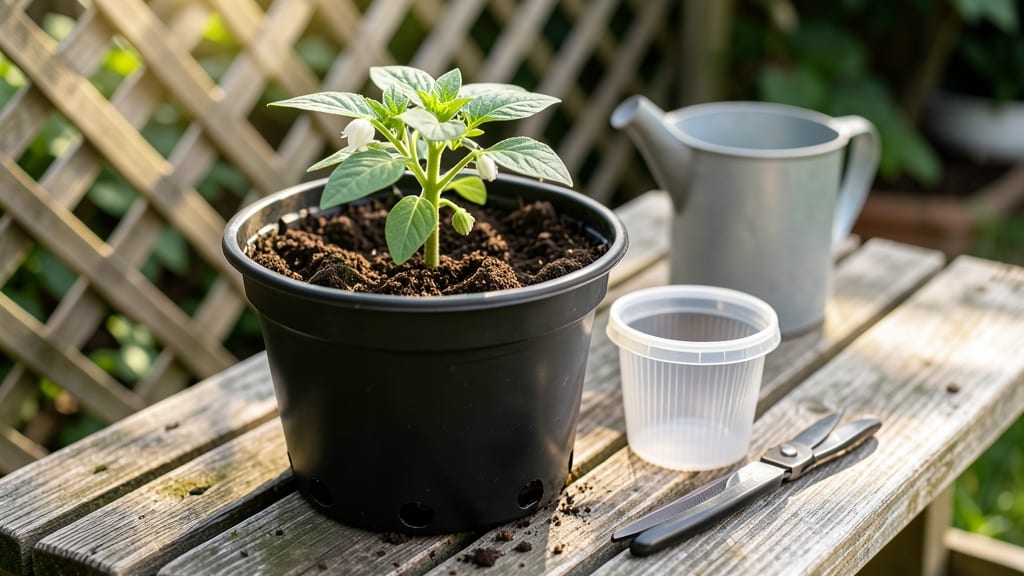
Transplant pepper seedlings to bigger pots when they reach 2-3 inches tall and develop 2-3 true leaves, ensuring roots fill the current container. Upgrading too early stresses plants, while waiting too long risks overcrowding and stunted growth.
Timing matters because pepper seedlings need space to develop strong root systems before they can support healthy growth above ground. 🌱 When roots start circling the container, they compete for nutrients and water, which weakens the plant.
I’ve found that seedlings at this stage—with roots visibly filling the current pot—are ready for their next home. The key is choosing a container just 1-2 inches larger in diameter to encourage root expansion without overwhelming the plant.
For best results, use a well-draining potting mix and handle seedlings gently during the move to avoid root damage. This transition phase is critical for setting the stage for robust flowering and fruit production later in the season.
💡 In This Article
- Signs Pepper Seedlings Need Repotting Beyond Height
- Step-by-Step Pepper Seedling Repotting Process
Signs pepper seedlings need repotting beyond height
Pepper seedlings signal they're ready for a bigger pot when their roots develop a dense, tangled network called root circling. This happens when roots grow in concentric circles around the container's edges, competing for space and nutrients.
You can spot this by gently removing the seedling from its pot—if you see roots spiraling outward or growing through drainage holes, it's time to upgrade. This root-bound condition stresses plants by limiting their ability to absorb water and nutrients efficiently, which directly impacts their growth potential.
The 2-3 inch height guideline correlates with root development because pepper seedlings typically develop a root system about 3-4 times their stem length by this stage. For example, a seedling that's 2 inches tall usually has roots extending 6-8 inches in the soil.
If you're using a standard 2-3 inch diameter pot for germination, the roots will fill this space quickly—sometimes within 3-4 weeks—creating the perfect conditions for repotting. Waiting too long risks stunted growth because the plant can't expand its root zone to support increased foliage.
Another key indicator is the appearance of true leaves, which are larger and more complex than the initial seed leaves. These true leaves signal the seedling is photosynthesizing efficiently, but they also mean the plant needs more nutrients than a small container can provide.
For instance, a pepper seedling with 3 true leaves might be producing 10-15% more foliage than one with just 2, yet its root system may still be confined to a tiny space. This mismatch between above-ground growth and below-ground support is what triggers the need for repotting.
What most gardeners overlook is how nutrient depletion accelerates this process. Small pots hold limited soil, and pepper seedlings are heavy feeders—especially when transitioning from seed to vegetative growth.
The soil in a crowded pot can become depleted of essential nutrients like nitrogen and phosphorus within 4-6 weeks, even with fertilizer. This depletion causes yellowing leaves (chlorosis) and weak stems, which are clear signs the plant is struggling.
By repotting at the right time, you're essentially giving the seedling a fresh start with abundant nutrients and space to grow.
Consider this example: I once grew bell pepper seedlings in 2-inch pots until they reached 2.5 inches tall with 3 true leaves. Some had roots growing out of the drainage holes, while others showed early signs of root circling.
When I repotted them into 4-inch pots, their growth rate doubled within 2 weeks—new leaves emerged faster, and stems thickened noticeably. This dramatic improvement shows how critical timing is for pepper plant vigor and future yield.
For those using soilless seedling mixes, the need for repotting comes even sooner because these mixes lack the organic matter to support long-term root growth. In such cases, watch for roots appearing on the soil surface or through the pot's sides—this is a definitive sign to transplant immediately.
The goal is to prevent root stress, which can reduce flowering and fruiting capacity by up to 30% in some varieties.