
Picking
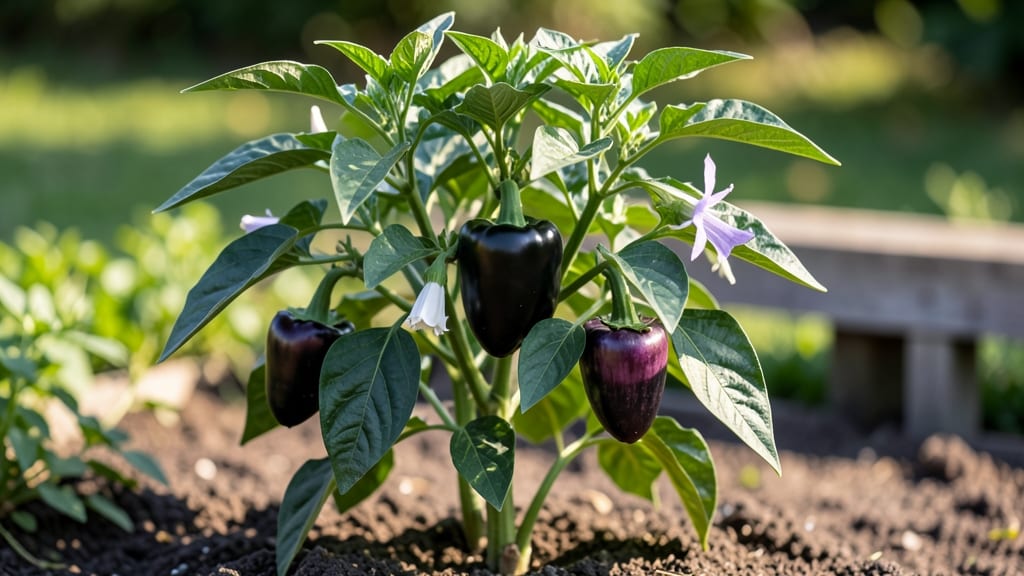
Growing black bell peppers means sweeter, deeper flavor with less bitterness than their green cousins. 🌱 I learned the hard way that these beauties demand full sun (6+ hours daily), rich soil, and consistent moisture—or they’ll turn bitter or crack.
My first crop was a disaster until I adjusted my watering and fertilization. The secret starts with well-draining soil mixed with compost (think 3 parts soil, 1 part compost). Plant seeds indoors 8-10 weeks before last frost, then transplant seedlings 12-18 inches apart in warm soil (60°F+).
Black peppers love heat—if nights dip below 55°F, they’ll stop setting fruit. By mid-summer, you’ll see glossy, dark purple-black peppers forming. Harvest when firm and fully colored for the boldest, sweetest flavor.
Prune suckers to focus energy on fruit production, and watch your plants reward you with heirloom-quality harvests all season long. Perfect for containers or in-ground gardens—just avoid overwatering (they hate soggy roots) and keep an eye out for aphids.
With these tweaks, you’ll grow peppers so rich, even picky eaters will ask for seconds!
📚 In This Guide
- What you need
- Instructions
- Tips and common mistakes
- Wrapping up and next steps
What you need
- ● Black Bell Pepper Seeds or Seedlings: Choose heirloom or hybrid varieties like 'Black Beauty,' 'Black Pearl,' or 'Black Hungarian.' Opt for 6-8 seeds if starting from scratch or 2-3 seedlings for faster growth.
- ● Pro tip: 💡 Buy seeds from reputable suppliers to ensure disease resistance and flavor.
- ● Containers or Garden Bed: For containers: Use pots at least 12-18 inches deep with drainage holes. 5-gallon buckets or fabric grow bags work well (1-2 plants per container).
- ● For garden beds: Ensure 6+ hours of full sun daily and well-draining soil. Space plants 18-24 inches apart in rows 24-36 inches apart.
- ● High-Quality Potting Mix: 1-2 bags (2-3 cubic feet each) of sterile, well-draining mix (e.g., 50% peat moss, 30% perlite, 20% compost). Avoid garden soil—it can compact and suffocate roots!
- ● Fertilizer: Balanced fertilizer (e.g., 10-10-10 or 5-5-5) or compost for organic growth. Start with 1 tbsp per plant at planting, then every 4-6 weeks.
- ● Garden Gloves: Protect your hands from thorns and soil (opt for nitrile-coated for durability).
- ● Trowel or Hand Shovel: For planting and transplanting seedlings.
- ● Watering Can or Hose with Nozzle: Peppers need 1-1.5 inches of water weekly (more in extreme heat).
- ● Pruning Shears: To trim dead leaves or encourage bushier growth.
- ○ Mulch (Optional but Recommended): Use straw, wood chips, or black plastic mulch to retain moisture and suppress weeds. Apply a 2-3 inch layer around plants.
- ○ Support Stakes or Cages (Optional): For taller varieties, use bamboo stakes or tomato cages to support heavy fruit.
- ● Warmth: Black bell peppers thrive in temperatures between 70-85°F. Start seeds indoors 8-10 weeks before the last frost or transplant seedlings after soil warms to 60°F+.
- ● Sunlight: Commit to a sunny spot—peppers are not shade-tolerant!
- ● pH-Balanced Soil: Test soil pH (ideal range: 6.0-6.8). Amend with lime (to raise pH) or sulfur (to lower pH) if needed.
- ● Patience: From seed to harvest, expect 70-90 days for maturity.
Step-by-step instructions for cultivating black bell peppers
Here’s how to grow sweet, glossy black bell peppers that stay bitter-free and pack maximum flavor.
🌱 Step 1: Start Seeds Indoors 8-10 Weeks Before Last Frost
Fill 4-inch biodegradable pots with sterile seed-starting mix (not garden soil) and moisten it until damp but not soggy. Plant 2 seeds per pot at a depth of ¼ inch, pressing gently to ensure good soil contact. I always label the pots with the variety and date—black bell peppers take longer to mature than standard bells, so timing matters.
Cover the pots with a clear plastic dome or wrap to retain warmth and humidity, then place them on a seedling heat mat set to 75-80°F. Germination should occur in 7-14 days, but don’t rush—wait until 50% of seeds sprout before removing the cover. This prevents damping-off, a fungal disease that turns seedlings to mush overnight.
☀️ Step 2: Provide 14+ Hours of Light Daily After Germination
The moment those first true leaves appear, move the seedlings under full-spectrum LED grow lights positioned 2-3 inches above the plants. Black bell peppers need bright, consistent light to prevent leggy growth—thin, stretched stems that never recover. I keep my lights on a 14-hour timer to mimic summer daylight, adjusting the height weekly as the plants grow.
Rotate the pots a quarter turn daily so they grow straight instead of leaning toward the light. You’ll notice strong seedlings have thick stems and deep green leaves spaced 1-2 inches apart. If leaves look pale or stems bend, the light is too far away—lower it immediately.
🪴 Step 3: Harden Off and Transplant After All Frost Risk Passes
Two weeks before your last frost date, start hardening off the seedlings by placing them outside in a sheltered, shaded spot for 1-2 hours the first day. Gradually increase exposure over 10-14 days, ending with a full day in direct sun. Black bell peppers are heat-lovers, so they need this gradual adjustment to avoid shock.
Transplant after soil reaches 60°F and stays above 55°F at night. Dig holes twice as wide as the root ball but only as deep—burying too deep suffocates the stem. Space plants 18-24 inches apart in rows 24-30 inches apart to allow airflow and prevent disease. I always add a handful of compost to each hole before backfilling.
💧 Step 4: Water Deeply at the Base and Fertilize Weekly
Water deeply 1-2 times per week, aiming for 1 inch of water per week—more in extreme heat. Wet the soil 2-3 inches deep to encourage strong root growth, but avoid overhead watering after dark (damp leaves invite fungal issues). Black bell peppers are drought-sensitive; wilting means roots aren’t getting enough moisture.
Feed every 2 weeks with a balanced liquid fertilizer (10-10-10) diluted to half strength. Stop fertilizing 4-6 weeks before harvest—too much nitrogen late in the season makes peppers bitter. You’ll know you’re on track when plants produce white flowers, followed by small green peppers within 2-3 weeks.
Tips & tricks for cultivating bold black bell peppers
Here's what nobody tells you about growing these sun-loving beauties—details that make all the difference between good and extraordinary harvests.
Seed Starting Wisdom: The 8-10 week indoor starting window is non-negotiable for black bell peppers, which mature slower than standard varieties. I've learned this the hard way—planting too late means you'll be harvesting when frost arrives. Use a small pencil to make planting holes at exactly ¼ inch deep, and press firmly to ensure soil contact. This prevents seeds from washing away during watering, which is especially critical in the early days when seeds are most vulnerable.
Lighting Strategy: Those first true leaves signal it's time to move seedlings under lights—don't wait a day longer! Position your full-spectrum LED grow lights 2-3 inches above the plants and keep them running on a 14-hour timer. The key is consistency: I've seen seedlings stretch toward light when moved too far away, creating weak stems that can't support the heavy pepper fruits later. Rotate your pots daily to prevent this—your goal is straight, sturdy plants with leaves spaced 1-2 inches apart.
Harden Off Gradually: The 10-14 day hardening process is where most gardeners fail. Start with just 1-2 hours of sheltered shade the first day, then increase exposure by 1-2 hours daily. Black bell peppers are heat-lovers, but they can't handle sudden temperature swings. Watch for leaves that curl or wilt—this is your signal to slow down the process. The goal is to acclimate them to outdoor conditions without causing shock that could stunt their growth.
Transplanting Secrets: When transplanting, dig holes twice as wide but only as deep as the root ball—burying too deep suffocates the stem. I always add a handful of compost to each hole before backfilling, which gives the plants an immediate nutrient boost. Space plants 18-24 inches apart to allow proper airflow, which is crucial for preventing fungal diseases that thrive in crowded conditions. This spacing also makes future harvesting easier without damaging neighboring plants.
Pro Tips for Black Bell Peppers
- Here's what nobody tells you about growing these sun-loving beauties—details that make all the difference between good and extraordinary harvests.
- Seed Starting Wisdom: The 8-10 week indoor starting window is non-negotiable for black bell peppers, which mature slower than standard varieties.
- Lighting Strategy: Those first true leaves signal it's time to move seedlings under lights—don't wait a day longer!
Frequently asked questions
Got questions about growing black bell peppers?
You’re not alone! Here are answers to the most common ones—so you can grow bold, bitter-free peppers like a pro.
When should I pick black bell peppers?
Harvest black bell peppers when they reach full size (about 3–4 inches long) and turn deep black or dark purple. Unlike green peppers, they don’t soften much after picking—so wait until they’re fully mature for the best flavor. Pro tip: Use pruning shears to avoid damaging the plant!
Why are my black bell peppers bitter?
Bitter black bell peppers often result from stress—like uneven watering, extreme heat, or over-fertilizing. Ensure consistent moisture (1–1.5 inches per week) and avoid letting soil dry out. If bitterness persists, try a milder variety like ‘Black Beauty’ or harvest earlier when flavors are sweeter.
Can I substitute black bell peppers for other varieties?
Use them like you would green or red bell peppers—raw in salads, roasted for depth, or stuffed for a smoky twist. Their rich, slightly sweet flavor works well in stir-fries, sauces, or even as a garnish. Just remember: they’re firmer than green peppers, so adjust cooking times accordingly.
How long does it take for black bell peppers to mature?
From seed to harvest, expect 70–90 days in warm climates (zones 9–11) or 90–120 days in cooler zones (start indoors 8–10 weeks before last frost). If your season is short, opt for transplants or grow them in containers near a sunny wall. Patience pays off—these peppers are worth the wait!
What pests or diseases should I watch for?
Black bell peppers are prone to aphids, hornworms, and blossom end rot (caused by calcium deficiency). Prevent pests with neem oil or companion planting (basil/marigolds). For rot, ensure even watering and amend soil with crushed eggshells or lime. Quick fix: Remove affected peppers immediately to stop spread.
Can I save seeds from black bell peppers?
Yes! Clean seeds, dry them for 1–2 weeks, and store in a cool, dark place. However, note that hybrid varieties (like ‘Black Beauty’) may not produce true-to-type peppers. For consistent results, stick to heirloom seeds. Bonus: Share seeds with fellow gardeners—community love grows great harvests!
Wrapping up and next steps
Black bell peppers are a rewarding addition to any garden—packed with bold flavor, nutrition, and ease of growth when you follow the right steps! Whether you’re a seasoned gardener or just starting, their sun-loving nature and adaptability make them a fantastic choice.
Now that you’re armed with the sun-loving secrets to cultivate bitter-free, vibrant peppers, it’s time to roll up your sleeves and get planting!
🌱 Next steps:
- Pick your spot—sunny, well-draining soil is key!
- Start seeds indoors (or buy sturdy transplants) and follow your planting timeline.
- Monitor for pests, water consistently, and enjoy the process—your harvest is on the way!