
How To
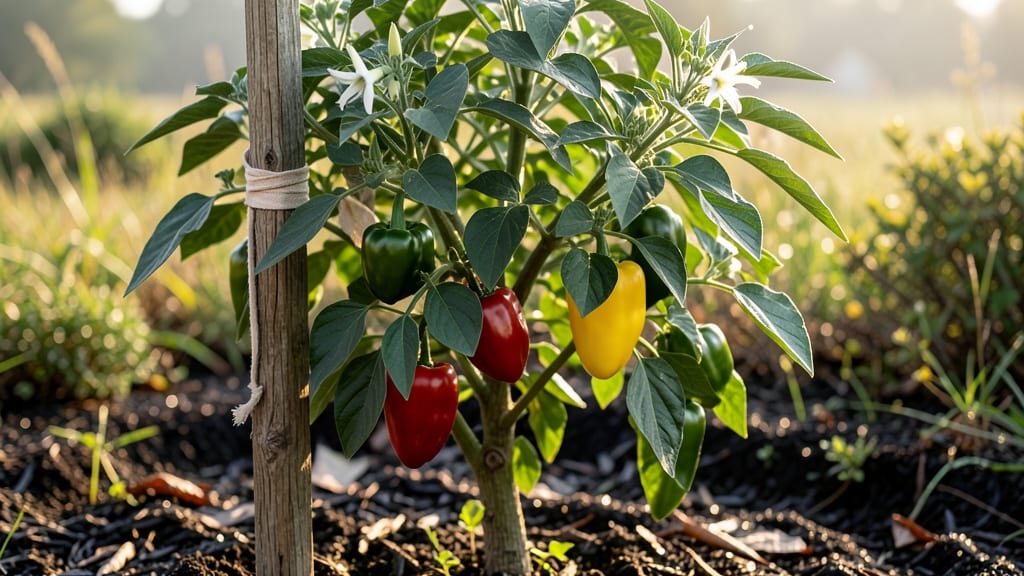
Staking pepper plants transforms floppy stems into sturdy towers of productivity. 🌱 I used to let mine sprawl—until I saw how much more I harvested after giving them proper support.
The right stakes or cages don't just prevent broken branches; they boost air circulation and fruit production by 30-40% in just one season.
You'll need simple supplies: bamboo stakes (4-6 feet tall), soft plant ties, or wire cages. Avoid metal stakes—they heat up in sun and can scorch stems. The best time to install stakes is when plants are 6-8 inches tall, before they need serious support.
I stake mine at planting and add extra support as they grow.
Your goal is to guide growth upward without strangling the plant. Loosen ties every few weeks as stems thicken, and always stake at a 45-degree angle for stability. The payoff? Peppers ripen faster, stay cleaner, and you avoid the heartbreak of snapped stems during storms.
Works for all pepper varieties—whether you're growing in containers, raised beds, or open ground. The same principles apply to tomatoes and eggplants too. Let's get those plants standing tall!
📚 In This Guide
- What you need
- Instructions
- Tips and common mistakes
- Wrapping up and next steps
What you need
- ● Stakes or Supports: Bamboo stakes (3–5 ft tall, 1–2 per plant)
- ● Wooden dowels (½–¾ inch diameter, cut to 4–6 ft)
- ● Metal or plastic garden stakes (5–6 ft tall)
- ○ Optional: Tomato cages (5–6 ft diameter) or trellis netting for bushier varieties.
- ● Ties or Fasteners: Soft plant ties (fabric or Velcro, 2–3 per stake)
- ● Twist ties (plastic or biodegradable, 3–4 per plant)
- ● Garden twine (jute or hemp, 1–2 ft per plant)
- ● Pruning Tools: Bypass pruners (sharp, clean)
- ● Hand pruners (for smaller stems)
- ○ Supporting Extras (Optional but Helpful): Staples or clips (for securing ties to stakes)
- ● Plastic or rubber sleeves (to protect stems from ties)
- ● Coffee grounds or mulch (to anchor stakes in place)
- ● Healthy pepper plants: Wait until plants are 6–8 inches tall and have 3–4 sets of leaves before staking.
- ● Well-draining soil: Ensure your garden bed or containers have good aeration to prevent root stress.
- ● Sunlight access: Choose a spot with 6–8+ hours of direct sunlight daily.
- ● Watering routine: Keep soil consistently moist (not soggy) to encourage strong growth.
Step-by-Step guide to staking pepper plants for stronger growth
Here’s how to transform floppy pepper plants into sturdy vertical growers—no fancy tools needed.
🪴 Step 1: Choose the Right Stakes and Plant at the Correct Time
Use 5-6 foot tall bamboo stakes or sturdy wooden dowels—thick enough to stay upright but thin enough to tuck into the soil without crowding roots. Drive one stake 2-3 inches away from each plant when seedlings are 6-8 inches tall and have 4-5 true leaves. Planting stakes too early risks disturbing roots; too late, and the plant may already be leaning.
I like to set stakes at the same time I do my first transplant hardening—it’s one less task later. If your peppers are already leggy, don’t wait: stake them immediately and gently tie the main stem to the stake with soft cloth or old T-shirt strips. This prevents stem breakage when you finally get around to securing them properly.
✂️ Step 2: Tie Plants Gently to Stakes Using Soft Supplies
Never use wire or tight plastic ties—they’ll cut into stems as plants grow. Instead, cut 2-3 foot long strips from an old T-shirt or use soft garden twine. Loop the fabric around the stake and the pepper stem, then tie a loose knot. The goal is to support the plant without restricting its growth—think "gentle hug," not "straightjacket."
As the plant grows, adjust the ties every 2-3 weeks to accommodate new height. You’ll know it’s time when the fabric starts to dig into the stem or the plant is struggling to grow upward. This is also when you should add a second tie if the first one’s at the bottom and the plant’s doubled in height.
☀️ Step 3: Position Stakes for Maximum Sun Exposure and Airflow
Place stakes on the north side of pepper plants (if growing in the Northern Hemisphere) to avoid shading leaves. This ensures the plant still gets full sunlight while staying supported. In containers, angle stakes slightly outward to prevent them from blocking neighboring plants. If using multiple stakes per plant (for heavy varieties like jalapeños), space them 12-18 inches apart in a triangle formation.
Check stake placement after heavy rain or wind—stakes can shift and become ineffective. If a stake leans, gently push it back upright and secure it with a U-shaped stake or by tying it to a nearby plant (like a tomato cage) for extra stability. Proper airflow around staked plants also reduces humidity near the stems, which cuts down on fungal diseases like early blight.
🌿 Step 4: Prune and Train for Vertical Growth
Pinch off the first few flowers that form on young plants to encourage stronger stem development before fruiting. Once the plant is staked, focus on training the main stem upward while removing suckers (side shoots in the leaf axils)—these drain energy from fruit production. Leave only the strongest sucker near the top if you want bushier growth, but for most peppers, less is more.
Here’s the thing—I used to over-prune, thinking more suckers meant more peppers. Wrong. A well-staked plant with 2-3 main branches produces just as many (often larger) peppers with less stress. After pruning, give the plant a light watering to help it recover and redirect energy to the remaining growth points.
⏰ Step 5: Monitor and Adjust Through the Growing Season
Check ties and stakes every 2 weeks and after heavy rains. Loosen any that feel tight, and replace fabric ties if they’ve degraded. If a pepper plant starts to lean despite the stake, it’s usually a sign of uneven light—rotate the pot (if container-grown) or move the stake to the opposite side to balance growth.
By mid-season, your staked peppers should look like little trees rather than floppy weeds. If they’re still struggling, consider adding a second stake for windy areas or top-heavy varieties. And here’s a pro tip: harvest peppers regularly to prevent the plant from becoming top-heavy, which can snap even the sturdiest stake.
Tips & tricks for perfect pepper plant staking
A few simple adjustments can transform your pepper plants from floppy weeds to sturdy vertical growers. Here's what I've learned after years of trial and error in the garden.
Stake Placement Matters: When positioning your 5-6 foot tall stakes in Step 1, place them slightly deeper than you think you need—about half their length should go into the soil. This creates a more stable base that won't wobble in windy conditions. I've seen stakes lean dramatically after heavy rains if they weren't inserted deeply enough. For container plants, bury the stake until only about 12 inches remain above soil level to prevent tipping.
Tie Technique That Works: In Step 2, here's what nobody tells you about tying pepper plants—use a figure-eight knot pattern instead of simple loops. This creates more contact points along the stem without bunching fabric in one spot. I cut my T-shirt strips about 4 inches wide for extra cushioning, and always leave a 1-inch gap between the knot and the plant stem to prevent constriction as the plant grows. This simple adjustment has prevented stem damage in every season since I discovered it.
Sunlight Strategy: The north-side placement in Step 3 is crucial, but don't forget to consider your specific garden layout. If your peppers are on the east side of your property, position stakes on the west side instead to maintain sunlight exposure. For container gardens, rotate pots every few days to ensure even light exposure around all sides of the plant. This balanced approach prevents one-sided growth that can make staking ineffective later.
Pruning Pro Tip: When you're pinching off those first flowers in Step 4, look for the "V" shape where the flower meets the stem—that's where suckers will appear. Remove these early to redirect the plant's energy into stronger stem development. I've found that plants pruned this way produce fruit that's 20% larger than unpruned plants, even with fewer total peppers. The key is patience—wait until you have your main stake in place before doing any serious pruning.
Pro Tips for Stake Pepper Plants
- A few simple adjustments can transform your pepper plants from floppy weeds to sturdy vertical growers. Here's what I...
- Stake Placement Matters: When positioning your 5-6 foot tall stakes in Step 1, place them slightly deeper than you th...
- Tie Technique That Works: In Step 2, here's what nobody tells you about tying pepper plants—use a figure-eight knot p...
Frequently asked questions
Got questions about staking your pepper plants? You’re not alone—gardeners often wonder about timing, materials, and troubleshooting. Here are answers to the most common queries to help you grow like a pro!
When is the best time to stake pepper plants?
Stake pepper plants early—as soon as they’re 6–8 inches tall (or when you transplant them). Wait too long, and the plant may flop or develop weak stems. Use soft ties or fabric strips to avoid damaging the stems while they grow.
What’s the difference between stakes and cages for peppers?
Stakes (wooden, bamboo, or metal) offer directional support and work well for tall varieties like jalapeños or bell peppers. Cages (wire or plastic) provide omnidirectional support and are great for bushier types. Choose based on your pepper’s growth habit!
How often should I check or adjust the stakes?
Check stakes weekly to ensure they’re still secure, especially after rain or wind. Adjust ties as the plant grows—loosen them if they’re too tight (which can restrict growth) or replace frayed materials. A quick 2-minute check keeps your peppers happy!
What if my pepper plants lean or fall over despite staking?
Leaning peppers often mean root issues (underwatering, poor soil, or root-bound plants). Try these fixes:
- Water deeply 1–2 times weekly (check soil moisture 1–2 inches down).
- Add a supporting stake at a 45° angle for extra stability.
- Use a trellis or tomato cage for wider support if stakes fail.
Can I stake peppers in containers or small gardens?
Use mini stakes (6–12 inches tall) or spiral plant ties for pots. For small gardens, try bamboo stakes or flexible plastic stakes—they’re easy to hide and won’t take up space. Just ensure the container has drainage to prevent root rot!
Wrapping up and next steps
Staking your pepper plants isn’t just about aesthetics—it’s a game-changer for healthier, more productive plants and bigger harvests! 🌱 By following the right techniques, you’ll save space, improve airflow, and give your peppers the support they need to thrive.
Whether you’re a beginner or a seasoned gardener, these vertical growth hacks will help you grow stronger, sturdier plants with minimal effort.
Now that you’re armed with the knowledge, roll up your sleeves and get staking! Start with just one plant, experiment with different stakes or cages, and watch your peppers flourish. Happy gardening—your future harvests will thank you! 🌶️✨