
Container Gardens
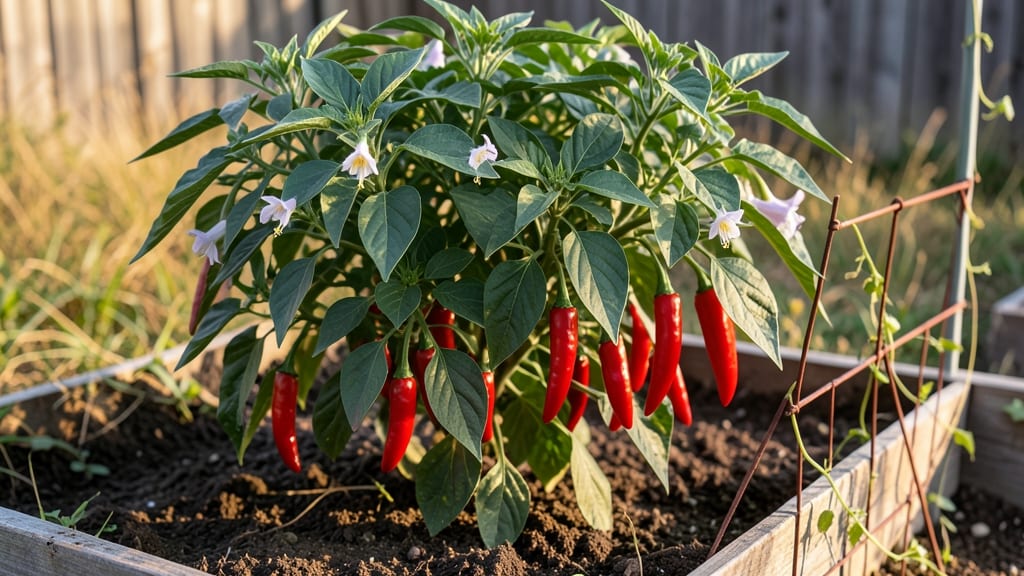
Growing Fresno peppers is like growing a tiny firecracker in your garden—55 days from seed to harvest, and every bite packs a medium heat that lingers. 🌶️ I’ve grown these peppers for years, and the key to success isn’t just heat tolerance—it’s training them on poles to save space while maximizing yield.
These peppers thrive in containers or small plots, making them perfect for urban gardeners or anyone short on ground space.
The secret to their speedy growth starts with well-draining soil (mix in compost for nutrients) and full sun (at least 6-8 hours daily). Whether you direct-sow seeds after your last frost or transplant seedlings, keep the soil consistently moist but never soggy—Fresno peppers hate wet feet.
A 5-foot tall trellis or stake lets them climb vertically, saving garden real estate while keeping fruits off the ground and easier to harvest.
By mid-summer, you’ll be snipping bright red, 2-3 inch peppers straight from the vine, perfect for salsas, hot sauces, or drying. The plants stay productive for weeks, and with proper care, you’ll pull in pounds of peppers from just a few plants.
Pole training also makes harvesting a breeze—no bending over, just reach up and pick.
Here’s the best part: Fresno peppers are disease-resistant and rarely attract pests, so you won’t spend hours battling garden problems. Pair them with basil or onions to boost flavor and deter insects, and you’ve got a foolproof system for homegrown heat. Ready to grow your own firecrackers?
📚 In This Guide
- What you need
- Instructions
- Tips and common mistakes
- Wrapping up and next steps
What you need
- ● Fresno pepper seeds or seedlings: 2–4 plants (choose disease-resistant varieties like 'Fresno Chili' or 'Banana Pepper').
- ● Containers: 5-gallon pots or fabric grow bags (minimum 12" deep, with drainage holes).
- ● Potting mix: 1 bag (1–2 cubic feet) of well-draining mix (e.g., 60% potting soil + 40% perlite/vermiculite).
- ● Fertilizer: Balanced organic fertilizer (10-10-10) or compost tea (follow label rates).
- ● Support system: 5–6 ft bamboo stakes or trellis (for pole training).
- ● Mulch: Straw or shredded leaves (to retain moisture).
- ● Watering can or hose: With a gentle spray nozzle.
- ● Grow lights (if starting indoors or in low-light areas).
- ● Pruning shears (for shaping plants).
- ● Row covers (to protect from pests early on).
- ● pH test kit (ideal soil pH: 6.0–7.0).
- ● Hot pepper spray (organic pest deterrent).
Step-by-step instructions for growing Fresno peppers pole-trained
Here's how to grow fiery Fresno peppers vertically—saving space while maximizing heat and yield.
🌱 Step 1: Start Seeds Indoors 8-10 Weeks Before Last Frost
Fill 2-3 inch deep seed trays with sterile seed-starting mix and maintain soil temperature at 75-85°F using a heat mat. Fresno seeds germinate best in warm conditions, so I always pre-soak them for 12 hours in lukewarm water before planting. This softens the outer coating and speeds up germination to 7-14 days.
Plant seeds ¼ inch deep and cover lightly with additional mix. Mist the surface until evenly moist but not soggy—overwatering at this stage causes damping-off. Place trays under grow lights for 14-16 hours daily to prevent leggy seedlings. You'll see true leaves emerge within 10-14 days, signaling it's time to thin to the strongest seedling per cell.
☀️ Step 2: Transplant Seedlings to Poles After True Leaves Form
When seedlings develop 3-4 true leaves (about 4-6 weeks after germination), transplant them into 5-gallon containers or directly into the garden. I use 5-foot tall bamboo stakes as trellises, planting seeds 2 inches from the pole so vines can immediately begin climbing.
Fresno peppers thrive in full sun (6+ hours daily) and well-draining soil with a pH of 6.0-6.8. Mix 2 cups compost into the planting hole to provide nutrients without overwhelming young roots. Water deeply after transplanting to settle soil around roots, then maintain 1 inch of water weekly—adjusting for rain.
🪴 Step 3: Train Vines and Prune for Maximum Yield
The key to pole-trained Fresnos is consistent upward growth. As vines reach 12 inches tall, tie them to the stake with soft plant ties every 12 inches. This prevents wind damage and encourages vertical growth. I prune suckers (side shoots) that form in the leaf axils to redirect energy to fruit production.
When vines hit the top of the pole, trim the main stem to promote bushier growth. You'll see new lateral branches form within 7-10 days, each capable of producing 5-10 peppers. Remove any flowers that appear before 45 days after transplanting—this ensures larger, hotter peppers later in the season.
✂️ Step 4: Harvest and Maintain Through First Frost
Fresno peppers mature in 55-60 days from transplant, turning from green to red when fully ripe. Harvest by cutting stems ¼ inch above the pepper to encourage more production. I pick every 3-4 days during peak season to prevent overripening and maintain heat levels.
Continue fertilizing with balanced 10-10-10 every 3-4 weeks until frost. If your growing season is short, use black plastic mulch to extend warmth and protect peppers from early cold snaps. You'll harvest 4-6 peppers per plant at peak, each packing 10,000-23,000 Scoville units of heat!
Tips & tricks for pole-trained Fresno peppers
These game-changing techniques will help you maximize heat, yield, and plant health while keeping your fiery Fresnos thriving.
Germination Boost: The 12-hour pre-soak is non-negotiable for Fresno seeds—it softens the tough outer coating and triggers faster germination. Use lukewarm water (not hot!) and place seeds in a sealed container. After soaking, pat them dry before planting to prevent mold. I’ve found that keeping the soil temperature at the upper end of the 75-85°F range (closer to 85°F) during germination speeds things up even more.
Lighting Strategy: Those critical 14-16 hours of grow light are your secret weapon against leggy seedlings. If you notice stems stretching toward the light, you’re either not providing enough light or the seedlings are too crowded. I use full-spectrum LED grow lights just 2-3 inches above the seedlings—they’re energy-efficient and prevent heat buildup that can scorch young plants. Rotate trays daily for even growth.
Transplant Timing: Waiting for 3-4 true leaves ensures your seedlings are strong enough to handle transplant shock, but don’t delay beyond the 4-6 week window. I’ve learned the hard way that Fresnos transplanted too early struggle to establish roots, while those transplanted too late may not have enough time to mature before frost. The 2-inch proximity to the bamboo stake is perfect—close enough for immediate climbing but not so tight it restricts root development.
Pruning Precision: When you reach the 45-day mark, those early flowers might look tempting, but removing them now pays off big time. The plant redirects its energy to developing stronger roots and stems, which means larger, hotter peppers later. I prune suckers aggressively—anything growing in the leaf axils gets snipped. This might seem counterintuitive, but trust me, your harvest will thank you with peppers packing 20,000+ Scoville units instead of the average 15,000.
Pro Tips for Growing Fresno Peppers
- These game-changing techniques will help you maximize heat, yield, and plant health while keeping your fiery Fresnos ...
- Germination Boost: The 12-hour pre-soak is non-negotiable for Fresno seeds—it softens the tough outer coating and tri...
- Lighting Strategy: Those critical 14-16 hours of grow light are your secret weapon against leggy seedlings. If you no...
Frequently asked questions
Got questions about growing Fresno peppers?
Here are answers to the most common ones—so you can grow hot, homegrown heat with confidence!
How long does it take for Fresno peppers to mature?
Fresno peppers are fast growers—expect 55–65 days from transplanting to harvest! Start seeds indoors 8–10 weeks before your last frost, or buy seedlings for a quicker harvest. Pole-trained plants may take slightly longer to mature but yield more peppers over time.
What’s the best temperature for Fresno pepper plants?
Fresnos thrive in warmth—ideal temps are 70–90°F (21–32°C). They’re frost-sensitive, so wait until soil is at least 60°F (15°C) before planting outdoors. If nights dip below 55°F (13°C), use row covers or grow them in containers to move indoors.
Can I grow Fresno peppers in containers?
Fresnos are perfect for containers—choose a pot at least 12–18 inches deep with drainage holes. Use a lightweight potting mix and fertilize every 2–3 weeks. Pole-training in containers works well; just provide a trellis or stake for support.
Why aren’t my Fresno peppers producing?
Common culprits include:
- Not enough sun: Fresnos need 6–8+ hours of sunlight daily.
- Underwatering: Soil should stay consistently moist but not soggy.
- Nutrient deficiency: Feed with a balanced fertilizer (like 10-10-10) when flowers appear.
- Stress: Extreme heat (>95°F/35°C) or cold can halt production.
Try hand-pollinating flowers with a soft brush if bees are scarce!
How do I know when Fresno peppers are ripe?
Fresnos turn from green to bright red when ripe (though some stay green if harvested early). They’re ready to pick at 3–5 inches long, with a slight snap when twisted. For milder heat, harvest earlier; for max spice, let them fully ripen.
Wrapping up and next steps
Growing Fresno peppers is a rewarding journey—packing bold flavor, quick harvests, and minimal fuss into a tiny package! With just a sunny spot, a container, and a little patience, you’ll be enjoying homegrown heat in under two months. 🌱✨
Ready to take the next step? Start with one or two plants, experiment with companion crops, and savor the satisfaction of homegrown spice. Whether you’re spicing up salsas, pickling batches, or sharing with neighbors, your Fresno pepper adventure is just beginning. Happy growing! 🌶️🔥