
Picking
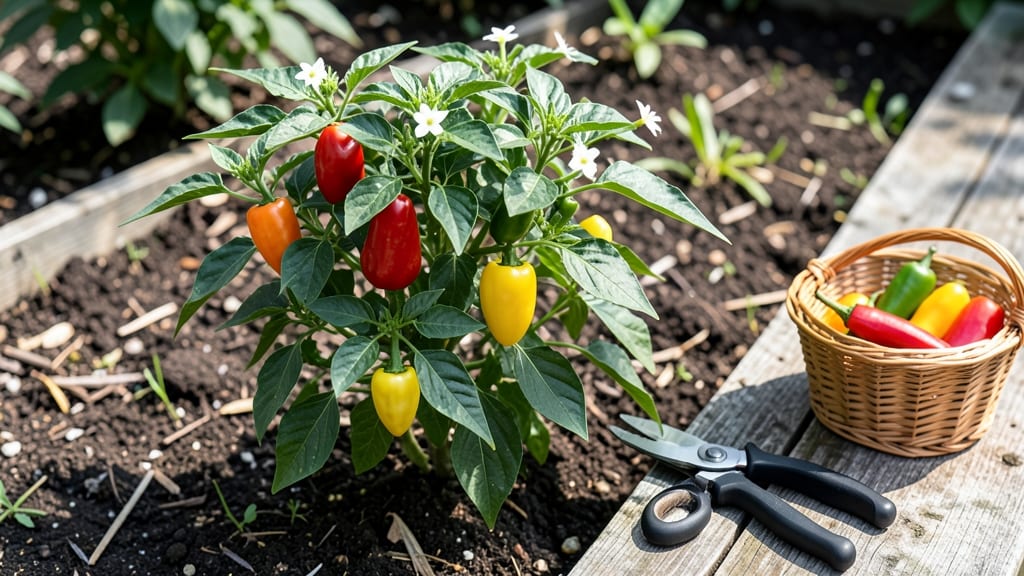
Chili peppers are ready to pick when they reach full color, firmness, and size for their variety 🌶️ — but timing this perfectly can make or break your harvest.
Picking too early means bland, rubbery peppers, while waiting too long risks overripe mush. The key is knowing the subtle cues that tell you the moment is right — and avoiding the mistakes that turn a great crop into a disappointment.
In this guide, I’ll break down the visual and physical signs of ripeness by variety, how to test firmness without damaging the plant, and the best times of day to harvest for peak flavor.
You’ll learn how temperature and variety affect ripening, plus how to store or use your peppers once they’re off the vine for maximum freshness.
Chili pepper ripeness guide: color, size & firmness signs by variety
Knowing when to pick chili peppers is an art that balances visual cues, physical tests, and variety-specific traits. Each chili type ripens differently—some stay green, while others transition through vibrant colors.
Ignoring these signs can lead to missed flavor peaks or wasted effort. Let’s break down the key indicators for common chili varieties so you can harvest at their prime.
Chili peppers ripen through distinct stages, from green and firm to colored and slightly softer. The color change is often the most obvious signal, but size and firmness play equally important roles.
For example, a jalapeño might turn red or stay green, while a bell pepper will shift from green to yellow, orange, or red. Understanding these differences ensures you don’t pick too early or too late.
Here’s a quick reference for the most popular chili varieties, including their ripe color, ideal size, and firmness cues. Use this as your guide to avoid common mistakes like harvesting peppers that are still hard or overly soft.
| Variety | Ripe Color | Size (Inches) | Firmness Test | Harvest Tip |
|---|---|---|---|---|
| Jalapeño | Green or Red | 2-3 | Slight give near stem | Pick when glossy and firm |
| Bell Pepper | Green, Yellow, Red, Purple | 3-4 | Firm with slight softness at base | Wait for deep color and shine |
| Habanero | Orange or Red | 1-2 | Firm but yields slightly when pressed | Harvest when vibrant and aromatic |
| Serrano | Green or Red | 1-2 | Firm with glossy skin | Pick before wrinkling occurs |
| Cayenne | Red or Yellow | 2-3 | Slightly soft at tip | Harvest when color is uniform |
For jalapeños and serranos, the color shift from green to red signals peak heat and flavor. However, some varieties like bell peppers can be harvested at any ripe color—green, yellow, or red—each offering a unique flavor profile.
Always prioritize firmness over color; a pepper that’s too soft may be overripe and lose its crisp texture.
Temperature plays a subtle but critical role in ripening. Cooler nights can slow color development, while hot days may accelerate it. If your chili peppers aren’t changing color as expected, check your watering routine—consistent moisture (but not soggy soil) encourages even ripening.
Overwatering can dilute flavor, while underwatering stresses the plant and stunts growth.
One of my biggest mistakes was picking habaneros too early because I focused only on size. They were still hard and lacked their signature fruity aroma. After learning to twist gently at the stem, I noticed the skin would separate cleanly when ripe—now I never miss the perfect moment.
This simple trick works for nearly all chili varieties.
Don’t forget that maturity doesn’t always mean maximum heat. Some chili lovers swear by green, unripe peppers for milder flavors, while others insist on fully ripened pods for bold, complex tastes.
Experiment with your harvests to discover what suits your palate best. Just remember: overripe peppers (wrinkled, leathery skin) are best used in cooked dishes rather than fresh.
If you’re growing multiple varieties, keep a small harvest journal to track ripening times. Note the day of year, temperature ranges, and final color for each pepper.
This helps you predict future harvests and adjust care for next season. For example, my cayennes always ripen faster in August, while jalapeños take longer in cooler September weather.
Finally, store freshly picked chilis in a
How to test chili pepper ripeness beyond visual cues
While color changes and size development are the first signs of ripeness, some chili varieties—especially heirlooms or unusual types—don’t always follow the rules. That’s where physical tests come in handy. These methods help you confirm ripeness even when visual cues are ambiguous, ensuring you harvest at peak flavor and heat.
One of the simplest tricks is the tap test, which reveals the internal structure of the pepper. Gently tap a mature-looking pepper with your fingernail—if it sounds hollow, it’s likely ready.
A solid thud usually means it’s still firm and underripe. This method works especially well for thick-skinned varieties like jalapeños or bell peppers, where color alone can be misleading.
The stem check is another reliable indicator. Gently twist the pepper near the stem—if it separates cleanly with minimal resistance, it’s ripe. A stubborn attachment suggests it’s still hardening. For varieties like habaneros or ghost peppers, this test is crucial because their vibrant colors can develop unevenly.
Always harvest with a sharp pair of pruning shears to avoid damaging the plant.
🌶️ Pro Tip: The taste test is the ultimate judge, but use it sparingly. A small bite can reveal whether the pepper has developed its signature heat profile and sweetness.
For example, a jalapeño should have a balanced kick, while a bell pepper should be fully sweet. If the flavor is muted or overly bitter, it’s not ready yet.
⚠️ callout-warning- Overripe peppers lose flavor and texture, becoming wrinkled or mealy.
- Underripe peppers lack heat and sweetness, often tasting bland or grassy.
- Harvesting in direct sunlight can cause peppers to overheat and spoil faster.
Timing is everything when it comes to chili pepper ripeness. For example, red bell peppers take longer to mature than their green counterparts, so don’t rush the harvest. If you’re growing multiple varieties, keep a small notebook to track each type’s unique ripening timeline.
Some peppers, like cherry peppers, may change color gradually—watch for a deep, even hue rather than patchy spots.
Even after mastering these tests, environmental factors like temperature fluctuations or inconsistent sunlight can delay ripening. If your peppers aren’t maturing as expected, consider relocating them to a sunnier spot or providing afternoon shade in scorching climates.
Patience is key—rushing the harvest can leave you with peppers that lack the complexity and intensity they’re capable of delivering.