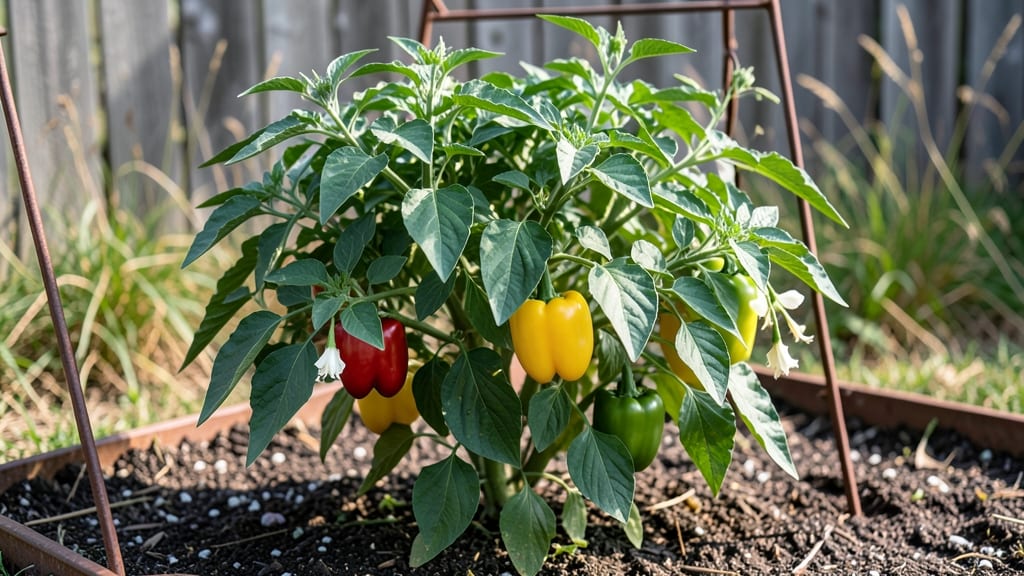
Green pepper plants typically grow 2 to 4 feet tall and spread 1 to 2 feet wide, but their size can vary wildly depending on the variety and growing conditions.
If you're dreaming of a bountiful green pepper harvest but worried about space, you're not alone—many gardeners struggle to balance plant size and yield.
Whether you're working with a backyard plot or a windowsill garden, knowing how much room your 🌶️ plants need is the key to avoiding crowded, underperforming plants.
Standard varieties like bell peppers can reach 3 to 4 feet tall, while compact or bush types stay under 2 feet. This difference isn’t just about aesthetics—it directly impacts how you space your plants, whether you need trellises, and even how many peppers you’ll harvest.
Below, I’ll break down the height and spread of common green pepper varieties, share space-saving tips for small gardens, and explain how pruning can help control size without sacrificing productivity.
Mature heights of green pepper plants: standard vs. compact varieties compared
When planning your garden, understanding how tall green pepper plants grow is key to maximizing your space and yield. Standard varieties typically reach 3 to 4 feet tall, while compact or bush types stay between 1 to 2 feet.
The difference isn't just about aesthetics—it directly impacts spacing, airflow, and even how many peppers you can harvest. For example, a 4-foot-tall plant needs at least 18 inches of space between neighbors, while a 2-foot dwarf can thrive in just 12 inches.
Your garden layout depends on the varieties you choose. Trailing types, like some jalapeños, may need vertical support to prevent sprawling, while upright bush varieties stay neatly contained. Even the width of the plant matters—some spread 2 feet wide, while others stay compact.
If you're working with containers, dwarf varieties are your best bet, but even standard types can be pruned to fit smaller spaces.
Here’s the breakdown: Standard green peppers (like bell peppers) grow 3-4 feet tall and produce heavier yields but require more space. Compact varieties (like 'Snackable' or 'Arpad F1') stay 1-2 feet tall, making them perfect for balconies, raised beds, or small gardens.
The trade-off? They may produce slightly fewer peppers per plant, but their convenience often makes up for it.
Spacing is everything. Overcrowding leads to poor airflow, increasing the risk of fungal diseases like powdery mildew. Underspacing, on the other hand, can stunt growth due to competition for nutrients.
For standard varieties, aim for 18-24 inches apart in rows 2-3 feet apart. For compact types, 12-18 inches apart in rows 18 inches apart works perfectly.
| Variety |
Type |
Mature Height |
Spacing Needs |
Yield Potential |
Best For |
| Bell Pepper (e.g., 'California Wonder') |
Standard (Upright) |
3-4 ft |
18-24" apart |
High (10-20 peppers) |
Backyards, raised beds |
| Jalapeño (e.g., 'Early Jalapeño') |
Standard (Trailing) |
2-3 ft |
18" apart (trellis) |
Medium (5-10 peppers) |
Trellises, containers |
| Snackable Pepper |
Compact (Bush) |
1-2 ft |
12" apart |
Low-Medium (3-8 peppers) |
Containers, balconies |
| Arpad F1 |
Compact (Bush) |
1.5-2 ft |
12-15" apart |
High (10+ peppers) |
Small gardens, pots |
| Lunchbox Pepper |
Compact (Bush) |
1-1.5 ft |
Best space-saving green pepper varieties for small gardens and containers
If you love the idea of growing your own green peppers but lack space, don't worry—there are plenty of compact varieties perfect for balconies, patios, and even small garden beds. These space-saving peppers can thrive in containers as small as 5-gallon pots while still delivering a bountiful harvest.
The key is choosing bush-type varieties or dwarf hybrids that stay under 2 feet tall.
For container gardening, I always recommend starting with determinate varieties, which grow in a compact shape and produce fruit all at once. This makes them ideal for small-space gardening where you want predictable yields without sprawling vines. Plus, their shorter stature means less maintenance and easier access to harvest.
Here are my top space-saving green pepper varieties, each with unique benefits for small gardens:
- 🌱 'Snackable' - Only 12-18 inches tall, perfect for 5-gallon containers or hanging baskets. Produces 3-inch peppers great for snacking.
- 🌿 'Arpad F1' - Compact 18-24 inches with high disease resistance. Ideal for urban gardens and patio planters.
- 🪴 'Lunchbox' - Bush-type reaching 20-24 inches, producing 4-6 peppers per plant in small containers.
- ✂️ 'Jupiter' - 24-inch max height, heavy producer with blocky green peppers. Thrives in raised beds or large pots.
- 💧 'Black Beauty' - 18-24 inches, dark green peppers perfect for small-space growing. Handles partial shade better than most.
When selecting containers, aim for at least 5 gallons per plant to ensure proper root growth. I've had great success using fabric grow bags or self-watering pots, which help maintain consistent moisture—a critical factor for container-grown peppers.
Remember to place your containers in a spot with 6-8 hours of sunlight daily for optimal growth.
To maximize yield in small spaces, I recommend pruning lightly to encourage bushier growth and removing flowers if you want larger peppers. For vertical gardening, consider using small trellises or cage supports to guide taller varieties upward.
This technique works especially well for 'Arpad F1' or 'Jupiter' when grown in deep containers.
With these space-saving varieties, you can enjoy a homegrown pepper harvest even in the smallest of spaces. Whether you're growing on a balcony, patio, or windowsill, these peppers prove that big flavors don't require big gardens.
Start with one or two varieties to test what works best in your micro-garden setup!
★★★★★5.0(6 reviews)
|