
Watering
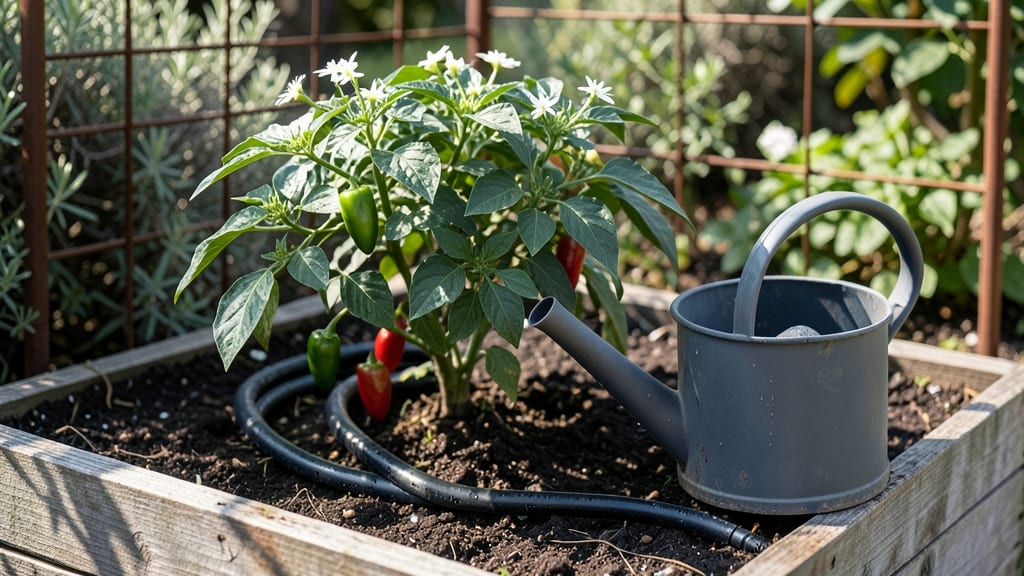
Watering your 🌶️ habanero pepper plants the right way is the difference between a bumper crop of fiery peppers and a sad, wilted disappointment.
Mastering the watering schedule for habanero pepper plants is the secret to unlocking their fiery potential—overwater or underwater, and you’ll sacrifice heat, flavor, and even fruit production.
These tropical plants crave consistent moisture, but they hate soggy roots. In USDA Zone 6a, where spring planting kicks off in April, the key is checking soil moisture before you water—stick your finger an inch deep, and if it feels dry, it’s time.
Below, I’ll break down the exact watering routine for every growth stage, from seedlings to harvest-ready peppers, plus how to adjust for containers, heatwaves, and those tricky rainy spells.
Habanero watering schedule by growth stage: when and how much
Habanero peppers are thirsty plants that demand precise watering—too much or too little throws off their heat production and fruit quality. The key? Adjusting your schedule based on their growth stage and weather conditions.
I’ve grown habaneros for years, and I’ve learned that consistent moisture (never soggy soil) is non-negotiable for those fiery peppers.
Young seedlings need gentle care, while mature plants can handle deeper waterings. The 1-2 inch dry rule—letting the top 1-2 inches of soil dry between waterings—works for most stages, but heatwaves and container gardening require tweaks.
Let’s break it down by stage so you can keep your habaneros thriving from seed to harvest.
| Growth Stage | Watering Frequency | Soil Moisture Target | Water Amount | Adjustments |
|---|---|---|---|---|
| Seedling (0-4 weeks) | Every 2-3 days | Top 1 inch dry | 1/4 cup per plant | Keep soil consistently moist (use tray watering) |
| Vegetative (4-8 weeks) | Every 3-4 days | Top 1-2 inches dry | 1/2 cup per plant | Increase to deep watering (1 inch deep) |
| Flowering (8-12 weeks) | Every 2-3 days | Top 1-2 inches dry | 3/4 cup per plant | Critical stage—avoid wetting flowers |
| Fruiting (12+ weeks) | Every 2-4 days | Top 1-2 inches dry | 1-1.5 cups per plant | Heatwave? Water daily with mulch |
| Container Grown | Every 1-2 days | Top 1 inch dry | 1 cup per 5-gallon pot | Dries out faster—check daily |
During the seedling stage (first 4 weeks), habaneros are delicate. I water mine every 2-3 days using a spray bottle or shallow tray to keep the soil evenly moist.
Overwatering now leads to damping-off disease, while underwatering stunts growth. The 1-inch dry rule applies here—stick your finger in the soil to check.
Once they hit the vegetative stage (4-8 weeks), I switch to deep watering every 3-4 days. This encourages strong root development. Mornings are best—watering in the early hours reduces evaporation and fungal risks.
If your habaneros are in containers, they’ll dry out faster, so I check them daily during hot spells.
The flowering stage (8-12 weeks) is where many gardeners trip up. Habaneros need consistent moisture but avoid wet flowers, which can cause rot. I water at the base of the plant and aim for 3/4 cup per plant every 2-3 days.
If you see drooping flowers, it’s a sign of thirst—water immediately but avoid soggy soil.
When peppers start forming (fruiting stage, 12+ weeks), I increase the water to 1-1.5 cups per plant every 2-4 days. This stage demands the most attention, especially in heatwaves.
I mulch heavily with straw to retain moisture and water deeply in the morning. If the soil feels bone-dry beyond 2 inches, it’s time to water.
Containers need extra care—drying out faster than in-ground plants. I water mine every 1-2 days in summer, using a 5-gallon watering can to ensure thorough saturation. Pro tip: Terracotta pots dry out quicker than plastic, so adjust accordingly. Always check soil moisture before watering!
Adjust your schedule based on weather conditions. During heatwaves (90°F+), I water daily and mulch to lock in moisture. In cooler weather (below 70°F), I stretch watering to every 4-5 days. Rainy seasons? Reduce watering by half and ensure pots have drainage holes to prevent root rot.
One mistake I see often is watering on a schedule instead of checking the soil. Use the finger test: Stick your index finger 1-2 inches deep. If it feels dry, water; if moist, wait. This simple trick saves habaneros from blossom end rot and wilting. Consistency is
Signs of overwatering vs. underwatering habanero peppers (with fixes)
Habanero peppers are sensitive to moisture extremes, and their leaves tell the story. Yellowing leaves with crisp edges often signal overwatering, while dry, brittle leaves and drooping stems scream underwatering.
Both conditions stress your plants, reducing heat levels and fruit production. Let’s decode these signs and fix them fast.
First, check the soil—soggy soil with a foul odor means you’re drowning your habaneros. Blossom end rot (black, leathery spots on peppers) also points to overwatering or inconsistent moisture.
On the flip side, wrinkled leaves and peppers falling off the plant? That’s classic underwatering. Your goal is consistent moisture, not a swamp or a desert.
How Often to Water Habanero Pepper Plants
| Factor | Watering Frequency | Pros | Cons |
|---|---|---|---|
| Seedlings | Every 1-2 days | Encourages root growth | Risk of damping-off |
| Mature Plants (Summer) | Every 2-3 days | Supports fruit production | Overwatering causes rot |
| Containers | Daily (small pots) | Prevents drying out | Requires frequent checks |
| Heatwaves | Every 1-2 days (deep water) | Cools roots | Increases evaporation |
💧 Key Tip: Always water at soil level, not the leaves, to prevent disease.
To fix overwatering, reduce frequency and improve drainage. Amend your soil with perlite or sand to loosen it, and consider a well-draining pot if growing in containers. Mulching with straw or wood chips helps stabilize soil moisture and prevents evaporation.
For underwatering, water deeply until moisture reaches 6-8 inches below the surface.
Adjust your soil pH too—habaneros thrive in 6.0-7.0 pH. Test your soil and amend with lime (to raise pH) or sulfur (to lower it) if needed. A balanced fertilizer like 10-10-10 can also help stressed plants recover.
Consistency is key: aim for 1 inch of water per week, adjusting for rain or heat.
Pro tip: Use a moisture meter to track soil conditions. Stick it 2 inches deep—if it reads dry, water thoroughly. If it’s soggy, wait another day. Morning watering is ideal; it gives foliage time to dry before nightfall, reducing fungal risks like powdery mildew.
Remember, habaneros are tropical plants that love warmth and humidity. If your air is dry (like in arid climates), mist the leaves lightly or use a pebble tray under pots. Balance is everything—your habaneros will reward you with bold flavors and fiery heat when you get it right. 🌶️