Planting
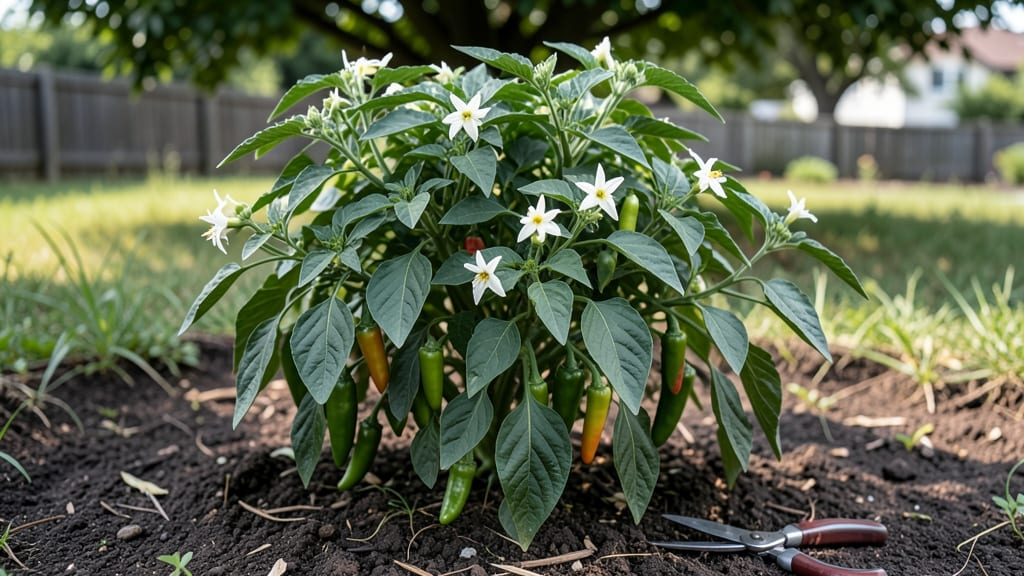
Growing Serrano peppers from seed to harvest is like watching a tiny plant race toward spicy glory—each stage brings bigger surprises than the last. 🌱 The journey starts with those wrinkled seeds and ends with fiery red peppers dangling from your trellis, but the real magic happens in those first 60 days when roots, stems, and leaves transform before your eyes.
You’ll begin with germination in cozy seed trays, then cheer on your seedlings as they stretch toward light, before transplanting them into the garden where they’ll climb poles like eager kids on a jungle gym.
Flowering arrives in 45-60 days, signaling the start of the pepper production phase—though some varieties take up to 90 days from seed to harvest. By midsummer, you’ll be snipping peppers that pack serious heat, their colors shifting from green to red as they ripen. The key?
Pole training keeps plants healthy, flowers accessible to pollinators, and peppers easy to reach when harvest time comes. This method works for any climate where Serrano peppers thrive—just adjust your timeline based on your last frost date.
Let’s break down each stage so you can grow a bumper crop of these fiery little gems.
📚 In This Guide
- What you need
- Instructions
- Tips and common mistakes
- Wrapping up and next steps
What you need
- ● Serrano pepper seeds – 5–10 seeds (or 1–2 plants if buying seedlings). Choose heirloom or hybrid varieties based on your heat preference.
- ● Seed-starting mix – 1–2 small trays (1020 or 720-cell) or 4–6 biodegradable pots (2–3 inches deep). Use a lightweight, sterile mix (e.g., 50% peat moss, 30% perlite, 20% vermiculite).
- ● Growing containers or garden bed – Containers: 5-gallon pots (1 per plant) with drainage holes, or a raised bed (4’x8’) for 4–6 plants.
- ● Garden soil: Well-draining, slightly acidic soil (pH 6.0–6.8). Amend with compost (1 part compost to 3 parts soil) for nutrients.
- ● Fertilizer – Seedling stage: Balanced liquid fertilizer (e.g., 10-10-10) diluted to half-strength.
- ● Vegetative stage: High-phosphorus fertilizer (e.g., 5-10-10) or compost tea every 2–3 weeks.
- ● Fruiting stage: Low-nitrogen, high-potassium fertilizer (e.g., 2-4-4) to boost pepper production.
- ● Watering can or hose with a gentle spray nozzle – Avoid overwatering; serranos hate soggy roots!
- ● Pole or trellis system – 1–2 bamboo stakes (5–6 ft tall) or metal cages (4–5 ft) per plant.
- ● Soft plant ties or twine (1–2 rolls) to secure vines.
- ● Pruning shears or scissors – Sharp, clean tools to trim suckers and shape plants.
- ○ Mulch (optional but recommended) – Straw or wood chips (2–3 inches thick) to retain moisture and suppress weeds.
- ● Grow lights or sunny windowsill – If starting indoors, use a full-spectrum LED grow light (12–16 hrs/day) for seedlings.
- ○ Heat mat (optional) – For seeds germinating below 70°F (21°C), a seedling heat mat speeds up sprouting.
- ● pH test kit – Ensures soil pH stays in the ideal range (6.0–6.8). Adjust with lime (to raise pH) or sulfur (to lower).
- ● Insect netting – Protects plants from pests like aphids or hornworms.
- ● Spray bottle with neem oil – Natural pesticide for early pest control.
- ● Harvest basket or knife – A sharp knife for clean cuts when harvesting peppers.
- ● Garden journal – Track plant stages, watering, and fertilizer schedules for future reference!
Step-by-Step guide to serrano pepper growth stages
Watch your serrano peppers transform from tiny seeds into fiery harvests—here's exactly what to expect each season.
🌱 Step 1: Germination and Seedling Stage (Days 1-21)
Start by planting serrano seeds ¼ inch deep in warm soil (75-85°F). Germination takes 7-14 days, with the first tiny leaves (cotyledons) emerging first. These initial leaves look different from true leaves—they're rounder and thicker, serving as the plant's first food source.
Keep the soil consistently moist but never soggy during this stage. You'll know moisture is right when the top inch feels damp to touch. Once seedlings have 2-3 sets of true leaves (the smaller, more pointed ones after cotyledons), they're ready for their first light boost. Real talk: If you see yellowing leaves, it's usually overwatering—let the top inch dry out between waterings.
☀️ Step 2: Vegetative Growth (Weeks 3-8)
This is when your serrano plant starts its rapid growth spurt, reaching 12-18 inches tall if properly supported. You'll notice new leaves appearing every 2-3 days during peak growth. Here's the thing—serranos need 6-8 hours of direct sun daily at this stage, or they'll grow leggy and weak.
If you're using a pole, gently tie the main stem to it when the plant reaches 6 inches tall, using soft plant ties. Don't pull too tight—you want room for the stem to thicken. Watch for the first flower buds forming at the leaf axils (where leaves meet the stem). These tiny white blooms signal the plant is ready for its next growth phase.
🌿 Step 3: Flowering and Fruit Set (Weeks 8-12)
When those first white flowers appear, your serrano plant is shifting energy from leaves to fruit production. Each flower has the potential to become a pepper, but not all will set fruit—some will drop naturally. You'll see tiny green peppers forming within 7-10 days after successful pollination.
This is the moment that matters: Keep the soil consistently moist but reduce watering slightly if you notice blossom end rot (dark spots on fruit). The key is even moisture—never let the soil dry out completely between waterings. You'll start seeing the first peppers grow from ½ inch to 1 inch long within about 3 weeks of flowering.
✂️ Step 4: Fruit Development and Maturity (Weeks 12-20)
Now the real fun begins—your serrano peppers will grow rapidly, turning from green to red as they mature. You'll notice the fruit changing color first at the tips, then gradually working downward. For the hottest flavor, harvest when peppers are fully green (about 60-75 days after planting).
Here's where it gets fun—watch the peppers reach 1-2 inches long and develop their signature shape. At this stage, they're packed with capsaicin, so handle them carefully. Prune any suckers (side shoots) that form in the leaf axils to direct energy to fruit production. You'll know they're ready to harvest when they're firm, glossy, and fully colored.
Tips & tricks for pole-trained serrano pepper growth
Growing serrano peppers on poles isn't just about patience—it's about timing, support, and understanding what your plants truly need at each stage.
Germination Game-Changer: I learned this the hard way after ruining three batches—serrano seeds need consistent warmth at 75-85°F to germinate properly. Place your seed trays on a heat mat or in a warm spot like the top of your fridge (not inside!) until you see those first tiny leaves. The 7-14 days germination window can feel like forever, but resist the urge to water more than once daily—overwatering at this stage is the #1 killer of young seedlings.
Pole Training Secret: When your serrano reaches 6 inches tall in Step 2, tie it to the pole using soft plant ties—but here's the trick: leave a little slack. As the stem thickens over the next 2-3 days of rapid growth, you'll need to adjust the ties upward. I use old t-shirts cut into strips because they're gentle on the stems and biodegradable. This prevents the plant from snapping when you finally get those first flower buds forming at the leaf axils.
Flowering to Fruit Transition: The moment those white flowers appear in Step 3, your plant is making a critical shift. Here's what nobody tells you—reduce watering slightly (about 10-15% less) to prevent blossom end rot, but keep the soil consistently moist. I set a reminder to check moisture every 2-3 days during this phase. The first peppers will appear within 7-10 days of pollination, starting as tiny green bumps—don't mistake them for buds!
Harvesting Visual Cues: For the hottest flavor, harvest when peppers are fully green at about 60-75 days after planting. Look for these three signs: firm texture when gently squeezed, glossy skin, and a slight give at the stem. The color change starts at the tips first—if you see red creeping in, your harvest window is closing. And here's a pro move: Wear gloves when handling mature peppers—they're packed with capsaicin, which can irritate skin and eyes.
Pro Tips for Serrano Pepper Plant Stages
- Growing serrano peppers on poles isn't just about patience—it's about timing, support, and understanding what your plants truly need at each stage.
- Germination Game-Changer: I learned this the hard way after ruining three batches—serrano seeds need consistent warmth at 75-85°F to germinate properly.
- Pole Training Secret: When your serrano reaches 6 inches tall in Step 2, tie it to the pole using soft plant ties—but here's the trick: leave a little slack.
Frequently asked questions
about growing serrano peppers from seed to harvest—because every gardener deserves a little clarity!How long does it take for a serrano pepper plant to go from seed to harvest?
A serrano pepper plant typically takes 90–120 days from seed to harvest, depending on your climate and growing conditions. If you start with transplants, you’ll shave off about 30 days. Pole-training can also speed up fruit production by optimizing space and airflow!
Can I grow serrano peppers indoors, or do they need outdoor conditions?
Yes! Serrano peppers thrive indoors with 6–8 hours of sunlight daily (use grow lights if needed). Keep temperatures between 70–85°F and ensure proper airflow to prevent pests. Just be patient—indoor plants may take slightly longer to fruit than outdoor ones.
Why aren’t my serrano pepper plants flowering or fruiting?
Common culprits include lack of sunlight, inconsistent watering, or nutrient deficiencies. Serrano peppers need full sun (6+ hours/day) and balanced fertilizer (high in phosphorus for blooms). If temps drop below 60°F, flowers may drop—try moving plants to a warmer spot or using a small greenhouse.
How do I know when serrano peppers are fully ripe for harvest?
Serrano peppers are ready when they’re bright green, firm, and 1–2 inches long. For extra heat, wait until they turn red, orange, or yellow—but harvest early if you prefer milder flavor. Pro tip: Use pruning shears to avoid damaging the plant!
What’s the best way to save serrano pepper seeds for next year?
Let a pepper fully ripen on the plant, then scoop out the seeds, rinse them, and dry on a paper towel for 3–5 days. Store seeds in a cool, dry place (like a sealed jar) for up to 2 years. Bonus: Fermenting seeds in water for 24 hours can improve germination rates!
Wrapping up and next steps
Growing a serrano pepper plant from seed to harvest is a rewarding journey filled with vibrant green leaves, fiery blooms, and—eventually—those coveted, spicy peppers! 🌱 By understanding each stage—from germination to fruiting—you’ll unlock the secrets to a thriving pole-trained harvest.
Whether you’re a seasoned gardener or a beginner, patience and care will pay off with a bountiful crop.
Now that you’re armed with knowledge, it’s time to roll up your sleeves and plant those seeds! Start small, track your progress, and don’t hesitate to experiment with training techniques. Happy growing—your future spicy harvest awaits! 🌶️✨