
Watering
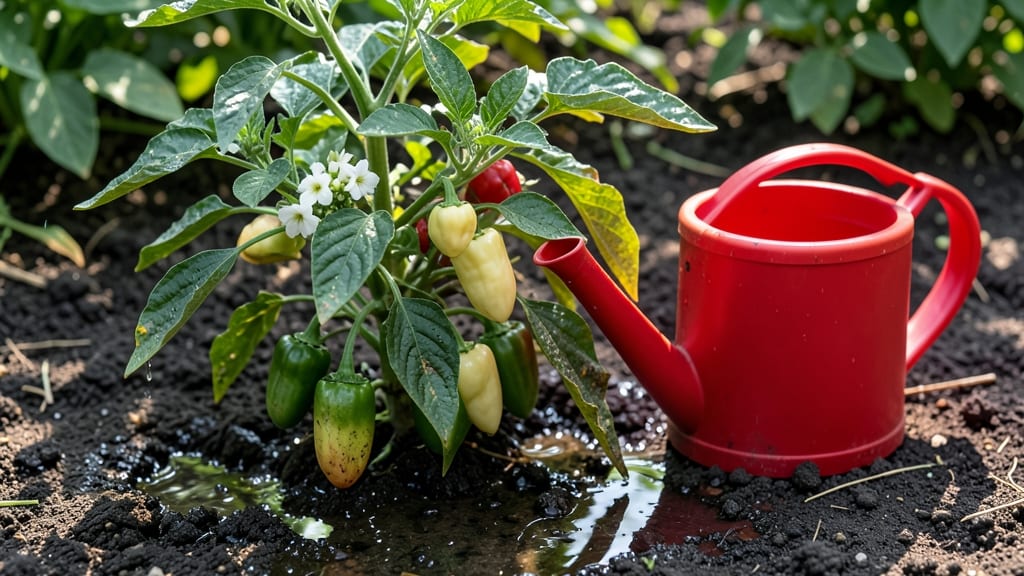
Your pepper plants might be drowning in water—even if the soil looks wet. 🌱 The signs of overwatering are sneaky but obvious once you know what to watch for: yellowing leaves, mushy stems, and roots that smell like rot.
I’ve saved my own plants from this silent killer, and I’ll show you how to spot it before it’s too late.
Most gardeners overwater because they assume peppers need constant moisture. But peppers hate soggy roots—too much water cuts off oxygen, inviting fungus and bacteria. Check the soil: if it stays damp for more than a day, you’re overdoing it.
And those "happy" droopy leaves? That’s often a sign of root stress, not thirst.
Fixing it starts with letting the soil dry out between waterings. Amend heavy soil with compost or perlite to improve drainage, and avoid watering on a schedule—stick your finger in the soil first. Within a week, you’ll see new growth and perky leaves as the roots recover.
This works for bell peppers, jalapeños, and even heirlooms—just adjust based on your climate. Once you master the balance, your plants will reward you with bold flavors and thicker walls. Let’s get those roots breathing again.
Root Causes Of Overwatering
Overwatering pepper plants is a common mistake, but understanding the science behind it helps prevent damage. Let’s break down the key reasons why this happens—so you can adjust your watering habits before it’s too late.
Pepper plants thrive in well-draining soil, but if your containers or garden beds lack proper drainage, excess water pools at the roots. Without escape routes, oxygen can’t reach the roots, leading to anaerobic conditions—a suffocating environment where harmful bacteria and fungi (like Phytophthora or Pythium) multiply.
These pathogens attack root tissues, causing rot and weakening the plant’s ability to absorb nutrients.
Actionable fix:
- Use pots with drainage holes (at least 2-3 per 6-inch container).
- Add perlite, vermiculite, or coarse sand to soil mixes (20-30% by volume) to improve aeration.
- Elevate containers slightly to prevent waterlogging during heavy rains.
Skipping a watering day and then drowning the roots in one go is a fast track to overwatering. Pepper plants prefer consistent moisture—not soggy soil followed by dry spells.
When roots sit in water for too long, they ferment, producing toxic byproducts like ethanol and acetic acid, which burn root cells. This stress triggers wilting, even when the soil feels damp.
Actionable fix:
- Stick to a schedule: Water when the top 1-2 inches of soil feel dry (use your finger, not guesswork!).
- Morning watering is best—it allows excess moisture to evaporate by evening.
- Group plants with similar water needs to streamline care.
High humidity or frequent rain can trick growers into thinking their plants don’t need water—when in reality, the soil stays saturated longer. Pepper plants in humid climates (like Florida or tropical regions) or shaded areas transpire less, slowing water absorption.
If you water on a cloudy day or after rain without checking soil moisture, roots drown in their own "swamp."
Actionable fix:
- Adjust for weather: Reduce watering by 30-50% during rainy seasons or high humidity.
- Move containers to sunnier spots if possible—sunlight increases evaporation, drying soil faster.
- Use a moisture meter to avoid overestimating thirst.
Not all soil mixes or pots are created equal. Heavy clay soils or compacted potting mixes (like pure peat moss) hold water like a sponge, choking roots. Similarly, plastic pots retain moisture longer than terracotta, which breathes through its walls. If your soil doesn’t "breathe," overwatering becomes inevitable.
Actionable fix:
- Amend soil with compost, coconut coir, or worm castings to improve structure.
- Avoid peat-heavy mixes—opt for balanced blends (e.g., 40% peat, 30% perlite, 20% compost, 10% vermiculite).
- Switch to terracotta pots if using plastic, or add a layer of gravel at the bottom for drainage.
Before watering, stick your finger 1-2 inches into the soil. If it’s damp but not soggy, hold off. If it’s dry, water deeply until it runs out the drainage holes. This simple check beats guesswork every time! 🌱✨
Fixing Overwatered Pepper Plants
Overwatering can turn your thriving pepper plants into a soggy mess, but don’t panic—there’s still hope! The key is acting fast and adjusting your care routine. Below, we’ll match common overwatering symptoms to practical fixes, plus tips to keep your peppers healthy long-term.
Cause: Soggy roots suffocate the plant, starving leaves of nutrients. Fix:
- Stop watering immediately—let the soil dry out for 2–3 days to prevent further damage.
- Check the roots 🔍: Gently remove the plant (if in a pot) and inspect for black, mushy roots. Trim any rotten sections with clean scissors.
- Repot if needed 🏺: If the soil is compacted or waterlogged, transfer the plant to fresh, well-draining potting mix (add perlite or sand for aeration).
- Water lightly 💧: Once repotted, water only when the top 1–2 inches of soil feel dry. Stick your finger in—if it’s damp, wait!
Prevention tip: 💡 Use a moisture meter or the "squeeze test" (grab a handful of soil—if it clumps, it’s too wet).
Cause: Compacted soil cuts off oxygen, causing stress. Fix:
- Loosen the soil 🏗️: Use a fork or stick to aerate the roots without damaging them. For potted plants, flip the pot upside down and gently tap the sides to break up clumps.
- Improve drainage 🚿: Add a layer of coarse sand or gravel to the pot’s bottom (or drill holes if using a container without drainage).
- Water in the morning ⏰: This gives roots time to absorb moisture before evening humidity traps dampness.
Pro tip: ✨ Elevate pots on saucers or stands to prevent water pooling.
Cause: Excess moisture invites fungal infections like powdery mildew or root rot. Fix:
- Remove infected parts ❌: Snip off yellowed or moldy leaves with sterilized scissors.
- Apply fungicide 💊: Spray with a copper-based or neem oil solution (follow package instructions). For severe cases, repot with fresh, sterile soil.
- Increase airflow 🌬️: Space plants 12–18 inches apart and use a small fan on low for 10–15 minutes daily to dry leaves faster.
Prevention tip: 🌡️ Avoid watering overhead—use drip irrigation or a watering can with a narrow spout to target the soil.
Cause: Overwatering diverts energy from growth to survival. Fix:
- Cut back on water 🚰: Pepper plants need 1–1.5 inches of water per week (less in humid climates). Check soil moisture daily in pots.
- Fertilize lightly 🌱: Once recovered, use a balanced fertilizer (10-10-10) only when the plant shows new growth—overfeeding wet soil worsens root burn.
- Prune strategically ✂️: Trim back excess foliage to reduce water demands and improve airflow.
Grower hack: 🎯 Mulch with straw or wood chips to retain just enough moisture without drowning roots.
If your peppers are severely waterlogged (e.g., black stems, foul smell):
- Remove the plant 🌿 and shake off excess soil to expose roots.
- Rinse roots 🚿 with lukewarm water to wash away sludge.
- Let dry ☀️ for 1–2 hours in shade, then repot with fresh, dry soil and perlite.
- Hold off on watering for 3–5 days to let roots recover.
Warning: 🚨 If the plant is mushy or smells rotten, it may not survive—start fresh with a new seedling.
Final Reminder: Overwatering is reversible, but consistency is key. Once your peppers bounce back, stick to a watering schedule (every 3–5 days for pots, weekly for in-ground) and always check soil moisture before reaching for the hose. Happy growing! 🌶️💦
Frequently asked questions
How do I tell if my pepper plant is overwatered vs. underwatered?
Overwatered peppers show yellowing leaves (especially older ones), mushy stems, and wilting despite wet soil. Underwatered plants have crispy brown edges and dry, pulling soil. The key difference? Overwatered soil stays damp for days, while underwatered soil feels bone-dry 1-2 inches deep.
Can I save a pepper plant with root rot from overwatering?
Yes, but act fast! Remove the plant, trim black/mushy roots, and repot in fresh, well-draining soil with perlite. Hold off watering for 3-5 days to let roots recover. If more than 50% of roots are rotten, the plant may not survive—start fresh with a cutting or seedling.
Why do my pepper leaves turn yellow when I water them?
Yellowing leaves are often a red flag for overwatering. Excess moisture blocks oxygen, causing nutrient deficiencies (like nitrogen) that turn leaves yellow. Check the soil: if it stays damp for more than 24 hours, cut back watering. For potted plants, ensure drainage holes exist and soil mixes contain 20-30% perlite.
How often should I water pepper plants to avoid overwatering?
Peppers need water when the top 1-2 inches of soil feel dry. In pots, this is usually every 3-5 days (daily in extreme heat). For in-ground plants, 1-1.5 inches per week is ideal. Always water deeply—soak the soil until it drains from the bottom, then stop. Morning watering prevents evening moisture buildup.
What’s the best soil mix to prevent overwatering?
Use a lightweight, airy mix like 40% peat moss, 30% perlite, 20% compost, and 10% vermiculite. Avoid heavy clay or pure peat. For containers, add a 1-inch gravel layer at the bottom. Terracotta pots help too—they wick away moisture faster than plastic. Always check soil moisture before watering!