
Plants
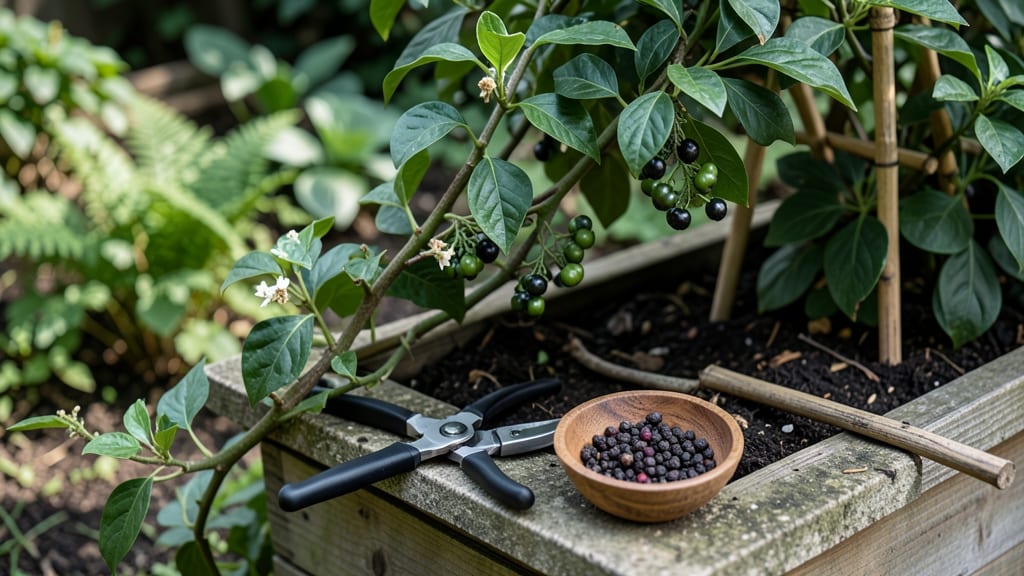
Black peppercorns look like tiny, round, and deeply wrinkled berries, about the size of a sesame seed (3–5 millimeters wide), with a glossy black or dark gray exterior when fully dried.
These little powerhouses start as smooth green berries on the pepper vine, but as they dry, their skins shrink dramatically, creating those signature wrinkles. 🌱 The drying process also concentrates their flavor while giving them that distinctive rough texture—almost like tiny raisins.
What's fascinating is how their color can vary from deep charcoal to nearly silver-gray depending on how they're cured, which affects both their appearance and storage properties.
When you hold a single peppercorn between your fingers, you'll notice its weight is surprisingly substantial for its size—this density comes from the concentrated oils inside. 💫 The glossy sheen isn't just about looks; it's actually a natural wax coating that helps preserve their potency.
This visual and tactile contrast is what makes them instantly recognizable among other whole spices.
💡 In This Article
- Identifying Mature Black Peppercorns: Size, Shape, and Texture
- Black Peppercorn Varieties: Visual Differences in Cultivation
Identifying mature black peppercorns: size, shape, and texture
The signature wrinkled texture of black peppercorns isn't random—it's a direct result of how they're dried. When green peppercorns are harvested, they contain about 70-80% moisture. During the drying process, this moisture rapidly evaporates, causing the skin to shrink and pucker dramatically, creating those deep ridges.
This isn't just about appearance; the wrinkles actually increase surface area, which helps concentrate the essential oils that give black pepper its intense flavor. 🌱
Size-wise, black peppercorns measure about 3-5 millimeters in diameter—roughly the size of a sesame seed or the period at the end of this sentence. Their round shape is nearly perfect, though you might find slight variations due to natural imperfections in the berries.
The texture is surprisingly firm when dry, almost like a tiny leather ball, which is why they maintain their shape even when stored for years. This hardness comes from the concentrated oils and resins that form as moisture leaves the fruit.
What makes them visually distinct is their glossy sheen, which comes from a natural wax coating that develops during drying. This isn't just cosmetic—it's functional, helping preserve the peppercorns' potency by slowing oxidation. The color ranges from deep charcoal to nearly silver-gray, depending on how long they're dried and cured.
Longer drying produces darker, richer-colored peppercorns, while shorter drying yields lighter shades. This color variation affects both appearance and storage life—darker peppercorns tend to keep their flavor longer.
Here's how to test for maturity: Gently press a peppercorn between your fingers. A properly mature black peppercorn should feel firm but slightly give under pressure, indicating optimal moisture loss. Immature peppercorns will feel rubbery or too soft, while over-dried ones become brittle and crumbly.
This tactile test helps distinguish authentic peppercorns from cheaper imitations that might feel waxy or overly smooth. 💫
The wrinkled surface also serves a practical purpose—it creates tiny air pockets that help regulate temperature changes during storage. These microclimates prevent condensation from forming inside storage containers, which could lead to mold growth.
This natural design is why black peppercorns have been used for centuries in both culinary and medicinal applications worldwide.
When comparing to other spices, black peppercorns stand out because their texture is uniquely rough and irregular. White peppercorns, made from the same berries but with the outer layer removed, are smooth and ivory-colored.
Black peppercorns' distinctive appearance is what makes them instantly recognizable among whole spices, even when mixed with other ingredients. This visual consistency is one reason they're often used as a quality indicator in professional kitchens.