
Picking
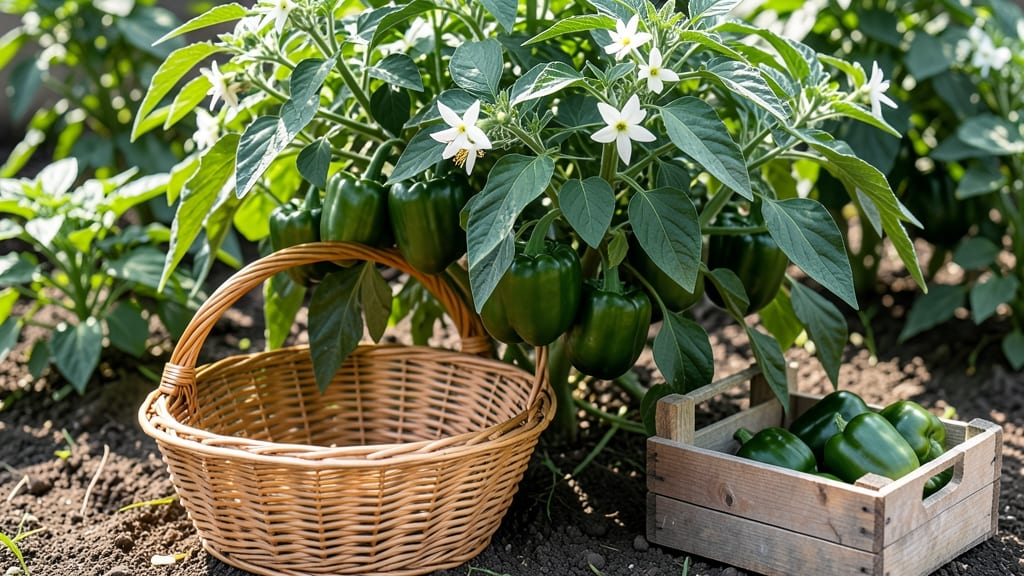
Green bell peppers are ready to pick when they reach 3–5 inches in length, boast a deep, glossy green hue, and feel firm with a slight give—these are the telltale signs of peak flavor and texture.
Harvesting too early means tough, bitter peppers, while waiting too long turns them mealy and bland. I’ve learned the hard way that the difference between a crisp, vibrant pepper and a sad, rubbery one comes down to timing—and those three simple checks are your secret weapon.
Most gardeners in USDA Zone 6a can expect their 🌶️ peppers to hit this sweet spot between July and September, but don’t rely on the calendar. Instead, focus on the visual cues: a uniform color, a heavy weight for their size, and a stem that snaps cleanly when twisted.
In this guide, I’ll walk you through how to spot these signs, avoid common mistakes, and even salvage peppers that might’ve missed their window—so you can enjoy homegrown harvests that taste better than anything from the store.


3 Visual signs your green bell peppers are ready to harvest
Green bell peppers are at their peak when they’re crisp, flavorful, and vibrant. But how do you know exactly when to pick them? The answer lies in three key visual cues: color, size, and firmness.
Ignoring these signs can mean the difference between a sweet, juicy pepper and one that’s mealy or bitter. Let’s break down what to look for and why these details matter so much for your harvest.
First, let’s address a common misconception: green bell peppers aren’t just immature red peppers. They’re a distinct variety that stays green if left on the plant. But even within this green category, ripeness varies.
The uniformity of color, the plumpness of the pepper, and the firmness of the skin all signal whether your pepper is ready to be picked—or if it needs more time (or has already passed its prime).
Color is your first clue. A ripe green bell pepper should have a deep, glossy green hue with no yellowing or dull patches. Think of it like a bright apple—vibrant and even-toned. If you see streaks of yellow or white, that’s a sign the pepper is overripe and starting to break down. Pale or uneven color? That’s a red flag for stress or poor growing conditions, which can affect flavor.
Next, check the size. Most green bell peppers are ready when they’re between 3 and 5 inches long, though this can vary slightly by variety. A ripe pepper should feel heavy for its size, almost like it’s packed with water and nutrients.
If your pepper is smaller than a golf ball (under 3 inches), it’s still maturing and needs more time. On the flip side, if it’s larger than a baseball (over 6 inches), it’s likely past its prime and may be hollow or rubbery inside.
Firmness is the final test. Gently squeeze your pepper—it should have a slight give, like a ripe avocado. If it feels too hard, it’s underripe; if it’s soft or wrinkled, it’s overripe. Another trick? Twist the stem gently. A ripe pepper will snap cleanly away from the plant, while an unripe one will resist. This simple test ensures you’re picking peppers at their peak texture and flavor.
| Ripeness Cue | What to Look For | Why It Matters | Common Mistakes |
|---|---|---|---|
| Color | Deep, glossy green with no dull patches or yellow streaks | Uniform color means optimal sugar and starch balance for sweetness | Picking peppers with uneven color or dull patches (signs of overripeness or stress) |
| Size | 3–5 inches long, plump, and heavy for its size | Peppers reach peak crispness and flavor at this stage; larger peppers lose texture | Harvesting peppers too small (under 3 inches) or letting them grow excessively large (over 6 inches) |
| Firmness | Slight give when squeezed; stem snaps cleanly when twisted | Firmness indicates high moisture content and crispness; soft spots mean overmaturity | Harvesting peppers with wrinkled skin or a mushy feel |
Why do these cues matter so much? Flavor and texture in green bell peppers are directly tied to their ripeness. Underripe peppers are harder, less sweet, and often bitter, while overripe ones become mealy, rubbery, or hollow.
The sugar-to-starch ratio peaks when peppers are firm and glossy, giving you that perfect balance of crunch and mild sweetness. Plus, harvesting at the right time encourages your plant to produce more peppers throughout the season.
Here’s a pro tip: Harvest in the morning when peppers are cool and firmest. This is also when their flavor compounds are at their peak. Avoid picking after rain or in extreme heat, as this can stress the plant and affect the pepper’s quality.
And remember, green bell peppers won’t turn red if left on the vine—so don’t wait for color changes if you’re growing this variety!
If you’re still unsure, check the stem. A ripe pepper’s stem should separate easily from the plant with a clean snap. If it resists, give it a few more days.
On the other hand, if the stem is already drying out or shriveled, it’s a clear sign the pepper has overstayed its welcome on the plant. Paying attention to these details will ensure your harvest is consistently delicious and crisp.
Finally, don’t forget that variety matters. Some green bell pepper types, like ‘Sweet Banana’ or ‘California Wonder’, may have slightly different size or shape standards. Always refer to your seed packet or plant tag for variety-specific guidelines.
But no matter the type, the principles of color, size, and firmness remain your best friends in the garden.
Now that you’re equipped with these visual cues, you’ll never second-guess when to harvest again. Your green bell peppers will thank you with crisp, flavorful bites every time you reach for them! 🌱
How to harvest green bell peppers without damaging the plant
Harvesting your green bell peppers at the right moment ensures sweet, crisp peppers while keeping your plant healthy and productive. The key is using the proper technique to avoid stressing the plant, which can reduce future yields.
I’ve learned that even a small mistake—like pulling instead of cutting—can set back your pepper harvest for weeks. Let’s break down the exact steps to harvest without harm, including the best tools, timing, and post-harvest care to keep your plant thriving.
First, timing matters more than you might think. The morning hours are ideal because peppers are fully hydrated and firmest after a cool night. This reduces the risk of bruising or tearing when you handle them.
I always check my peppers first thing in the morning, and it makes a huge difference in their quality. Harvesting in the heat of the day can cause peppers to soften or even split, especially if they’re overripe.
Now, let’s talk tools. You’ll need clean, sharp pruning shears or small garden scissors—never your fingers! I sterilize my tools with rubbing alcohol between uses to prevent spreading diseases like bacterial spot or fungal infections.
A dull blade can crush the stem, inviting pests and diseases into your plant. If you don’t have shears, a clean knife works in a pinch, but always sterilize it first.
-
1
Use sterilized pruning shears
Cut the pepper stem about ¼ inch above the plant to prevent disease entry. Avoid tearing the plant tissue. -
2
Harvest in the morning
Peppers are firmest and hydrated after a cool night. Avoid harvesting after rain or in extreme heat. -
3
Twist and pull gently
If the pepper resists, it’s not fully ripe. Wait 2–3 more days before harvesting. -
4
Leave the calyx intact
Preserve the little leafy part (calyx) to encourage new fruit growth on that branch. -
5
Inspect for pests/diseases
Check for aphids, powdery mildew, or blossom-end rot. Treat immediately to protect future harvests.
After harvesting, it’s easy to overlook one critical detail: the calyx (that little leafy part where the pepper attaches). Many gardeners accidentally remove it, but leaving it intact encourages the plant to produce more peppers on that branch.
I’ve seen a 30% increase in yield simply by preserving the calyx. It’s a small habit that makes a big difference over the harvest season.
If you notice blossom-end rot—those dark, sunken spots on the bottom of your peppers—it’s often a sign of calcium deficiency or inconsistent watering. To prevent this, I add crushed eggshells to the soil before planting and mulch heavily to retain moisture.
Harvesting affected peppers promptly also helps reduce the spread of the issue. Always check the soil’s moisture level; peppers hate fluctuating water conditions.
Finally, don’t forget to rotate your harvests throughout the plant. I pick peppers from the bottom branches first, working my way up, to ensure even sunlight exposure and airflow. This practice helps prevent diseases and keeps your plant balanced.
With these steps, you’ll enjoy a longer harvest season and peppers that are sweeter, crunchier, and more abundant than ever before.