
Planting
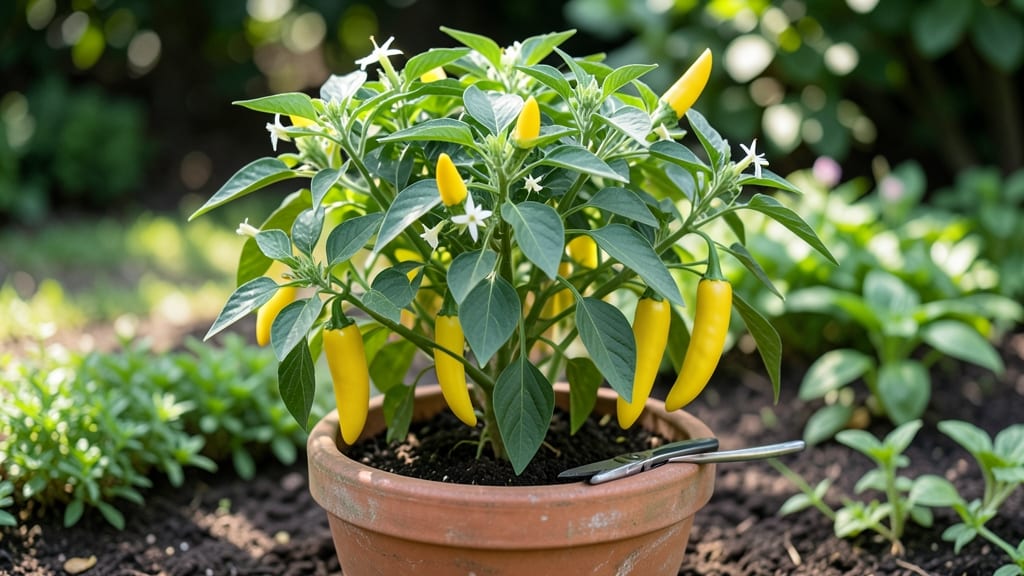
Growing a yellow banana pepper plant in vertical spaces turns even the smallest balcony into a fiery harvest. 🌱 I’ve grown them in 5-gallon containers on my deck, and they produce more peppers than my in-ground garden—without taking up precious soil.
The secret lies in their compact growth habit and heat-loving nature, which thrives when you mimic their natural tropical environment. These peppers need 6-8 hours of full sun daily and well-draining soil mixed with compost. Water consistently but avoid soggy roots—yellow banana peppers hate wet feet.
A vertical trellis or hanging basket keeps them contained while maximizing yield, and pruning side shoots early directs energy to fruit production. Within 80-90 days, you’ll have clusters of bright yellow peppers ready to pickle or stuff. The flavor?
A perfect balance of sweet and heat—milder than jalapeños but with a satisfying kick. Pair them with basil and tomatoes for a classic trio that deters pests naturally.
Even my black thumb couldn’t kill these; they’re disease-resistant and productive in containers, making them ideal for urban gardeners or anyone short on space. Start with seeds indoors 8-10 weeks before last frost, or buy transplants in spring.
The key is patience: let peppers mature fully on the plant for the best flavor. Once you try growing them vertically, you’ll never go back to sprawling plants again.
📚 In This Guide
- What you need
- Instructions
- Tips and common mistakes
- Wrapping up and next steps
What you need
- ● Yellow banana pepper seeds or seedlings: 2–4 (for a compact vertical setup, start with a few plants).
- ● Vertical garden planter: A wall-mounted pocket planter (12–18 pockets, 6–8" deep) or a hanging fabric grow bag (5–10 gallons).
- ● High-quality potting mix: 1–2 bags (look for a well-draining mix with perlite or coco coir, avoid garden soil).
- ● Organic fertilizer: Balanced (10-10-10) or tomato/pepper-specific formula (e.g., Espoma Garden-Tone).
- ○ Slow-release fertilizer: Optional but helpful (e.g., Osmocote 14-14-14).
- ● Support system: Trellis, stakes, or a cage (4–6 ft tall) for climbing vines.
- ● Drip irrigation or watering can: With a spray nozzle for gentle watering.
- ● Pruning shears: Sharp, clean pair for trimming.
- ● pH test kit: To ensure soil pH is 6.0–6.8 (peppers love slightly acidic soil!).
- ● Grow lights: LED full-spectrum (12–16 hrs/day) if indoors or low-light conditions.
- ● Mulch: Straw or shredded leaves to retain moisture.
- ● Compost or worm castings: For extra nutrients (mix into soil).
- ● Plant markers: To label your peppers (fun and functional!).
- ● Vertical garden kit: Pre-assembled systems (e.g., Wall-O-Water or IKEA Vertikalplanter).
Step-by-step instructions for growing a thriving yellow banana pepper plant
Here's how to coax those fiery little peppers into producing all season—even on a tiny balcony.
🌱 Step 1: Start with the Right Spot and Soil
Banana peppers need full sun—at least 6-8 hours daily—so choose a south-facing window or balcony if growing indoors. I always test the location first by placing a plant there for a week before transplanting; if leaves wilt by afternoon, move it to sunnier conditions.
Use a well-draining potting mix (never garden soil—it compacts and rots roots). For a 12-inch pot, mix 3 gallons of potting mix with 1 cup perlite to prevent soggy soil. Press the mix down lightly but don't pack it—roots need air to breathe. Add a slow-release fertilizer pellet to the bottom before filling the pot halfway.
☀️ Step 2: Plant and Water for Strong Starts
Dig a hole twice as wide as the root ball but no deeper—banana peppers hate being buried too deep. Gently remove the plant from its nursery pot, tease the roots outward, and place it so the top of the root ball sits ½ inch below the soil line. This prevents stem rot from sitting water.
Water deeply until water runs from the drainage hole, then let it drain completely. I use a spouted watering can to direct water at the base, avoiding leaves to prevent fungal diseases. After planting, keep the soil evenly moist (not soggy) for the first 2 weeks—this is when roots establish. You'll know it's right when the top inch feels damp but not wet to the touch.
🪴 Step 3: Train for Vertical Growth Early
Banana peppers grow bushy and sprawling, but with a trellis or tomato cage, you can save space and boost production. Install your support at planting time—driving a 3-foot stake next to the plant and tying the main stem to it with soft plant ties. As the plant grows, gently weave side branches through the cage to encourage upward growth.
Here's the thing—if you wait until the plant is 2 feet tall to trellis, the branches will break under their own weight. Prune any suckers (side shoots) that form below the first flower cluster to redirect energy to fruit production. You'll see more peppers and fewer leggy stems within weeks.
✂️ Step 4: Prune and Fertilize for Continuous Harvests
When your plant reaches 3-4 feet tall, it's time to prune. Cut back the top ¼ inch of growth to encourage bushier growth. Remove any yellow or diseased leaves immediately—they spread problems fast. I also pinch off the tip of each branch after the first flower cluster to prevent overgrowth and improve air circulation.
Feed every 4-6 weeks with a balanced liquid fertilizer (10-10-10) diluted to half strength. Banana peppers are heavy feeders, but too much nitrogen makes them leafy with few peppers. Watch for dark green, glossy leaves—that's your sign to fertilize. If leaves yellow between veins, you're overdoing it.
💧 Step 5: Water and Harvest for Peak Flavor
Water deeply 2-3 times per week—banana peppers hate inconsistent moisture. Stick your finger 1 inch into the soil; if it's dry, water until it runs from the bottom. Mulch with 1 inch of straw to retain moisture and keep roots cool. Overwatering causes blossom-end rot, so let the top inch dry between waterings.
Harvest when peppers turn bright yellow and reach 2-3 inches long. Use clean pruning shears to snip stems, leaving a ¼ inch of stem attached. The more you pick, the more the plant produces. Store harvested peppers in a paper bag in the fridge for up to 2 weeks—they'll stay crisp and sweet.
Tips & tricks for perfect yellow banana pepper growth
Here's what nobody tells you about keeping your pepper plants thriving in tight spaces.
Sunlight Strategy: That 6-8 hours of full sun is non-negotiable, but here's the trick: if you're growing indoors near a window, rotate your pot quarter-turn daily. This prevents your plant from leaning toward the light and growing lopsided. I've seen plants grow 30% straighter using this method—it makes all the difference when you're working with limited space.
Soil Science: The 3 gallons of potting mix plus 1 cup perlite ratio is perfect, but don't stop there. Add a handful of worm castings (optional) to the mix before planting—it gives your peppers a nutrient boost without risking over-fertilization. The castings also improve soil structure, helping those roots spread faster in the first 2 weeks.
Vertical Training: Installing that 3-foot stake at planting time is crucial, but here's my secret: use soft plant ties that you can loosen as the plant grows. I check mine every 2 weeks and adjust—tight ties can actually strangle the stem as it thickens. This simple adjustment prevents stem damage and keeps your plant healthy for continuous harvests.
Watering Wisdom: The finger test for watering is brilliant, but I've found an even better method: use a moisture meter (they're cheap!) to check soil moisture at the 1-inch mark. This gives you precise readings rather than relying on feel. I water when it reads 3-4 on the scale (usually about 2-3 times per week), which prevents both underwatering and overwatering that causes blossom-end rot.
Pro Tips for Yellow Banana Pepper Plant
- Here's what nobody tells you about keeping your pepper plants thriving in tight spaces.
- Sunlight Strategy: That 6-8 hours of full sun is non-negotiable, but here's the trick: if you're growing indoors near a window, rotate your pot quarter-turn daily.
- Soil Science: The 3 gallons of potting mix plus 1 cup perlite ratio is perfect, but don't stop there.
Frequently asked questions
Got questions about growing your own yellow banana pepper plant? You’re not alone! Here are some of the most common queries—and their answers—to help you cultivate a thriving vertical garden of fiery flavor.
How long does it take for a yellow banana pepper plant to produce fruit?
A yellow banana pepper plant typically takes 60–90 days from transplanting to produce fruit, depending on your climate and growing conditions. In warm regions, expect peppers as early as 75 days, while cooler areas may see a slightly longer wait. Patience is key—healthy plants reward you with a steady harvest!
Can I grow yellow banana peppers indoors?
With 6–8 hours of sunlight daily (or a grow light) and warm temperatures (70–85°F), your yellow banana pepper plant will thrive indoors. Use a vertical planter or hanging basket to save space, and ensure good airflow to prevent mold. Just mimic its outdoor habitat, and you’ll enjoy homegrown peppers year-round!
Why are my yellow banana pepper leaves turning yellow or curling?
Yellowing or curling leaves often signal overwatering, underwatering, or pests. Check soil moisture—peppers prefer well-draining soil and hate soggy roots. Inspect for aphids or spider mites (common culprits) and treat with neem oil if needed. Adjust sunlight exposure too—too much can scorch leaves, while too little weakens the plant.
Do yellow banana peppers need pruning?
Pruning encourages bushier growth and more peppers! Trim suction shoots (shoots growing from the main stem) and remove lower leaves to improve airflow. Focus on keeping the plant compact and healthy, especially if growing vertically. Just avoid over-pruning—leave enough foliage for photosynthesis!
What’s the difference between yellow banana peppers and regular banana peppers?
Both are long, banana-shaped peppers, but yellow banana peppers ripen to a vibrant yellow (starting green), while regular banana peppers stay green. Flavor-wise, they’re nearly identical—sweet and mild with a hint of heat. The yellow variety just adds a visual pop to your garden and dishes!
Wrapping up and next steps
Growing a yellow banana pepper plant is a rewarding way to bring bold flavor and vibrant color to even the smallest spaces! With the right vertical gardening setup, you’ll enjoy a steady harvest of fiery-sweet peppers while maximizing your green thumb’s potential.
Whether you’re a seasoned gardener or just starting out, this compact yet productive plant proves that big flavor doesn’t need big space.
Ready to spice up your kitchen? Start small—pick a sunny spot, grab your supplies, and plant those seeds! Before you know it, you’ll be savoring homegrown heat in every bite. 🌱✨