
Pests and Diseases
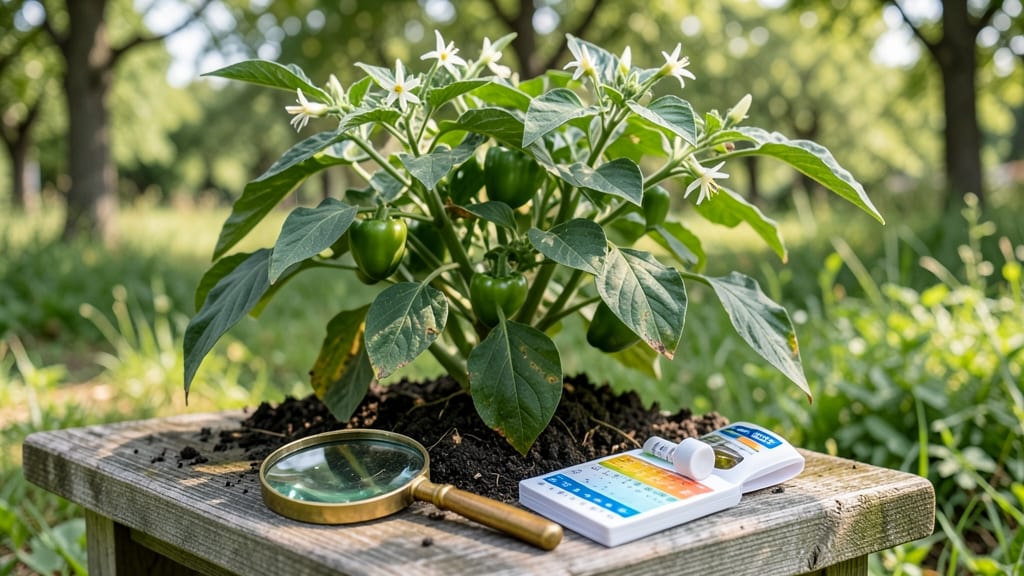
Bell pepper leaves curling down? That crispy-edged frustration happens faster than you'd think—especially when spider mites or viral infections sneak in. 🌱 I’ve seen healthy plants turn into sad, curled messes in just days, but the good news is these fixes work fast when you catch them early.
The culprits are usually tiny pests hiding on leaf undersides, sudden heat spikes, or even overwatering that stresses roots. You’ll need a magnifying glass for the pests, a spray bottle for moisture checks, and either neem oil or insecticidal soap for organic treatment.
Within 3-5 days of targeted care, leaves should start unfolding and regaining their crisp, vibrant green. The key is acting before the problem spreads to peppers—because once it hits the fruit, you’re dealing with a whole new level of disappointment.
This works for greenhouse, patio, or in-ground peppers—just adjust watering based on your climate. Let’s get those plants back in shape before the next harvest!
Root Causes Behind Curling Leaves
When your bell pepper plants start showing downward-curling leaves, it’s often a cry for help from the plant itself. This isn’t just a random quirk—it’s a response to stress, whether from the environment, pests, or unseen threats.
Understanding the why behind the curl is the first step to saving your harvest. Below, we break down the most common culprits, backed by science, so you can diagnose and act fast.
Bell peppers hate soggy feet. When soil stays too wet—whether from overwatering, heavy clay, or blocked drainage—roots suffocate. Without oxygen, they can’t absorb nutrients or water efficiently, leading to leaf curling as a stress signal.
- Why it happens: Waterlogged soil triggers anaerobic conditions, where roots struggle to respire. The plant prioritizes survival over growth, causing leaves to curl downward to reduce water loss.
- Actionable clue: Check the soil 1–2 inches down—if it’s damp, hold off on watering. Yellowing leaves paired with curling? That’s a red flag.
- Pro tip: Amend heavy soil with perlite or compost to improve aeration. Raised beds or containers with drainage holes can also help.
On the flip side, drought stress forces bell peppers into survival mode. When roots can’t pull up enough moisture, leaves curl downward to minimize surface area and slow transpiration (water loss). High temperatures exacerbate this, as heat increases evaporation rates.
- Why it happens: The plant’s abscisic acid (ABA) hormone spikes under drought, causing stomata (leaf pores) to close. This leads to wilting and curling as the plant conserves water.
- Actionable clue: Soil feels dry 1–2 inches deep, and leaves may also feel crispy or papery to the touch.
- Pro tip: Water deeply at the base in the early morning or late evening to reduce evaporation. Mulch with straw or grass clippings to retain moisture.
Tiny mouthparts can wreak big damage. Sap-sucking pests like aphids, spider mites, or thrips pierce leaves to feed, disrupting the plant’s vascular system. As a result, leaves curl downward to protect damaged tissue and trap pests.
| Pest | Signs Beyond Curling | What’s Happening Scientifically |
|---|---|---|
| Aphids | Sticky residue (honeydew), distorted new growth | They inject salivary toxins that alter plant hormones, causing curling and stunted growth. |
| Spider Mites | Fine webbing, yellow speckling | Their feeding disrupts chlorophyll production, leading to curled, discolored leaves. |
| Thrips | Silver streaks, distorted flower buds | They damage cells with their rasping mouthparts, triggering a defense response that curls leaves. |
Actionable clue: Inspect the undersides of leaves with a magnifying glass. Shake plants over a white sheet—pests will drop.
Pro tip: Blast pests off with a strong spray of water (early morning works best). For severe cases, use neem oil or insecticidal soap (follow label rates).
Bell peppers are heavy feeders, and when they’re starved of key nutrients, leaves curl as a symptom of metabolic distress. The most critical deficiencies linked to curling are:
- Nitrogen (N): Leaves curl and yellow (older leaves first). Nitrogen fuels leaf growth, so a shortage stunts expansion.
- Potassium (K): Curling often starts at the leaf edges and progresses inward. Potassium regulates water and nutrient transport—without it, cells can’t maintain turgor pressure.
- Calcium (Ca): New leaves curl upward or downward with blossom-end rot on fruits. Calcium is immobile in plants, so new growth suffers first.
Actionable clue: Perform a soil test to confirm deficiencies. Quick fixes:
- Nitrogen: Apply balanced fertilizer (10-10-10) or compost tea.
- Potassium: Use banana peels (composted) or wood ash.
- Calcium: Sprinkle crushed eggshells or lime around the base.
Pathogens don’t just attack leaves—they hijack the plant’s biology. Viruses like Tobacco Mosaic Virus (TMV) or fungi such as Alternaria can cause curling by altering cell structure or clogging vascular pathways.
- Why it happens:
- Viruses: They disrupt protein synthesis, leading to malformed leaves and stunted growth.
- Fungi: Pathogens like Alternaria release toxins that cause cell death, triggering curling as a defense.
- Actionable clue:
- Look for mosaic patterns, spots, or lesions on leaves.
- Fungal infections often appear as dark, circular spots with yellow halos.
- Pro tip: Remove infected plants immediately to prevent spread. For fungi, apply copper fungicide; for viruses, sterilize tools and avoid contaminated soil.
Quick Fixes for Curling Pepper Leaves
Now that you know what’s causing those pesky curled leaves on your bell peppers, let’s roll up our sleeves and get them back to their crisp, healthy selves! The good news? Most solutions are simple, cost-effective, and can be done in just a few steps.
Below, we’ve mapped out practical fixes for each common cause—plus pro tips to keep your peppers thriving long-term.
If your peppers are wilting or drying out, their leaves may curl downward as a distress signal. Here’s how to fix it:
🔥 Step 1: Check the Soil Stick your finger 1–2 inches deep into the soil. If it feels dry, it’s time to water. If it’s soggy, hold off and let it dry slightly.
🍳 Step 2: Water Deeply (But Not Too Much)
- For drought stress: Water slowly and deeply at the base of the plant (avoid wetting the leaves to prevent disease). Use a drip irrigation system or a soaker hose for even moisture.
- For overwatering: Let the top 1–2 inches of soil dry out before watering again. If the roots are waterlogged, consider replanting in well-draining soil.
👨🍳 Step 3: Improve Drainage Amend heavy or compacted soil with compost or perlite to help water drain better. A raised bed can also prevent root rot.
💡 Pro Tip: 🌱 Mulch around the base (2–3 inches of straw or wood chips) to retain moisture without overwatering. This keeps roots cool and hydrated!
Bell peppers love warmth, but extreme heat or scorching sun can make leaves curl and crisp. Here’s how to cool them down:
🔥 Step 1: Provide Shade (Temporarily) If temps hit above 90°F (32°C), use shade cloth (30–50%) or a lightweight row cover to block direct sun for a few hours a day.
🍳 Step 2: Water in the Morning Water early in the day so leaves dry before evening. Wet leaves + heat = sunburn risk.
👨🍳 Step 3: Adjust Plant Placement
- Move potted peppers to a slightly shadier spot (but still with 6+ hours of sunlight).
- If in the ground, plant near taller crops (like corn or sunflowers) to provide natural shade.
💡 Pro Tip: 🌡️ Harvest peppers early in the day when they’re coolest to prevent heat stress. Store them in a cool, dark place (like a root cellar) if you can’t pick them daily.
Pests like aphids, spider mites, or flea beetles suck the life out of leaves, causing them to curl. Here’s how to evict them:
🔥 Step 1: Inspect & Identify the Culprit
- Aphids: Tiny green/black bugs clustered on undersides of leaves.
- Spider mites: Tiny webs + speckled leaves.
- Flea beetles: Tiny holes in leaves + jumping bugs.
🍳 Step 2: Blast Them Off
- Spray with water (forceful stream from a hose) to knock off aphids and mites.
- Neem oil spray (1 tsp neem oil + 1 tsp mild soap + 1 quart water) – reapply every 5–7 days.
- Diatomaceous earth (DE) – Sprinkle lightly around the base (avoid leaves—it’s abrasive).
👨🍳 Step 3: Introduce Predators (If Possible)
- Ladybugs eat aphids.
- Praying mantises hunt flea beetles.
- Birds love mites—set up a bird feeder nearby!
💡 Pro Tip: 🔪 Remove heavily infested leaves (but not if pests have spread). Drop them in soapy water to kill eggs.
If curling is paired with yellow spots, mold, or mushy stems, you’re dealing with a pathogen. Act fast to save your crop!
🔥 Step 1: Prune Infected Areas
- Cut off affected leaves/stems with sterilized scissors (wipe with rubbing alcohol).
- Do not compost infected plant material—trash it instead.
🍳 Step 2: Improve Airflow
- Space plants 18–24 inches apart (or thin seedlings).
- Remove nearby weeds (they harbor pests/disease).
- Avoid overhead watering—water at the base only.
👨🍳 Step 3: Apply Fungicide/Bactericide
- Copper fungicide (for bacterial spots).
- Baking soda spray (1 tsp baking soda + 1 quart water + few drops of soap) – reapply weekly.
- Commercial fungicide (like Serenade or Neem Oil) for severe cases.
💡 Pro Tip: 🌡️ Rotate crops next season—don’t plant peppers (or nightshades) in the same spot for 3+ years to prevent soil-borne diseases.
Curling can also mean your peppers are hungry! Yellowing leaves + curling often signal a lack of nitrogen, calcium, or magnesium.
🔥 Step 1: Test Your Soil Use a DIY soil test kit (or send a sample to your local extension office) to check pH and nutrient levels.
🍳 Step 2: Fix Common Deficiencies
| Problem | Symptoms | Solution |
|---|---|---|
| Nitrogen (N) Low | Yellow lower leaves | Add compost, fish emulsion, or blood meal. |
| Calcium (Ca) Low | Curling + brown leaf edges | Sprinkle crushed eggshells or use calcium nitrate. |
| Magnesium (Mg) Low | Yellow between leaf veins | Apply Epsom salt (1 tbsp per gallon of water, spray foliage). |
| Potassium (K) Low | Weak stems, curled edges | Use banana peel tea or wood ash (sparingly). |
👨🍳 Step 3: Fertilize Smartly
- Avoid over-fertilizing—stick to a balanced 10-10-10 or 5-5-5 fertilizer.
- Side-dress with compost mid-season for a slow-release boost.
💡 Pro Tip: 🥗 Use compost tea as a gentle, nutrient-rich foliar spray. Steep well-aged compost in water for 24 hours, strain, and spray on leaves.
Once your peppers are back to normal, keep them healthy with these easy habits:
✅ Water consistently – Aim for 1–1.5 inches per week (more in extreme heat). ✅ Mulch heavily – Retains moisture and regulates soil temp. ✅ Monitor pests daily – Catch infestations early before they spread. ✅ Rotate crops – Prevents soil-borne diseases from building up. ✅ Harvest regularly – Overripe peppers stress the plant; pick when firm and colorful. ✅ Avoid late-season fertilizer – Too much nitrogen late in the season = fewer peppers, more leaves.
Final Thought: Most curling issues are quick to fix—just diagnose the root cause and take action! With a little TLC, your bell peppers will be crisp, green, and thriving in no time. 🌿🔥
Frequently asked questions
Why do my bell pepper leaves curl downward but stay green?
Green curling often signals environmental stress like drought or heat. When roots can't pull up enough water, leaves curl to reduce surface area and conserve moisture. Check soil moisture 1-2 inches deep—if dry, water deeply at the base. Mulching helps retain moisture and prevent this stress.
How do I tell if curling is from pests vs. disease?
Pests (like spider mites or aphids) cause sticky residue or webbing on leaf undersides, while diseases show spots, lesions, or mosaic patterns. Inspect with a magnifying glass—pests leave tiny feeding marks, while diseases create irregular discoloration. Remove infected leaves immediately to prevent spread.
Can I save my peppers if the curling has spread to the stems?
If curling affects stems, the plant may be too far gone to recover. However, if only a few stems are affected, prune them below the curl with sterilized scissors. Focus on fixing the root cause (water, pests, or nutrients) for new growth. For severe cases, consider replacing the plant to prevent disease spread.
What’s the fastest way to fix curling from spider mites?
Blast mites off with a strong spray of water (early morning works best), then apply neem oil spray (1 tsp neem + 1 tsp soap + 1 quart water). Reapply every 5-7 days until leaves uncurl. Introduce predatory mites or ladybugs for long-term control—these natural enemies eat spider mites without harming your peppers.
Will curled leaves affect my pepper harvest?
Yes, if left untreated, curling can reduce fruit quality and quantity. The plant diverts energy to survival, delaying or stunting pepper production. Act within 3-5 days of noticing curls to restore health. Harvest existing peppers promptly to reduce stress on the plant while it recovers.