
Companion Plants
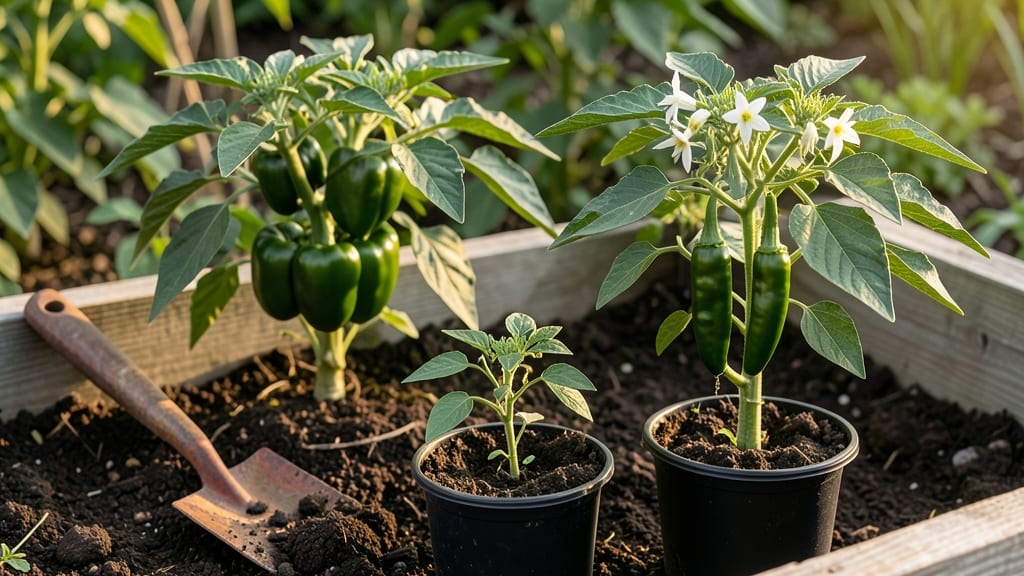
Bell peppers and jalapeños can absolutely be planted together—this pairing saves space and boosts your garden’s productivity. 🌱 I’ve grown them side by side for years, and the results are always better than when they’re separated.
They share the same sunlight needs, watering schedule, and even pest deterrents, making them the ultimate companion pair for small gardens or containers.
The key is spacing them 12–18 inches apart in well-draining soil with full sun. Both thrive in the same 60–85°F range, so they’ll grow harmoniously without competing for resources. Just watch for cross-pollination—if you’re saving seeds, keep varieties separate, but for flavor, it’s rarely an issue.
You’ll end up with a dense, high-yielding patch that’s easier to manage than two separate gardens. The peppers’ broad leaves shade the soil, reducing weeds, while their shared care routine cuts down on your workload. By mid-summer, you’ll be harvesting sweet bells and fiery jalapeños from the same plot.
This combo works for raised beds, containers, or in-ground gardens—just ensure good airflow to prevent disease. If you’re short on space, this is the smartest way to grow both without sacrificing yield or flavor.
📚 In This Guide
- What you need
- Instructions
- Tips and common mistakes
- Wrapping up and next steps
What you need
- ● Seeds or Seedlings: Bell pepper seeds (3–5 plants, depending on variety)
- ● Jalapeño seeds (2–3 plants, as they’re more prolific)
- ● Growing Containers or Garden Bed: Large pots (at least 5-gallon capacity per plant or container) or
- ● Garden bed with well-draining soil (minimum 12–18 inches deep)
- ● High-Quality Potting Mix: 1 bag of well-draining, organic potting soil (or mix with compost for better nutrients)
- ● Fertilizer: Balanced 10-10-10 fertilizer or organic options like compost tea or worm castings
- ○ Companion Planting Add-Ons (Optional but Helpful): Basil or marigolds (to deter pests naturally)
- ● Mulch (straw or shredded leaves to retain moisture)
- ● Sunlight: Full sun exposure (6–8 hours daily)
- ● Temperature: Warm soil (70°F+ for germination)
- ● Mature plants thrive in 75–85°F ranges
- ● Water: Consistent moisture (avoid waterlogging)
How to successfully plant bell peppers and jalapeños together
This space-saving combo thrives when you follow these proven spacing and care guidelines.
🌱 Step 1: Choose Compatible Varieties and Planting Spots
Select bell pepper varieties (like 'California Wonder' or 'Jupiter') alongside jalapeño types ('Early Jalapeño' or 'NuMex Victory') that mature at similar rates. Both plants need full sun (6-8 hours daily) and well-draining soil with a pH of 6.0-7.0. I always test my soil first—peppers hate acidic conditions, and a cheap pH kit from the garden center solves this.
Plant them in raised beds or large containers (at least 18 inches deep) if your soil is heavy clay. The extra depth prevents root competition while allowing both plants to spread. Space them 18-24 inches apart—this gives each plant room to grow without shading its neighbor, which jalapeños especially hate.
🌿 Step 2: Plant at the Right Time and Depth
Wait until after the last frost date when soil temperatures reach at least 65°F. Cold soil slows germination and invites rot. I plant mine in early May in my zone 8 garden, but adjust based on your climate. Dig holes twice as wide as the root ball but only as deep as the container they came in—burying too deep suffocates stems.
Place 1 bell pepper plant and 1 jalapeño plant in each hole, spacing them 12 inches apart within the same bed. This pairing works because bell peppers grow bushier while jalapeños climb, so they naturally complement each other. Water deeply after planting to settle the soil around roots—you’ll see the first true leaves emerge in 7-10 days if conditions are right.
☀️ Step 3: Maintain Consistent Water and Fertility
Keep soil evenly moist but never soggy—peppers hate wet feet. Water at the base of plants in the morning to prevent fungal diseases. I use a drip irrigation system set to deliver 1-1.5 inches of water weekly, adjusting for rain. Mulch with 2-3 inches of straw to retain moisture and suppress weeds—this is non-negotiable in hot climates where soil dries out fast.
Fertilize every 2-3 weeks with a balanced organic fertilizer (10-10-10) once flowers appear. Peppers are heavy feeders, and jalapeños need extra potassium for heat production. Stop fertilizing 4-6 weeks before harvest—too much nitrogen late in the season makes peppers bitter.
✂️ Step 4: Prune and Support for Maximum Yield
Remove suckers (the small shoots that form in the leaf axils) to direct energy to fruit production. Jalapeños benefit from light pruning to encourage bushier growth, while bell peppers can stay unpruned unless they get leggy. I tie tall jalapeño stems to stakes or cages early—waiting until they’re heavy with peppers leads to broken branches.
Watch for pests like aphids or hornworms, which love both peppers. I handpick hornworms (they’re huge and obvious) and spray aphids with neem oil at dusk. Harvest bell peppers when firm and glossy (about 70 days after transplanting) and jalapeños when they turn green and reach 3-4 inches—this ensures maximum heat without bitterness.
⏰ Step 5: Time Harvests and Extend the Season
Bell peppers mature first, so I pick them when fully colored to avoid crowding. Jalapeños take 60-75 days and can stay on the plant longer. Leave a few to ripen fully on the vine—they’ll turn red and develop more complex heat profiles. If frost threatens before jalapeños finish, harvest green peppers and ripen them indoors in a paper bag with a banana (the ethylene gas speeds up ripening).
Save seeds from your best jalapeños by fermenting them in water with a bit of salt for 3-5 days, then drying them on paper towels. This preserves heat levels for next year’s garden. I always plant a few extra jalapeños—they’re prolific, and their heat keeps pests away from the bell peppers.
Tips & tricks for perfectly paired bell peppers and jalapeños
Between us, these two plants are like the dynamic duo of the garden—bell peppers bring the sweetness while jalapeños add the kick. Here’s how to make sure they thrive together without stealing each other’s spotlight.
Sunlight Strategy: While both need full sun, bell peppers can handle up to 8 hours daily, but jalapeños start stressing after 7. Position them so the bell peppers get the morning sun (when it’s strongest) and the jalapeños get afternoon shade if your climate gets scorching. I’ve seen jalapeños wilt dramatically when they’re baked all day—don’t let that happen to yours!
Soil Science: That pH of 6.0-7.0 isn’t just a suggestion—peppers are finicky about their soil chemistry. If your soil tests lower than 6.0, mix in crushed eggshells or wood ash (both raise pH naturally) before planting. For the 18-24 inch spacing, think of it as giving each plant its own personal “territory” where roots can spread without competing. I’ve tried squeezing them closer, and the jalapeños always seem to resent it.
Watering Wisdom: The 1-1.5 inches weekly guideline works, but timing matters more than quantity. Water in the morning so the soil has all day to dry out—peppers hate soggy roots. I use a moisture meter to check before watering, especially in containers where soil dries faster. And that mulch? Don’t skimp on the 2-3 inches of straw. It’s like putting on sunscreen for your plants’ roots.
Pest Prevention: Here’s what nobody tells you—jalapeños act as natural pest deterrents for bell peppers. The capsaicin in their leaves repels many common pests, but you’ll still need to watch for hornworms. I’ve caught these green monsters (they’re the size of your hand!) before they could devour entire plants. Check leaves regularly, especially after rain when they’re most active.
Pro Tips for Can Bell Peppers And Jalapenos Be Planted Together
- Between us, these two plants are like the dynamic duo of the garden—bell peppers bring the sweetness while jalapeños add the kick.
- Sunlight Strategy: While both need full sun, bell peppers can handle up to 8 hours daily, but jalapeños start stressing after 7.
- Soil Science: That pH of 6.0-7.0 isn’t just a suggestion—peppers are finicky about their soil chemistry.
Frequently asked questions
Got questions about growing bell peppers and jalapeños side by side? You’re not alone! Here are some of the most common concerns—and answers—to help you maximize your garden space like a pro.
Can bell peppers and jalapeños cross-pollinate?
Yes, they can! Both are Capsicum annuum varieties, so cross-pollination is possible. While it won’t ruin your harvest, it may result in unexpected flavors or heat levels. To avoid surprises, plant them at least 500 feet apart or use physical barriers like row covers if space is tight.
What’s the best time to plant them together?
Start seeds indoors 8–10 weeks before your last frost, then transplant both varieties after all danger of frost has passed and soil temps reach 60°F+. Since they thrive in similar conditions, timing is easy—just ensure they get full sun (6–8 hours/day) and well-draining soil.
Will they attract the same pests or diseases?
Both are vulnerable to aphids, spider mites, and bacterial spot. The good news? They share the same natural predators (like ladybugs) and companion plants (e.g., basil, marigolds). Monitor leaves regularly and rotate crops yearly to prevent buildup.
How much space should I leave between them?
Give each plant 18–24 inches of space in all directions. Jalapeños are slightly bushier, while bells may sprawl wider. If using containers, opt for 5-gallon pots per plant. Pro tip: Prune jalapeños lightly to encourage upward growth and save space!
What if one grows faster or slower than the other?
No stress! Jalapeños often mature quicker (60–70 days) than bells (70–90 days). Use the extra time to mulch heavily to retain moisture for slower growers. If one outpaces the other, consider trellising the taller plant (like jalapeños) to free up ground space for companions.
Can I harvest them at the same time?
Not exactly! Jalapeños are ready when they’re firm, glossy, and 2–3 inches long, while bells need 60–90 days to reach full size and vibrant color. Harvest jalapeños first to prevent overcrowding and redirect energy to the bell peppers. Bonus: Use early jalapeños in salsas to free up space for other crops!
Wrapping up and next steps
Planting bell peppers and jalapeños together isn’t just possible—it’s a smart, space-saving move that can boost your garden’s productivity! 🌱 Both thrive in similar conditions, and their companion benefits (like pest control and shared nutrients) make them a dynamic duo.
Just remember to give them enough space, monitor for pests, and keep an eye on their growth habits.
Ready to grow your own fiery and sweet harvest? Grab your gloves, head to the garden, and start planting—your future meals (and bragging rights) will thank you! 🌶️🔥 Next step: sketch a simple garden layout or grab some seeds and get started today!