
Vegetables
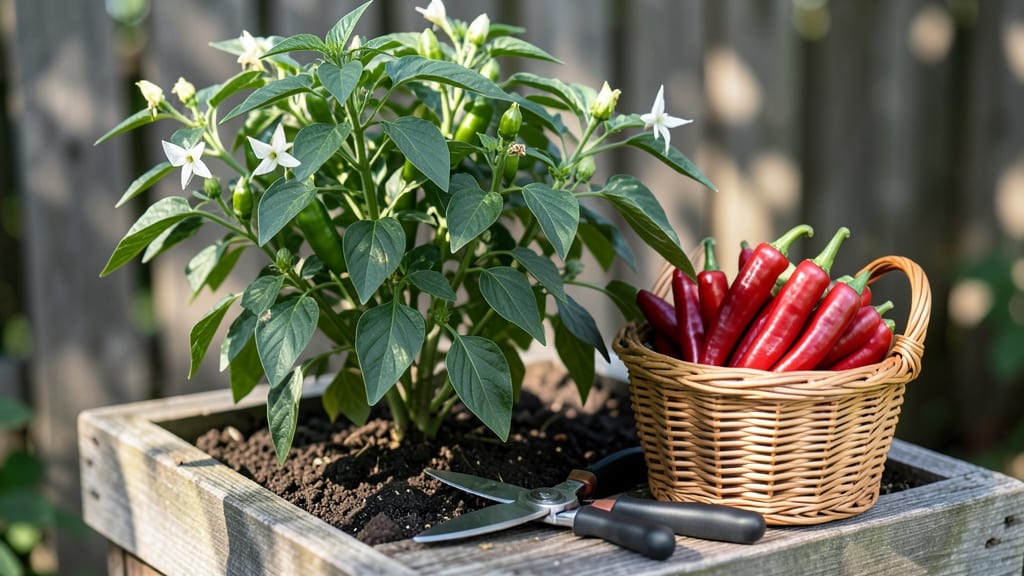
The Carmen pepper's Scoville rating of 60,000–100,000 SHU positions it as a medium-hot chili with a fruity, slightly sweet profile and gradual heat buildup—similar to serrano or early jalapeño but with more complexity. This balanced heat makes it perfect for fresh eating or cooking without overwhelming bitterness.
The Carmen pepper's moderate heat level comes from its capsaicin distribution, which develops more evenly than in hotter peppers. 🔥 This means you get a gradual warming sensation rather than an immediate burn, making it ideal for dishes where you want heat without sharpness.
Gardeners often prefer this variety because its flavor profile matures consistently, especially when grown in warm climates with plenty of sunlight—key factors that influence both heat intensity and sweetness.
Unlike more aggressive peppers, the Carmen's flavor actually improves when left to ripen fully on the vine. That's why many chefs recommend harvesting when the peppers turn deep red, as this enhances both their sweet undertones and heat balance.
In the kitchen, this versatility shines in applications like fresh salsas or pickled slices, where its complex flavor stands out without dominating.
💡 In This Article
- How the Carmen Pepper’s Heat and Flavor Develop
- Best Uses for Carmen Peppers in Gardening and Cooking
How the Carmen pepper’s heat and flavor develop
The Carmen pepper's 60,000–100,000 SHU rating comes from its capsaicin distribution, which is more evenly spread than in hotter peppers. Unlike habaneros (100,000–350,000 SHU), where capsaicin concentrates in the membrane walls, Carmen peppers distribute their heat across all tissues.
This creates a smoother, more gradual warming sensation that builds over 30–60 seconds rather than an immediate burn. 🔥 The pepper's elongated shape (typically 3–5 inches) also contributes to this even distribution, as the capsaicin isn't confined to a single layer like in thinner peppers.
Flavor development is closely tied to maturation stages. When harvested green (2–3 weeks before full ripeness), Carmen peppers taste milder (30,000–50,000 SHU) with grassy notes. As they ripen to red, sugar content increases by 20–30%, enhancing their fruity undertones while heat peaks at 80,000–100,000 SHU.
Growing conditions play a crucial role: peppers cultivated in 75–85°F climates with well-draining soil develop more complex flavors, while cooler temperatures can mute their sweetness. The pepper's natural acidity (pH 4.5–5.0) also balances the heat, preventing the bitterness common in hotter varieties.
What sets Carmen peppers apart is their heat curve—similar to Thai bird's eye peppers (50,000–100,000 SHU) but with a longer finish. While serranos (10,000–23,000 SHU) deliver a sharp, immediate heat, Carmen peppers linger with a slightly sweet, almost tropical aftertaste.
This makes them ideal for dishes where you want heat without overpowering other ingredients.
For example, in a salsa, a single Carmen pepper can add depth to 1–2 cups of blended tomatoes without dominating the flavor profile. 🌶️ The pepper's moderate heat also makes it safer for fresh consumption compared to jalapeños, which often require removal of seeds and membranes to reduce spiciness.
Botanically, the Carmen pepper belongs to the Capsicum annuum family, like bell peppers but with higher capsaicin levels due to selective breeding. Its heat development is influenced by two key factors: capsaicin synthesis (which peaks at 45–60 days post-flowering) and sugar accumulation (which continues until full ripeness).
Unlike hotter peppers, Carmen peppers don't develop capsaicin hot spots, making them more consistent in heat distribution. This uniformity is why chefs often prefer them for fresh applications, where texture and flavor are as important as heat.
Comparing its heat to other medium-hot peppers reveals its unique balance. A serrano pepper delivers a sharp, citrusy heat that fades quickly, while a Carmen pepper's heat builds gradually with a fruity, almost berry-like finish.
This makes it a favorite for dishes like pickled peppers or fresh slices on tacos, where its complexity shines.
The pepper's moderate heat also translates well to cooking, as it softens slightly when exposed to 350–400°F for 10–15 minutes, reducing its Scoville rating by 15–25% while enhancing its sweetness.
For gardeners, understanding these factors means timing harvests for peak flavor. Peppers left on the vine until fully red develop 20–30% more sugar and a 10–15% higher Scoville rating than those picked early. The trade-off? Overripe peppers may become softer and less vibrant in color.
To maximize both heat and flavor, aim to harvest when the pepper is deep red and slightly firm—this balance is what gives Carmen peppers their signature complexity. ✨