
Vegetables
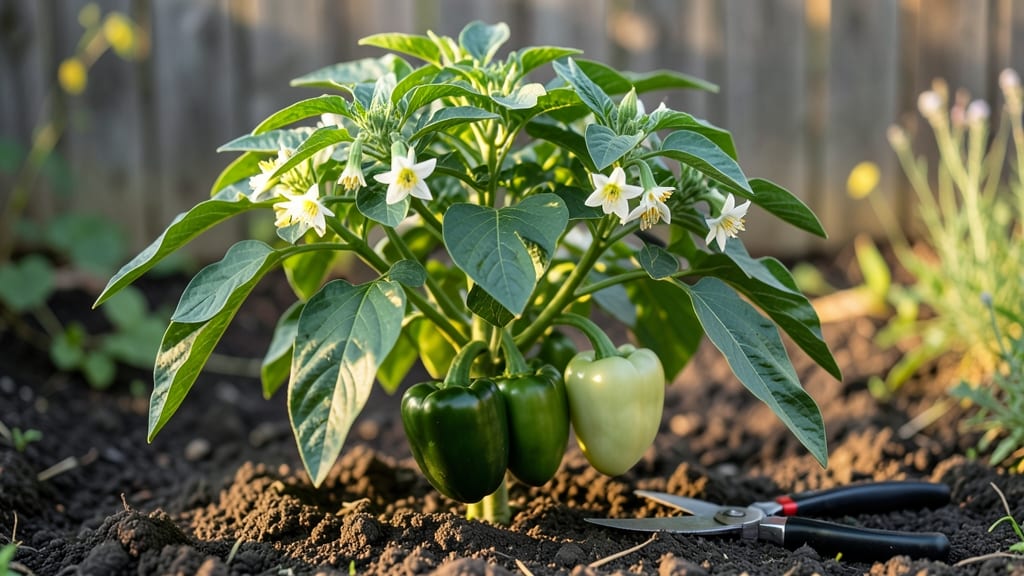
My green peppers started looking like they’d been through a food processor—not a good thing. 🌶️ Chapped peppers are a classic sign your plants are struggling, but the fix is simpler than you’d think.
The key is balancing water, soil, and stress factors so your peppers stay crisp and tender instead of leathery or cracked.
Uneven watering is the #1 culprit—soaking dry soil then letting it dry out again stresses plants, causing that unsightly chapping. Temperature swings (hot days, cool nights) and poor soil drainage play a role too. Even pests like aphids can weaken peppers over time, making them more prone to cracking.
Here’s the game-changer: consistent moisture (1–1.5 inches per week) and mulch to keep roots cool. Prune damaged peppers to redirect energy, and avoid over-fertilizing—peppers hate rich soil. Within a week, you’ll see fresher, firmer skins and peppers that actually taste crisp.
Works for bell peppers, jalapeños, or any variety—just adjust water based on your climate. No more sad, chapped peppers ruining your harvest. Let’s get those plants back on track!
The Science Behind Pepper Scorch
When your green peppers turn chapped—dry, leathery, or bitter—it’s not just a texture fail. It’s a sign of cellular stress, often triggered by environmental or handling factors.
Understanding the root causes helps you avoid ruining your peppers (and your dishes) next time. Here’s why it happens, broken down by the real culprits.
Peppers are 90% water by weight, and their cells rely on moisture to stay plump and tender. When exposed to excessive dry heat—whether from the oven, grill, or even a scorching stovetop—their outer layers lose water rapidly.
This causes the cell walls to collapse inward, creating that unappetizing, tough texture.
- Oven roasting at high temps (400°F+): Peppers dry out before the internal temperature rises enough to soften them. The epidermis (outer skin) becomes brittle while the flesh stays undercooked.
- Grilling or broiling: Direct flame or radiant heat can char the surface before the pepper’s moisture migrates inward, locking in a crispy, bitter shell.
- Dehydrating or air-drying: Low humidity + high airflow = accelerated moisture loss. Peppers shrink and develop a leathery texture if not monitored closely.
Pro tip: 🌡️ Preheat your oven to 375°F (190°C) or lower for roasting, and use a light mist of water or a damp towel over peppers during drying to slow evaporation.
Peppers are delicate when fresh. Rough handling—cutting, peeling, or even over-squeezing—damages the cuticle layer, the waxy barrier that protects moisture. Once broken, the pepper’s cells oxidize and lose turgor pressure (the "plumpness" from water-filled vacuoles), leading to a soft, mushy or dry texture.
- Peeling or cutting too aggressively: The mesocarp (flesh) loses structural integrity when the protective skin is stripped away.
- Storing in plastic bags: Condensation builds up, causing anaerobic respiration (lack of oxygen speeds up decay), which softens the pepper prematurely.
- Washing before storage: Excess moisture + closed containers = mold growth and cell breakdown.
Pro tip: 💡 Store peppers stem-side down in a paper bag in the fridge to reduce bruising. If you must peel, use a sharp knife and leave a thin strip of skin intact to preserve moisture.
Not all peppers are created equal—and neither are their ripening stages. Harvesting green peppers too early means their cell walls haven’t fully developed pectin (the natural "glue" that holds plant tissues together). This results in a mealy, dry texture when cooked, as the cells lack structural integrity.
- Picking before full size: Smaller peppers have thinner cell walls and higher water content relative to their mass, making them prone to drying out.
- Stress-induced ripening: Peppers grown in extreme heat or drought may appear green but have prematurely thickened skins due to stress hormones like ethylene.
- Variety matters: Some hybrids (like Banana peppers) are naturally more delicate than Jalapeños or Bell peppers.
Pro tip: ✨ Wait until peppers are firm, glossy, and fully colored (even if green). For uniform results, harvest in the morning when moisture levels are highest.
When peppers are exposed to extreme heat or light, their natural capsaicinoids (in hot varieties) or alkaloids (in milder ones) can concentrate near the surface. This creates a bitter, astringent taste—especially in the "chapped" areas where moisture loss is highest.
- Blanching incorrectly: Dipping peppers in boiling water for too short a time (<10 seconds) doesn’t deactivate enzymes that convert sugars into bitter compounds.
- Over-salting or marinating: High-sodium brines can draw out moisture via osmosis, causing the pepper’s cells to shrink and harden.
- Exposure to UV light: Peppers left in direct sunlight (even after harvest) develop oxidized oils, which contribute to bitterness.
Pro tip: 🍳 For blanching, use 15–20 seconds in boiling water, then ice bath immediately. Store cooked peppers in airtight containers with a paper towel to absorb excess moisture and prevent bitterness.
Quick fixes for perfectly crisp peppers
Now that you know why your green peppers turn out chapped or bitter, let’s tackle the solutions—simple, fast, and foolproof! Whether you’re dealing with overcooked exteriors, uneven texture, or bitter aftertaste, these fixes will help you achieve that crisp-tender perfection every time.
Cause: Boiling, frying, or roasting too long strips moisture and collagen, leaving peppers tough and rubbery.
Fix It: ✅ Blanching Boost – Before cooking, blanch peppers in boiling water for 30–60 seconds, then shock in ice water. This jumpstarts softening while keeping the skin intact. ✅ Low-and-Slow Magic – For roasting or grilling, reduce heat and cover with foil halfway to trap steam. Aim for 15–20 minutes at 375°F (190°C). ✅ Acid Bath Rescue – Soak peppers in lemon juice or vinegar for 10 minutes before cooking to tenderize fibers naturally.
💡 Pro Tip: If peppers are already tough, slice thinly and sauté in oil with a splash of water to revive crispness.
Cause: Thick peppers or uneven heat distribution leave some parts charred while others stay raw.
Fix It: ✅ Score Before Cooking – Lightly cut an "X" into the bottom of whole peppers to help them cook evenly. ✅ Cut Strategically – Slice into strips (not rounds) for uniform cooking. For stuffing, halve lengthwise for faster heat penetration. ✅ Rotate & Flip – When grilling or roasting, flip every 5–7 minutes to avoid hot spots. Use a wire rack for even air circulation.
🔥 Quick Hack: For char-free crispiness, broil peppers for 3–5 minutes at the end—watch closely to avoid burning!
Cause: Peppers develop bitterness when oxidized (from light/air exposure) or overcooked, or if they absorbed pesticides.
Fix It: ✅ Rinse & Soak – Wash peppers under cool water, then soak in baking soda solution (1 tsp per cup of water) for 10 minutes to neutralize bitterness. ✅ Cook Fast & Hot – Sear or blister peppers over high heat for 2–3 minutes per side—this locks in sweetness before bitterness develops. ✅ Balance Flavors – Pair with sweet elements like honey, pineapple, or caramelized onions to counteract bitterness.
🌡️ Science Tip: Bitterness peaks at high temps + long cook times. Keep peppers under 400°F (200°C) for best flavor.
Want to skip the fixes and nail it the first time? Follow these game-changing habits:
| Do This | Avoid This |
|---|---|
| Pick firm, glossy peppers (avoid wrinkled or dull ones) | Buying peppers with soft spots |
| Store in the fridge (not at room temp) to slow aging | Leaving peppers out for days |
| Use a mix of cooking methods (e.g., grill + roast) for balance | Over-relying on one heat source |
| Add acid early (lemon, vinegar, or tomato sauce) to tenderize | Waiting until the end to add flavor |
| Cut peppers just before cooking (oxidation ruins texture) | Prepping hours ahead |
Final Thought: With these fixes, your green peppers will be crisp on the outside, tender inside, and free of bitterness—every single time. 🎯 Now go forth and master the pepper!
Frequently asked questions
Why do my homegrown green peppers develop chapped or cracked skin?
Chapped peppers usually signal uneven moisture—either sudden dry spells or inconsistent watering. Temperature swings (hot days/cool nights) and poor soil drainage also stress plants, causing the skin to split. Even pests like aphids can weaken peppers over time, making them prone to cracking.
Can I still use peppers that have chapped skin?
Yes! Just trim off the damaged areas before cooking. For extra crispness, blanch them first (30–60 seconds in boiling water) to restore texture. Avoid storing them longer than 5–7 days in the fridge, as chapped peppers dry out faster.
What’s the best way to prevent chapped peppers in my garden?
Focus on consistent moisture (1–1.5 inches per week) and mulch to regulate soil temperature. Water deeply in the morning, and avoid overhead sprinklers. Prune damaged peppers to redirect energy, and use well-draining soil to prevent root stress.
Do all pepper varieties get chapped equally?
No—thinner-skinned varieties like banana peppers or jalapeños are more prone to chapping than thick-skinned bell peppers. Hotter varieties also dry out faster due to higher moisture content. For sensitive types, harvest slightly earlier and store with a paper towel to absorb excess moisture.
Will chapped peppers taste bitter?
Not necessarily, but they may develop mild bitterness if exposed to too much heat or light post-harvest. To fix, soak in lemon juice or vinegar for 10 minutes before cooking, or pair with sweet elements (honey, pineapple) to balance flavors.