
Planting
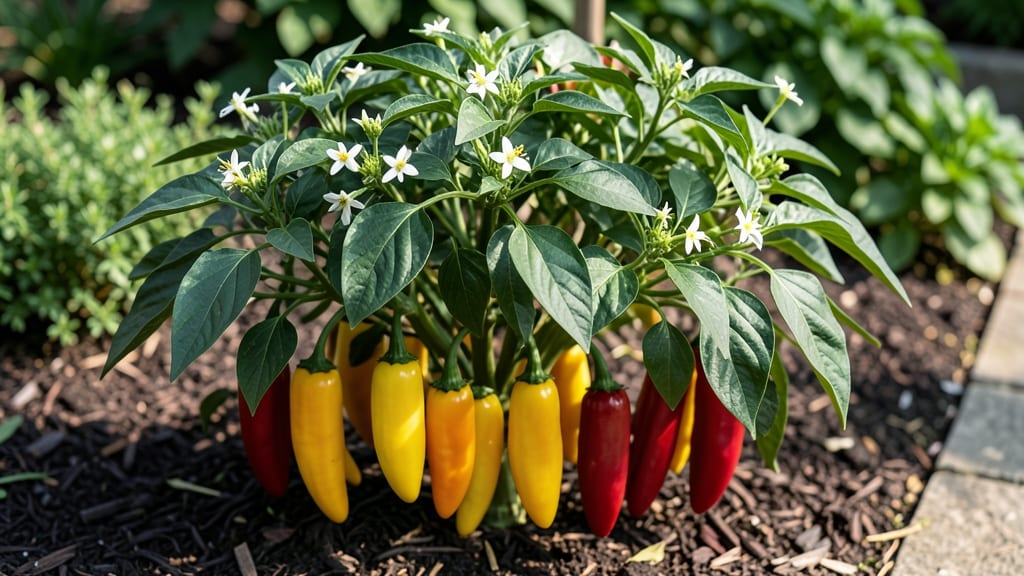
A full-grown banana pepper plant can reach 5 feet tall—but with pole training, it becomes a vertical powerhouse in even the smallest gardens. 🌱 I’ve watched mine transform from a leggy seedling into a 3-foot-tall bush bursting with 200+ peppers by late summer, all while taking up just a corner of my balcony.
The secret lies in understanding its growth habits and giving it the right support from day one. These peppers thrive in 6+ hours of sunlight and well-draining soil, but the real game-changer is the trellis or sturdy stake you add at planting.
Without support, they sprawl; with it, they climb, producing longer branches and more fruit than you’d expect from a plant this compact. Prune regularly to encourage bushier growth, and you’ll harvest bright yellow peppers from midsummer until frost. The payoff?
A steady supply of mild, crunchy peppers perfect for snacking, pickling, or stuffing—plus, the plant’s glossy foliage adds a tropical touch to containers or garden beds. Even in small spaces, you’ll get more peppers per square foot than from sprawling plants left to their own devices.
Works for containers, raised beds, or in-ground gardens—just adjust the pole height to your space. Here’s how to keep yours productive all season long.
Root Causes Of Stunted Growth
Banana peppers are the flavorful superstars of compact gardens and containers, but even the hardiest plants can struggle to reach their full potential. If your full-grown banana pepper plant isn’t thriving, the issue likely stems from one (or more) of these key culprits.
Understanding the science behind these problems helps you take precise, effective action—before it’s too late.
A banana pepper’s roots are its lifeline, and if the soil isn’t up to par, growth grinds to a halt. These peppers thrive in well-draining, slightly acidic soil (pH 6.0–6.8), rich in organic matter. Here’s why soil often sabotages your plant:
- Compacted or heavy soil: Clay or poorly amended soil restricts root expansion, suffocating roots and limiting nutrient uptake. Result? Stunted stems, yellowing leaves, and minimal fruit production.
- Lack of organic matter: Banana peppers crave nitrogen, phosphorus, and potassium—but without compost or aged manure, the soil becomes nutrient-poor. Think of it like feeding a athlete a sad salad instead of a power meal.
- Improper drainage: Waterlogged roots can’t breathe, leading to root rot (a fungal infection that turns roots mushy). Even "well-draining" potting mixes can fail if overwatered or if containers lack drainage holes.
💡 Pro Tip: Test your soil’s pH and amend it with compost, perlite, or coconut coir to improve aeration. For containers, use a 50/50 mix of potting soil and compost—banana peppers love it!
Banana peppers are sun-worshippers, but too little or too much light throws their growth off balance. Here’s the science:
- Insufficient sunlight (under 6–8 hours/day):
- Leads to etiolation—long, leggy stems with sparse leaves as the plant stretches toward light.
- Fewer flowers and fruits, since sunlight triggers photosynthesis (the energy factory for blooms).
- Excessive heat or direct midday sun (especially in hot climates):
- Can cause sunscald, where leaves turn white or crispy due to oxidative stress (like a sunburn for plants).
- May lead to blossom drop, where flowers fall off before fruiting due to temperature fluctuations.
🌡️ Actionable Fix: Place your plant in morning sun + afternoon shade if temps exceed 90°F (32°C). For containers, use a light-colored pot to reflect excess heat. If indoors, supplement with a grow light 12–14 hours/day.
Banana peppers are drought-tolerant once established, but watering mistakes are a top reason for stunted growth. The problem? Inconsistent moisture disrupts nutrient absorption and root health.
| Issue | Why It Happens | Signs to Watch For |
|---|---|---|
| Overwatering | Oxygen can’t reach roots, leading to anaerobic conditions and fungal/bacterial infections. | Yellowing leaves, mushy stems, wilting despite wet soil. |
| Underwatering | Roots shrink and struggle to uptake water/nutrients, causing osmotic stress. | Crispy leaf edges, drooping, dry soil pulling away from pot edges. |
| Inconsistent watering | Fluctuating moisture stresses roots, leading to nutrient lockout (plants can’t absorb what’s in the soil). | Leaf curl, stunted new growth, blossom end rot (in fruits). |
🔥 Best Practice: Water when the top 1–2 inches of soil are dry. Use drip irrigation or soaker hoses for containers to keep moisture even. Mulch with straw or shredded leaves to retain humidity.
Banana peppers are heavy feeders, and without the right nutrients, they’ll focus on survival—not growth. Here’s what’s missing (and how to spot it):
- Nitrogen (N) deficiency:
- Role: Promotes leafy green growth and stem strength.
- Signs: Pale yellow leaves (starting with older ones), slow stem growth.
- Fix: Apply a balanced fertilizer (10-10-10) or compost tea every 4–6 weeks.
- Phosphorus (P) deficiency:
- Role: Essential for root development and flower/fruit formation.
- Signs: Dark green or purple-tinged leaves, weak stems, few blooms.
- Fix: Use a phosphorus-rich fertilizer (like bone meal) at planting and mid-season.
- Potassium (K) deficiency:
- Role: Regulates water uptake and disease resistance.
- Signs: Yellowing leaf edges (like a "scorched" look), weak stems, poor fruit set.
- Fix: Add wood ash or a potassium sulfate supplement every 6–8 weeks.
- Micronutrient deficiencies (e.g., calcium, magnesium):
- Role: Calcium prevents blossom end rot; magnesium aids chlorophyll production.
- Signs: Distorted new leaves (magnesium), brown spots on fruit (calcium).
- Fix: Use Epsom salt (for magnesium) or crushed eggshells (for calcium).
✨ Pro Tip: Conduct a soil test to identify specific deficiencies. For containers, fertilize every 2–3 weeks during the growing season with a liquid seaweed or fish emulsion for a nutrient boost.
Even the hardiest banana pepper plants can be derailed by pests and pathogens that steal nutrients or block sunlight. Common culprits include:
- Aphids & Spider Mites:
- How they hurt: Pierce leaves to suck sap, weakening the plant and spreading viruses.
- Signs: Sticky residue (honeydew), curled leaves, white webbing (mites).
Reviving Your Pepper Plant
When your full-grown banana pepper plant starts showing signs of distress—whether it’s yellowing leaves, stunted growth, or pests—don’t panic! Most issues have simple, effective fixes. Below, we’ll break down common problems and their solutions, so you can get your plant back to thriving in no time.
Yellow leaves are often a cry for help, but they usually signal one of three issues: overwatering, underwatering, or nutrient deficiency. Let’s diagnose and fix them.
💧 Overwatering: Drainage & Adjustments
If the soil feels soggy and leaves turn yellow with brown edges, your plant is drowning.
- Step 1: Check the Soil 👨🍳 Stick your finger 1-2 inches deep into the soil. If it’s damp, hold off on watering.
- Step 2: Improve Drainage 🔥 Repot your banana pepper into a container with drainage holes (if not already present). Add a layer of gravel or perlite at the bottom to prevent waterlogging.
- Step 3: Adjust Watering Habits ⏰ Water only when the top inch of soil is dry. In hot climates, this may mean watering every 2-3 days; in cooler weather, once a week is often enough.
- Prevention Tip: 💡 Use a moisture meter or the "finger test" to avoid guesswork. Banana peppers hate "wet feet"!
🌞 Underwatering: Hydration Rescue
Crispy, dry leaves or wilting stems? Your plant is thirsty.
- Step 1: Deep Watering 🍳 Water slowly and deeply until it drains from the bottom. This encourages strong root growth.
- Step 2: Mulch to Retain Moisture 🌡️ Apply a 1-inch layer of mulch (straw or shredded leaves) around the base to lock in moisture.
- Step 3: Increase Humidity (Indoors) ✨ Place a humidifier nearby or set the pot on a pebble tray with water to mimic tropical conditions.
- Prevention Tip: 🎯 Group pepper plants together—they transpire less when clustered, reducing water loss.
🍽️ Nutrient Deficiency: Feeding Time
Pale yellow leaves (especially on younger foliage) mean your plant needs nitrogen, iron, or magnesium.
- Step 1: Test Soil pH 📊 Banana peppers prefer slightly acidic to neutral soil (6.0-7.0). Use a soil test kit to check.
- Step 2: Fertilize Properly 💪
- For nitrogen: Use a balanced fertilizer (10-10-10) every 4-6 weeks during growing season.
- For iron/magnesium: Apply chelated iron or Epsom salt (1 tbsp per gallon of water) monthly.
- Step 3: Compost Boost 🥗 Mix in well-aged compost at the base to replenish organic matter naturally.
- Prevention Tip: 🔥 Over-fertilizing burns roots! Always water before applying fertilizer to dilute it.
Pests like aphids, spider mites, and whiteflies can sap your plant’s energy. Here’s how to evict them:
🕷️ Soft-Bodied Pests (Aphids, Whiteflies)
- Step 1: Blast Them Off 🔪 Spray plants with a strong stream of water to dislodge pests.
- Step 2: Soap Solution 🧼 Mix 1 tbsp mild dish soap + 1 quart water and spray directly on infested areas.
- Step 3: Introduce Beneficial Insects 🐞 Release ladybugs or lacewings—they eat pests for breakfast.
- Prevention Tip: 💡 Neem oil spray (1 tsp per liter of water) every 2 weeks deters pests naturally.
🕸️ Spider Mites (Tiny Webbing)
- Step 1: Wipe Down Leaves 🧹 Use a damp cloth to remove webbing and mites manually.
- Step 2: Increase Humidity 🌧️ Spider mites hate humidity. Mist leaves daily or use a humidifier.
- Step 3: Systemic Treatment 💊 Apply miticide (like neem oil or horticultural oil) every 5-7 days until mites vanish.
- Prevention Tip: 🎯 Yellow sticky traps catch mites early—place them near your plants.
If your banana pepper is small, leggy, or not fruiting, it’s likely lacking light, space, or proper pruning.
☀️ Light & Space Solutions
- Step 1: Move to Brighter Spot 🌞 Banana peppers need 6-8 hours of sunlight daily. If indoors, place near a south-facing window or use grow lights (12-14 hrs/day).
- Step 2: Prune for Bushiness ✂️ Trim taller stems to encourage side shoots. Pinch off the topmost leaves to redirect energy to fruit production.
- Step 3: Support Poles 🏗️ If growing vertically, tie stems to a bamboo stake to prevent sprawling and improve air circulation.
- Prevention Tip: 💡 Rotate pots weekly so all sides get even light exposure.
Fungal diseases (like powdery mildew) or bacterial spots can ruin a healthy plant.
🍄 Fungal Issues (White Powder, Spots)
- Step 1: Improve Airflow 🌬️ Space plants 12+ inches apart and prune crowded foliage.
- Step 2: Fungicide Spray 🛡️ Use copper fungicide or baking soda spray (1 tsp baking soda + 1 quart water + a drop of soap) every 7-10 days.
- Step 3: Remove Infected Leaves 🗑️ Snip off yellow/brown leaves and dispose of them (don’t compost!).
- Prevention Tip: 🌡️ Water at the base (not overhead) to keep leaves dry.
- 🔄 Repot Every 2 Years – Banana peppers outgrow pots quickly. Choose 1-2 inches larger each time. - 🌡️ Ideal Temperature – Keep between 70-85°F (21-29°C).
Avoid drafts or sudden cold snaps. - 🍅 Pollination Help – If indoors, gently shake plants or use a small brush to transfer pollen for fruit set. - 🌱 Companion Planting – Grow with basil, marigolds, or onions to repel pests naturally.
With these fixes, your full-grown banana pepper plant will bounce back stronger than ever—ready to reward you with bountiful, fiery-sweet peppers! 🌶️💥
Frequently asked questions
How tall will my banana pepper plant grow without support?
A banana pepper plant typically reaches 3-4 feet tall when left to grow naturally, but it will sprawl outward 2-3 feet as well. Without a trellis or stake, it forms a bushy shape that takes up more garden space. For compact spaces, training it vertically on a 5-foot pole maximizes yield while saving room.
Can I grow banana peppers in containers year-round?
Banana peppers thrive in containers but need winter protection in cold climates. Move pots indoors near a sunny window or use a grow light (12-14 hours/day) when temperatures drop below 50°F (10°C). They’re tropical plants and won’t survive frost—bring them inside before the first freeze.
Why aren’t my banana peppers turning yellow?
Banana peppers stay green when they’re underripe—they only turn yellow when fully mature. Harvest when they’re 3-4 inches long and bright green for the best flavor. If they stay green too long, they may become tough. For consistent yellow peppers, harvest frequently to encourage new fruit production.
How do I prune a banana pepper plant for maximum yield?
Prune by removing the topmost leaves (pinching) to encourage bushier growth. Cut back overly long stems to redirect energy to fruit production. Focus on keeping the plant open and airy—this prevents disease and improves pollination. Prune in the morning so wounds heal by evening.
Are banana peppers self-pollinating?
Yes! Banana peppers are self-pollinating, but they produce more fruit with a little help. Gently shake the plant or use a small brush to transfer pollen between flowers. If growing indoors, this step is especially important since there are no bees to assist.