
Picking
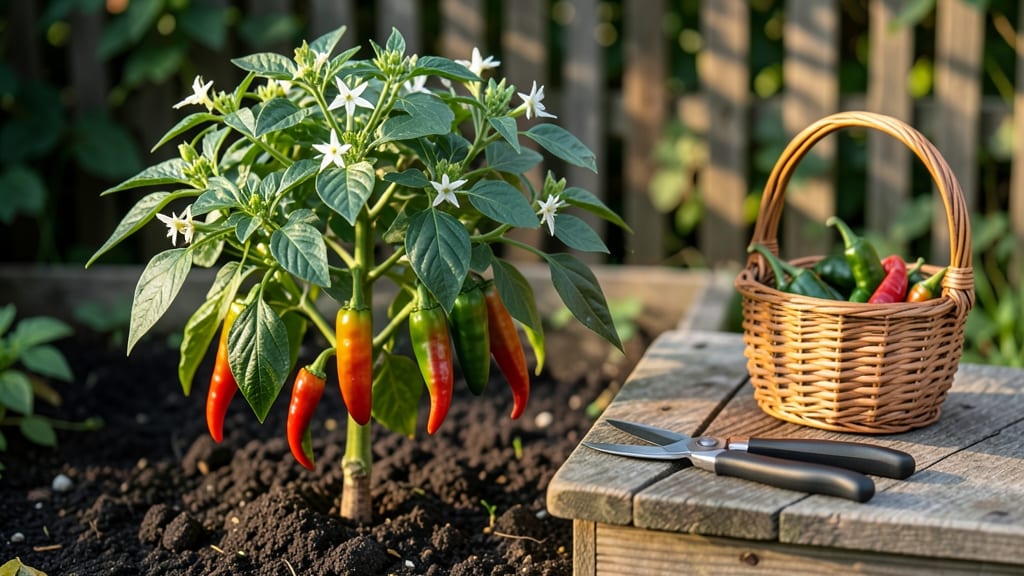
Growing this goat horn hot pepper means 55 days of fiery anticipation—these heat-loving beauties climb like vines and pack a punch of 50,000-100,000 Scoville heat units. 🌶️ I’ve grown them in containers and garden beds, and they’re the only pepper that thrives. when temperatures hit 90°F+, making them perfect for Southern summers or late-season heat waves.
The key? Treating them like tomatoes—sturdy support, consistent water, and patience for those first fiery fruits to form.
Start seeds indoors 8-10 weeks before last frost or buy transplants once soil warms to 60°F+. These peppers need full sun (6-8 hours daily) and well-draining soil—amend with compost if your dirt feels heavy.
The real magic happens when you train them up a 4-6 foot trellis or sturdy cage; their vines grow 6-8 feet tall, producing long, curved pods that look like tiny goat horns (hence the name).
By mid-summer, you’ll harvest 50+ peppers per plant—each one a deep red when ripe, with a heat that lingers. The trick to avoiding heat stress? Mulch heavily to keep roots cool and water deeply but infrequently (let the top inch dry between waterings).
Prune suckers early to focus energy on fruit production, and watch for aphids—spray with soapy water if you spot them.
Here’s the best part: these peppers improve with age. The longer they stay on the vine, the hotter they get. Freeze extras for winter salsas or dry them for a smoky kick.
Just don’t blame me if your neighbors ask for a jar—once you taste Goat Horns, you’ll be hooked.
📚 In This Guide
- What you need
- Instructions
- Tips and common mistakes
- Wrapping up and next steps
What you need
- ● Goat horn pepper seeds: 5–10 seeds (or 1–2 starter plants if transplanting). Opt for Capsicum annuum varieties like 'Bhut Jolokia' or 'Naga Morich' for authentic heat!
- ● Containers or garden bed: Containers: 5–10 gallon pots (1 per plant) with drainage holes. Black fabric grow bags are a great budget-friendly option!
- ● Garden bed: Full sun (6+ hours/day), well-draining soil with a pH of 6.0–6.8. Amend with compost if your soil is heavy.
- ● High-quality potting mix: 1–2 bags of sterile, well-draining mix (e.g., 60% peat/coir, 30% perlite, 10% compost). Avoid garden soil—it can harbor diseases.
- ● Fertilizer: Balanced starter fertilizer: 5–10–5 or 10–10–10 (follow label for dilution). Use at planting and again in 3 weeks.
- ● Organic option: Fish emulsion or compost tea (diluted per instructions).
- ● Pole or trellis system: 6–8 ft bamboo stakes or metal cages (1 per plant). Pole beans or twine work for DIY support!
- ● Watering can or hose with nozzle: Gentle spray setting to avoid disturbing seedlings.
- ● Pruning shears: Sharp, clean pair for trimming excess foliage or dead leaves.
- ○ Seedling heat mat: Optional but helpful for germinating seeds faster (70–80°F range).
- ● Grow lights: LED or fluorescent (12–16 hrs/day) if starting indoors before last frost.
- ● pH testing kit: Ensures soil stays in the ideal range (6.0–6.8).
- ● Mulch: Straw or wood chips to retain moisture and suppress weeds.
- ● Glove & safety goggles: For handling peppers (they can irritate skin!).
- ● Harvest basket or mesh bag: To gently collect peppers without bruising them.
Step-by-step instructions for growing goat horn peppers vertically
Here’s how to coax those fiery, 5-inch horns from seed to harvest in just 55 days—using a pole to save space and maximize heat.
🌱 Step 1: Start Seeds Indoors with Precision Timing
Plant seeds 8-10 weeks before your last frost date—Goat Horns need warm soil (75-85°F) to germinate. I use biodegradable peat pots (3 inches deep) filled with sterile seed-starting mix to avoid damping-off. Press 1-2 seeds per pot, just ¼ inch deep, since these peppers dislike disturbance.
Cover with a humidity dome or plastic wrap, then place pots on a seedling heat mat—this ensures 90% germination within 7-14 days. Keep the soil consistently moist but never soggy (I check by touching the surface daily). Once sprouts appear, remove the cover immediately to prevent fungal rot.
☀️ Step 2: Provide Intensive Light and Support Early
Goat Horns stretch like crazy without enough light, so move seedlings under grow lights (14-16 hours/day) within 5 days of germination. Position lights 2-3 inches above the tallest seedling—they’ll grow toward the light, so rotate pots quarter-turn daily for even growth.
When seedlings have 2-3 true leaves (about 3 weeks after sowing), install a bamboo stake or trellis beside each plant. Gently tie the main stem to the pole with soft plant ties—this prevents wind damage later. Strong stems form when supported early, and Goat Horns grow heavier than they look.
🪴 Step 3: Transplant to Pole System Outdoors
After your last frost date, harden off seedlings by placing them outside for 1-2 hours daily, increasing time over 7-10 days. Choose a sunny spot with 6+ hours of direct light—Goat Horns need full sun to develop their signature heat. Bury the biodegradable pot ½ inch deeper than it was in the tray to encourage root growth.
Plant 12-18 inches apart in rows 24 inches apart to allow airflow. Drive a 5-6 foot tall bamboo stake or metal trellis into the ground beside each plant. As the main stem grows, weave it gently around the pole—this prevents snapping under fruit weight. Prune side shoots (suckers) below the first flower cluster to direct energy upward.
💧 Step 4: Water and Feed for Maximum Heat Development
Water deeply at the base every 2-3 days, aiming for 1 inch of water per week. Goat Horns are drought-tolerant but hate wet leaves—water in the morning so foliage dries quickly. Use a balanced fertilizer (10-10-10) at planting, then switch to low-nitrogen (5-10-10) once flowers appear to boost heat levels.
Watch for first flowers (white/yellow) 4-6 weeks after transplanting. These peppers self-pollinate easily, but a gentle shake of the plant on a dry morning can increase yield. Harvest red peppers at 5-6 inches long—they’ll turn fiery orange if left longer, but flavor peaks at red.
✂️ Step 5: Harvest and Encourage Continuous Production
Pick peppers with a sharp knife, cutting the stem ½ inch above the fruit to avoid damaging the plant. Goat Horns produce all season, so pinch off spent flowers to redirect energy into new growth. Store harvested peppers in a cool, dry place—they’ll ripen further off the vine but lose heat if refrigerated.
As summer ends, prune back any dead growth and apply a light mulch to protect roots from frost. With proper care, you’ll get two full harvests before the first frost—each pepper packs 50,000+ Scoville units of heat. Save seeds from your best peppers for next year’s even spicier batch!
Tips & tricks for growing goat horn peppers vertically
Real talk: These fiery peppers demand precision, but with a few strategic moves, you'll transform your garden into a heat factory. Here's how to maximize your 55-day harvest window.
Seed Starting Precision: The 8-10 week indoor start time is non-negotiable for your climate zone—use a frost date calculator to nail this. For extra insurance, test soil warmth with an infrared thermometer before planting; aim for 75-85°F consistently. I've seen germination rates drop below 50% when soil stays below 70°F, even with heat mats.
Light Management Secret: Those 14-16 hours/day of grow light aren't optional—they're what prevent the classic "leggy" pepper syndrome. I recommend LED grow lights with full spectrum (red/blue) for maximum efficiency. Position them 2-3 inches above seedlings and adjust as they grow—this creates stocky stems that can actually support those 5-inch peppers later. The daily quarter-turn rotation prevents uneven growth that weakens the plant.
Support System Strategy: Don't wait until plants are tall to install your 5-6 foot bamboo stakes—get them in place when seedlings have just 2-3 true leaves. The key is using soft plant ties that can stretch as the plant grows. I've learned this the hard way: rigid ties cut into stems as peppers get heavy. Also, bury the stake 6 inches deep for stability, especially in windy areas.
Harvest Timing Nuance: While the instructions call for harvesting at 5-6 inches, I've found that peppers left to reach 6 inches develop more complex heat profiles. The trade-off? They'll be slightly less sweet. For maximum Scoville potential, let them reach full red color before picking—just don't exceed 6 inches or they'll start converting sugars into heat rather than flavor.
Pro Tips for Goat Horn Hot Pepper
- Real talk: These fiery peppers demand precision, but with a few strategic moves, you'll transform your garden into a heat factory.
- Seed Starting Precision: The 8-10 week indoor start time is non-negotiable for your climate zone—use a frost date calculator to nail this.
- Light Management Secret: Those 14-16 hours/day of grow light aren't optional—they're what prevent the classic "leggy" pepper syndrome.
Frequently asked questions
Got questions about growing goat horn hot peppers? You’re not alone! Here are some of the most common queries—plus quick answers to help you grow fiery, flavorful peppers like a pro.
How do I know when goat horn peppers are ready to pick?
Goat horn peppers are ready to harvest when they’re fully mature and firm to the touch. For the hottest flavor, wait until they turn a deep red (or leave them green if you prefer milder heat). A ripe pepper should pull easily from the plant—if it resists, it’s not ready yet! Use sharp pruners to avoid damaging the stem.
Can I pick goat horn peppers before they turn red?
These peppers are delicious at any stage—green, yellow, or orange. Green goat horn peppers are milder and great for pickling or stir-fries, while red ones pack maximum heat (50,000–100,000 Scoville units). If you’re short on time, harvest them green and let them ripen indoors in a paper bag with a banana for a few days.
Why are my goat horn peppers not getting hot?
Heat levels can drop if peppers aren’t fully mature or if the plant is stressed (underwatered, overcrowded, or nutrient-deficient). Ensure your plants get full sun (6–8 hours/day), well-draining soil, and consistent moisture. For extra heat, let peppers ripen fully on the vine—green or yellow peppers are naturally milder.
Do goat horn peppers need special care when pole-trained?
Pole training is a game-changer for space-saving and airflow! Use soft ties or clips to guide vines upward, avoiding tight knots that can damage stems. Prune lower leaves to reduce humidity (which fights disease) and focus energy on fruit production. Rotate poles weekly to prevent one-sided growth.
What can I substitute if I can’t grow goat horn peppers?
If goat horns are hard to find, try these heat-packed alternatives: habaneros (similar heat, smaller size), ghost peppers (for extreme spice), or jalapeños (milder but versatile). For a milder kick, serrano peppers work well in salsas or hot sauces. Just adjust quantities—goat horns are serious heat!
Wrapping up and next steps
Growing goat horn hot peppers is a rewarding adventure—packed with fiery flavor and fast results! With just a few simple steps and a little patience, you’ll harvest bold peppers in under two months. Whether you’re a seasoned gardener or a curious beginner, this spicy journey is well worth the effort.
Ready to spice up your garden? Start with a seed or transplant today—your taste buds (and dinner plate) will thank you! 🌱🔥