
Companion Plants
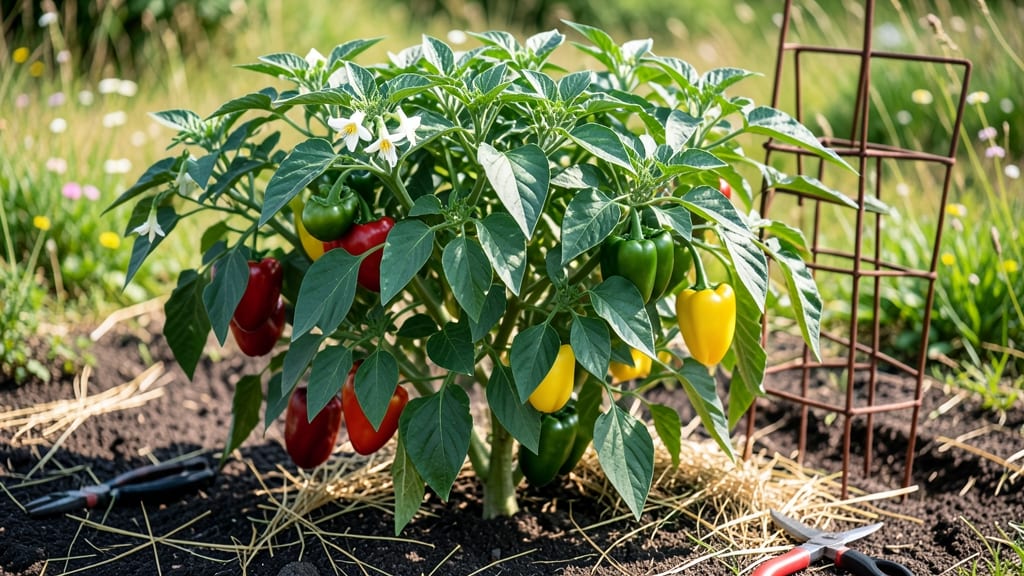
Bell pepper plants typically live for about 1 to 2 years, though they produce most of their fruit in their first growing season before gradually losing vigor. Most gardeners replace them yearly to maintain strong harvests, but proper care can sometimes extend their productive life.
Understanding bell pepper plant lifespan starts with recognizing their natural growth cycle.
These plants are technically perennials, meaning they can live multiple years in ideal conditions, but they're often treated as annuals because their productivity declines after the first harvest. 🌱 The first year is all about establishing strong roots and producing fruit, while subsequent years may yield fewer peppers as the plant focuses on survival rather than growth.
This is why many gardeners opt to start fresh each spring rather than trying to revive older plants.
What's fascinating is how environmental factors play into this. Proper pruning, consistent watering, and nutrient-rich soil can help maintain a plant's health longer, but even with the best care, the energy shift after the first year is inevitable.
For continuous harvests, most growers simply replant new seedlings each season, ensuring they always have vigorous plants at peak production.
💡 In This Article
- Bell Pepper Plant Lifespan Factors and Growth Stages
- Extending Bell Pepper Plant Life: Pruning, Care, and Renewal Tips
Bell pepper plant lifespan factors and growth stages
Bell pepper plants are technically perennials in warm climates, meaning they can survive multiple years—but their productivity follows a clear biological pattern.
The first year focuses entirely on establishing a strong root system and producing fruit, while subsequent years often see reduced yields as the plant shifts energy toward survival rather than growth.
This is why most gardeners treat them as annuals, even though the plant itself can live longer with proper care.
The plant's lifespan is divided into distinct stages: seedling (0-6 weeks), vegetative (6-12 weeks), flowering (12-16 weeks), and fruiting (16+ weeks). The most critical phase for fruit production is the first 12-16 weeks after transplanting, when the plant allocates resources to flower and fruit development.
After this peak, the plant's energy gradually shifts toward maintaining its structure, leading to fewer peppers in later years. 🌱
Temperature plays a key role in this cycle. Bell peppers thrive in 70-85°F soil temperatures, which aligns with their natural growing season. When nights grow cooler (below 60°F), the plant's metabolic processes slow, reducing fruit production.
This is why gardeners in colder climates often replant each year—the original plants simply can't sustain high yields in less-than-ideal conditions.
Another factor is the plant's natural aging process. After the first year, bell peppers experience what's called senescence—a gradual decline in cellular function. This is similar to how fruit trees produce fewer apples after their first harvest.
The plant's leaves may yellow, stems become woody, and new growth appears slower. While this doesn't kill the plant, it significantly reduces its ability to support heavy fruit loads.
Interestingly, some gardeners have successfully revived older bell pepper plants by cutting them back drastically in late fall and providing winter protection. When spring returns, these plants can sometimes produce a modest harvest, though never at the same level as their first year.
This demonstrates that while bell peppers are perennials, their economic lifespan as productive fruit producers is typically just 1-2 years.
For those who want to experiment with multi-year plants, consider varieties like Capsicum annuum (the species most bell peppers belong to), which are generally hardier than their hot pepper cousins.
With careful overwintering—using mulch, row covers, or even container growing—they can sometimes surprise you with a second season of peppers, though the quality and quantity will be noticeably different.