
Planting
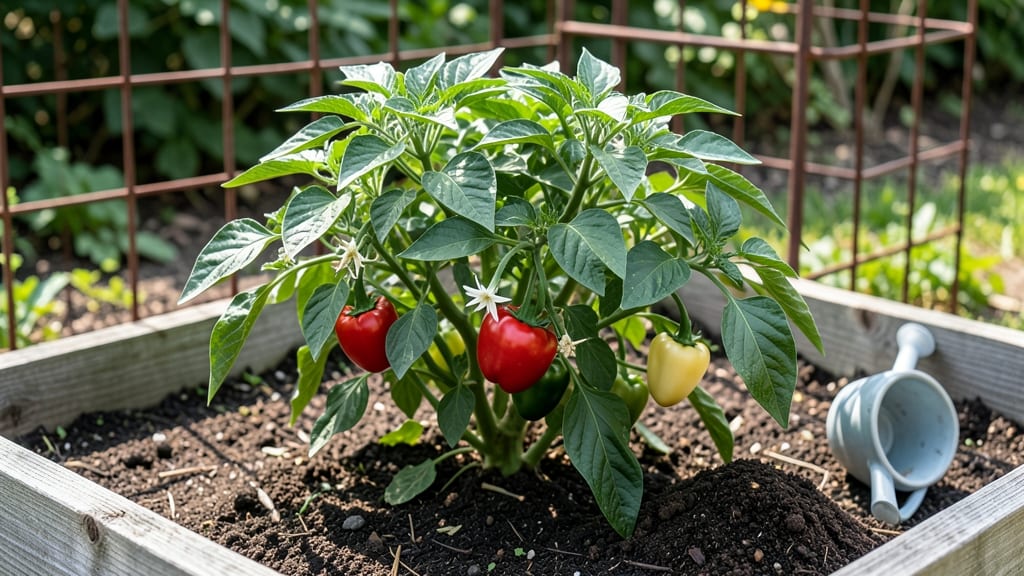
Growing Italian sweet pepper plants has changed how I enjoy fresh peppers—no more bitter surprises or store-bought disappointment. 🌱 These pole-trained varieties mature in just 55 days, delivering sweet, tender peppers straight from your garden to your plate.
The secret lies in the right soil, consistent care, and a little vertical growing magic that saves space and boosts production.
Start with well-draining soil rich in compost, and plant seeds indoors 8-10 weeks before your last frost. Sweet peppers crave warmth—keep seedlings cozy until nighttime temps stay above 55°F.
Once planted, stake them early with 5-6 foot trellises to guide their growth upward, where they’ll thrive in full sun for 6-8 hours daily. Water deeply but consistently, avoiding soggy soil that triggers blossom end rot.
By mid-summer, you’ll be harvesting glossy, 3-4 inch peppers that stay sweet and crisp—no bitter aftertaste in sight. Pole training keeps plants off the ground, reducing disease risk and making harvesting easier.
The real payoff? A steady supply of peppers for salsas, stir-fries, or snacking straight from the vine, all without the fuss of sprawling bushes.
Works in containers too, as long as pots are at least 12 inches deep. If pests like aphids appear, blast them off with water or introduce ladybugs—they’re nature’s pest control.
For extra sweetness, pinch off early flowers to let plants focus on foliage first. Trust me, once you try this method, you’ll never buy sweet peppers again.
📚 In This Guide
- What you need
- Instructions
- Tips and common mistakes
- Wrapping up and next steps
What you need
- ● Seeds or Seedlings: Italian sweet pepper seeds (e.g., 'Sweet Banana,' 'Golden California Wonder,' or 'Padrón') – 2-3 seeds per plant (or 1-2 seedlings if starting from nursery plants).
- ● Pro tip: 💡 Choose heirloom or hybrid varieties labeled for short-day or long-day climates to match your growing zone.
- ● Growing Containers or Garden Bed: If container gardening: 5-gallon pots or larger (minimum 12-18 inches deep) with drainage holes. Use 3-4 plants per container.
- ● If in-ground planting: Full sun spot (6+ hours/day) with well-draining soil. Space plants 18-24 inches apart in rows 24-36 inches apart.
- ● Soil: Well-draining, fertile potting mix (e.g., 60% peat moss/coco coir, 30% perlite/vermiculite, 10% compost). pH 6.0–6.8.
- ○ Optional boost: Mix in 1 cup balanced fertilizer (10-10-10) or compost per plant at planting.
- ● Pole or Trellis System: Bamboo stakes (5–6 ft tall), tomato cages, or DIY trellis (wooden lattice or wire mesh).
- ● Pro tip: 🌡️ Use 3–4 stakes per plant for stability as peppers grow heavy!
- ● Watering Supplies: Watering can with rose nozzle or drip irrigation kit.
- ○ Optional: Mulch (straw or shredded leaves) to retain moisture.
- ● Grow Lights: LED full-spectrum lights (for indoor/early starts or short-season climates).
- ● Plant Support Ties: Soft plant clips or twine to secure vines to poles.
- ● Pest Control: Neem oil, row covers, or beneficial insects (ladybugs for aphids).
- ● Pruning Shears: Small, sharp scissors for trimming excess foliage.
- ● Calcium Supplement: Epsom salt (for blossom end rot prevention).
Step-by-Step instructions for growing pole-trained Italian sweet peppers
Here's how to grow Italian sweet peppers vertically for maximum yield and minimal space—my foolproof method for a bountiful harvest.
🌱 Step 1: Start Seeds Indoors 8-10 Weeks Before Last Frost
Fill 2-3 inch deep seed trays with sterilized seed-starting mix and sow seeds ¼ inch deep. Italian sweet peppers need warmth to germinate, so place trays on a heat mat set to 75-85°F. Keep the soil consistently moist but never soggy—you'll see sprouts in 7-14 days.
Once seedlings emerge, move them to a sunny window or under grow lights 12-14 hours daily. Thin to the strongest seedling per cell to prevent competition. You'll know they're ready for transplanting when they develop 4-5 true leaves and the stems are ¼ inch thick.
🪴 Step 2: Transplant Seedlings to Containers or Garden Beds
Choose a location with full sun (6+ hours daily) and well-draining soil. If using containers, select pots at least 12 inches deep and wide—Italian peppers need room to develop strong root systems. Bury seedlings to the same depth they were in their trays, gently firming soil around the stems.
Space plants 18-24 inches apart in garden beds or 2 plants per 12-inch container. Add a 2-3 inch layer of compost to the planting hole for nutrients. Water deeply immediately after transplanting to settle the soil and reduce shock.
☀️ Step 3: Install Support Poles and Begin Training
Drive a 6-foot tall bamboo stake or trellis pole into the soil 6 inches from each plant. As seedlings grow, gently tie the main stem to the pole with soft plant ties or strips of fabric. This prevents wind damage and encourages upward growth.
Prune suckers (side shoots) that form in the leaf axils to focus energy on fruit production. You'll see the first flowers appear in 4-6 weeks—these will develop into peppers. Remove any flowers that appear before 6 weeks after transplanting to delay fruiting until plants are stronger.
💧 Step 4: Maintain Consistent Watering and Fertilizing
Water at the base of plants 1-2 inches per week, keeping soil evenly moist but never waterlogged. Italian peppers are sensitive to blossom-end rot, so mulch around plants with 2-3 inches of straw or shredded leaves to retain moisture and prevent soil-borne diseases.
Fertilize every 2-3 weeks with a balanced 10-10-10 or 5-5-5 fertilizer once flowers appear. You'll notice fruit set in 3-4 weeks after flowering, and peppers will mature in 55 days from transplanting. Harvest when peppers reach 3-4 inches long for peak sweetness.
✂️ Step 5: Harvest and Extend the Season
Pick peppers in the morning when they're firm and glossy. Use pruning shears to cut stems ¼ inch above the fruit to prevent disease entry. Regular harvesting encourages more production—you'll see new flowers forming within 1-2 weeks after each harvest.
To extend the season, cover plants with a frost blanket when nighttime temperatures drop below 50°F. Italian sweet peppers thrive in warm weather, so a late-season harvest is possible with protection. Save seeds from your best peppers for next year by allowing a few to fully ripen on the vine.
Tips & tricks for pole-trained Italian sweet pepper plants
Here's what nobody tells you about growing Italian sweet peppers vertically—these tricks will help you avoid common pitfalls and maximize your harvest.
Heat Mat Precision: The 75-85°F range on your heat mat isn't just arbitrary—it's the sweet spot for germination. I've seen seeds fail to sprout when temps drop below 70°F, even with consistent moisture. If your home stays cooler than this, consider using a dedicated seedling heat mat rather than relying on ambient room temperature. And here's a pro move: place a thermometer directly on the soil surface to monitor real-time conditions—surface temps can vary significantly from air temps.
Lighting Strategy: Those 12-14 hours of grow lights daily are non-negotiable for strong seedlings, but quality matters just as much as quantity. LED grow lights with a full spectrum (especially red and blue wavelengths) will give you better results than cheap fluorescent bulbs. Position lights just 2-3 inches above seedlings—the closer they are, the more intense the light, but don't let them touch the leaves. I rotate my trays daily to ensure even growth, which prevents leggy seedlings that struggle when transplanted.
Transplanting Timing: The 4-5 true leaves and ¼-inch thick stems indicators in Step 2 are your green light to transplant, but don't rush it. Seedlings with fewer than 4 true leaves often go into shock because they haven't built enough root mass. When you do transplant, water deeply right after planting to help settle the soil and reduce transplant shock. I've found that adding a handful of mycorrhizal fungi to the planting hole can boost root development by up to 30%—it's worth the small investment for container growers.
Pole Training Secret: That 6-foot tall bamboo stake might seem tall, but it's perfect for Italian sweet peppers which can grow 3-4 feet tall when properly supported. The key is to start training early—wait until plants are 6 inches tall before attaching them to the pole. Use soft plant ties (not wire or zip ties) and loosen them every few weeks as the stem grows. I've seen plants snap at the base when ties get too tight. Also, angle your poles slightly away from prevailing winds to prevent toppling during storms.
Pro Tips for Italian Sweet Pepper Plant
- Here's what nobody tells you about growing Italian sweet peppers vertically—these tricks will help you avoid common pitfalls and maximize your harvest.
- Heat Mat Precision: The 75-85°F range on your heat mat isn't just arbitrary—it's the sweet spot for germination.
- Lighting Strategy: Those 12-14 hours of grow lights daily are non-negotiable for strong seedlings, but quality matters just as much as quantity.
Frequently asked questions
How long does it take for Italian sweet pepper plants to bear fruit?
Italian sweet pepper plants are fast growers—expect your first harvest in just 55–70 days from transplanting (or 80–90 days from seed). Pole-trained varieties like 'Sweet Banana' or 'Golden Calwonder' mature even quicker! For a head start, sow seeds indoors 8–10 weeks before your last frost date.
Do Italian sweet peppers need a lot of water?
Yes! These plants thrive on consistency. Water deeply 1–2 inches per week, especially during flowering and fruiting. Avoid wetting leaves to prevent disease. Mulch around the base to retain moisture and keep roots cool. Drip irrigation is ideal—it delivers water right to the roots without waste!
Why are my Italian sweet peppers turning bitter?
Bitterness usually means overripe peppers or stress. Harvest when firm and glossy (before they turn yellow or wrinkled). Other culprits: too much nitrogen (focus on balanced fertilizer) or extreme heat. If your garden is scorching, provide afternoon shade with a lightweight shade cloth.
Can I grow Italian sweet peppers in containers?
Choose a 5-gallon container minimum (bigger = better for pole varieties). Use a well-draining potting mix with compost, and place in full sun (6+ hours daily). Trellis or stake plants early to save space. Just ensure your container has drainage holes—root rot is a container gardener’s worst enemy!
What can I plant alongside Italian sweet peppers to improve growth?
Companion planting is a game-changer! Try:
- Basil – Repels pests and boosts flavor.
- Marigolds – Deter nematodes naturally.
- Onions or garlic – Keep aphids away.
Wrapping up and next steps
Growing Italian sweet pepper plants is a rewarding journey that delivers delicious, homegrown harvests in just 55 days—no bitter surprises in sight! 🌱 With the right soil, sunlight, and care, you’ll enjoy a bountiful pole-trained garden that’s both space-efficient and productive.
Whether you’re a seasoned gardener or a beginner, this method makes it easy to savor fresh, flavorful peppers straight from your backyard.
Ready to get started? Plant your seeds today and watch your garden transform into a vibrant, pepper-filled paradise! For extra tips, check out our growing guide or share your progress with fellow gardeners—happy planting! 🌿