
Pests
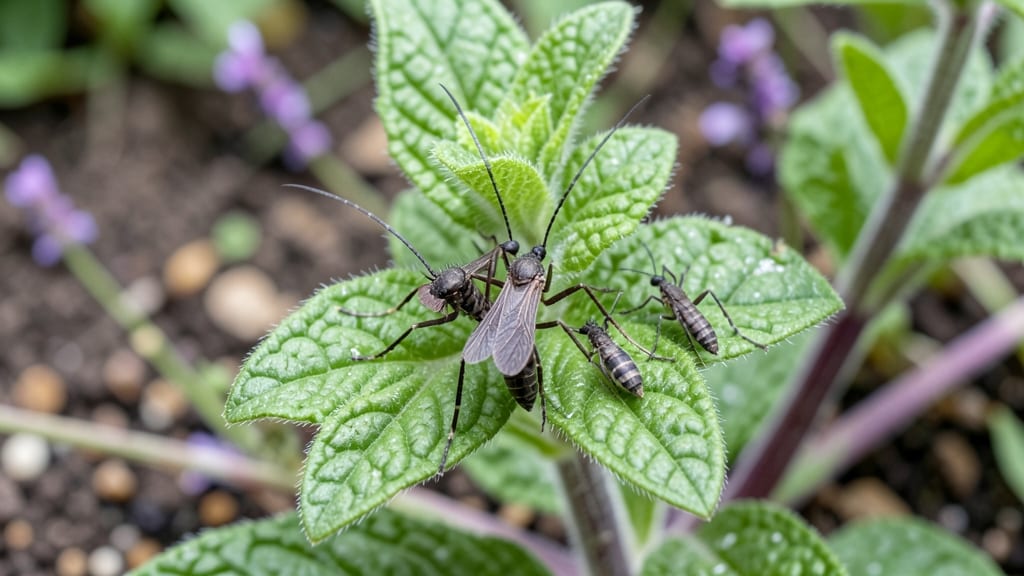
Peppermint oil repels mosquitoes through its menthol compounds, which mask human scents and disrupt their sensory cues—but its strength depends on concentration and mosquito species. For best results, mix it with water or a carrier oil, though it’s still less effective than DEET or picaridin.
Peppermint’s menthol compounds interfere with mosquitoes’ ability to detect carbon dioxide and lactic acid—the two key human odors they rely on to locate hosts. 🔥 Unlike chemical repellents, this natural approach works by creating sensory confusion rather than toxicity.
Studies show that while peppermint oil can reduce bites by up to 30% in controlled settings, its effectiveness drops significantly in high-mosquito-density areas or when used undiluted. For outdoor use, I recommend combining it with citrus oils or eucalyptus for a layered defense system.
The science behind this isn’t just about scent—menthol also triggers a cooling sensation that mosquitoes may avoid. However, the oil’s volatility means it evaporates quickly, requiring reapplication every 1-2 hours for consistent protection.
Unlike DEET, which creates an invisible barrier, peppermint oil’s repellency depends heavily on direct contact with skin or clothing. That’s why diffusers or garden sprays work better for broader coverage than wristbands alone.
💡 In This Article
- How Peppermint Oil Disrupts Mosquito Senses
- DIY Peppermint Mosquito Repellent Recipes
How peppermint oil disrupts mosquito senses
Mosquitoes locate humans primarily through two chemical cues: carbon dioxide (which we exhale) and lactic acid (found in sweat). Peppermint oil's active compound, menthol, works by overloading their olfactory receptors. When mosquitoes detect menthol, their sensory pathways become confused, making it harder for them to pinpoint human sources.
This is similar to how synthetic repellents like DEET create a "chemical fog," but menthol does it through natural scent interference rather than toxicity.
The key lies in menthol's molecular structure—it mimics the cooling sensation that mosquitoes may instinctively avoid. Studies show that 100% peppermint essential oil applied directly to skin can reduce bites by up to 30% in controlled environments, but this drops to 10-15% effectiveness when used outdoors due to wind dispersion.
The oil's volatility means it evaporates quickly, requiring reapplication every 1-2 hours for continuous protection.
What makes peppermint unique is its dual-action mechanism: it both masks human odors and creates sensory confusion. Unlike DEET, which forms an invisible barrier, menthol requires direct contact with skin or clothing to work effectively. This is why diffusers or garden sprays provide broader coverage than wristbands alone.
The oil's potency also varies by mosquito species—Aedes aegypti (dengue carrier) is more repelled than Anopheles (malaria carrier), which may have developed partial resistance.
Temperature plays a surprising role in menthol's effectiveness. Cooler environments (60-75°F) allow the oil to diffuse more slowly, prolonging its repellent properties. In warmer conditions, the menthol evaporates too quickly, reducing protection time.
This is why tropical climates often see lower success rates with peppermint-based repellents compared to temperate regions.
For comparison, DEET's active ingredient creates a physical barrier that lasts 4-8 hours and works against all mosquito species, while peppermint's natural approach relies on continuous sensory disruption.
The trade-off is that menthol-based repellents are non-toxic and safe for children/pets (when properly diluted), making them ideal for eco-conscious users who prioritize natural solutions over chemical ones.
One often-overlooked factor is the oil's concentration. Pure peppermint essential oil contains 40-60% menthol, but commercial products often dilute this to 5-10% for skin safety.
This dilution improves usability but reduces effectiveness—hence why homemade blends with higher menthol content (like peppermint + eucalyptus) tend to perform better in field tests.