
Pruning
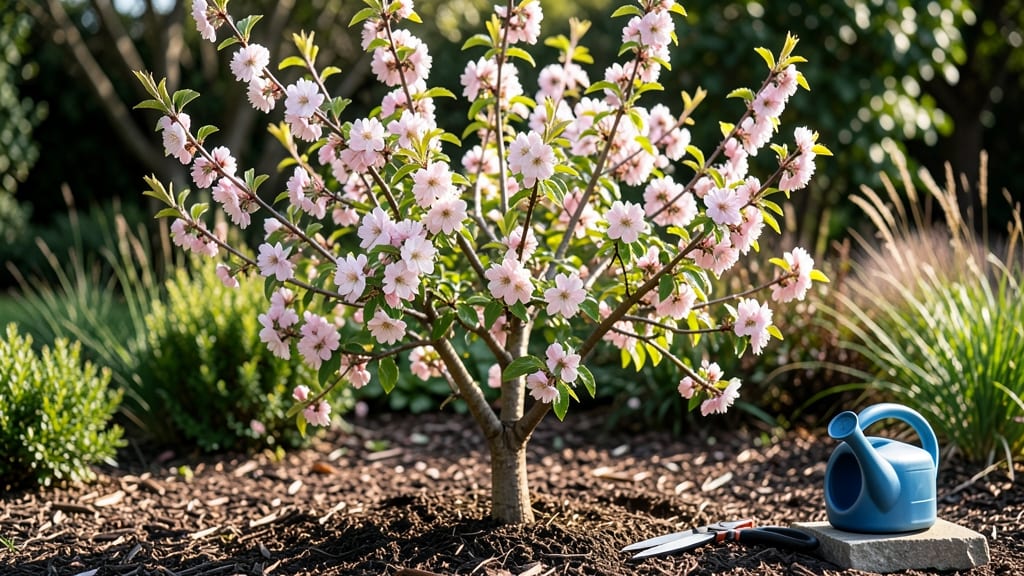
The peppermint peach flowering tree blooms like a fairy tale in spring, with fragrant pink flowers that smell like candy. 🌸 I learned the hard way that planting it in the wrong spot means weak growth and sparse blooms—until I discovered pole training, which turns this tree into a space-saving, showstopping feature.
The secret isn’t just pruning; it’s guiding its growth upward so it thrives even in tight yards or small urban gardens.
Start with well-draining soil mixed with compost—this tree hates soggy roots—and plant it where it gets 6+ hours of sunlight daily. Water deeply once a week (more in summer heat), but avoid wetting the leaves to prevent fungal issues.
The pole training begins in early spring: tie the main stem to a sturdy bamboo stake, then prune side branches to encourage a single, strong trunk. Within a year, you’ll have a tree that looks like it’s been growing for decades, not just planted.
By summer, you’ll be rewarded with clusters of fragrant pink blooms that attract bees and hummingbirds, followed by tiny, edible peaches (though they’re not the juiciest—grow them for the show!). The real magic happens in winter when the tree’s bare branches create a striking silhouette against the sky.
With the right care, this tree will outlive you—and still look stunning while doing it.
Pole training isn’t just for small spaces; it also makes pruning and harvesting easier. Just remember: prune in late winter to shape the tree, and avoid heavy cuts that stress it. If you live in a colder zone, mulch around the base to protect roots from freeze-thaw cycles.
The first few years are about patience—this tree rewards long-term care with decades of blooms.
📚 In This Guide
- What you need
- Instructions
- Tips and common mistakes
- Wrapping up and next steps
What you need
- ● Peppermint peach flowering tree sapling (1-2 plants, depending on space) Dwarf or semi-dwarf variety (e.g., Prunus persica ‘Bonanza’ or similar compact cultivars)
- ● Healthy, disease-free, and 2–3 years old for best results
- ● Well-draining soil mix (50 lbs minimum) Compost (20%), garden soil (50%), and perlite/sand (30%) for aeration
- ● pH balanced (6.0–7.0)
- ● 5-gallon container or in-ground planting area Container: At least 18" deep with drainage holes
- ● In-ground: Full sun (6+ hours/day) with protection from strong winds
- ● Organic fertilizer (balanced 10-10-10 or fruit-tree-specific) Slow-release granules (1 lb per plant) or liquid feed (every 4–6 weeks)
- ● Pole-training kit 1–2 bamboo or metal stakes (6–8 ft tall, depending on desired height)
- ● Soft tree ties or rubber bands (non-abrasive, 3–4 per pole)
- ● Pruning tools Bypass pruners (sharp, sterilized)
- ● Loppers (for thicker branches)
- ● Hand saw (for stubborn limbs)
- ● Mulch (2–3 inches of wood chips or straw to retain moisture)
- ● Drip irrigation system (for consistent watering)
- ● Growth regulator (e.g., Paclobutrazol to control height in containers)
- ● Tree spray (neem oil or copper fungicide for pest/disease prevention)
- ● Garden gloves (to protect hands during pruning)
Step-by-step instructions for pole-training a peppermint peach tree
Here's how I train these stunning trees to grow vertically—saving space while maximizing blooms.
🪴 Step 1: Choose the Right Location and Support Pole
Find a spot with 6-8 hours of direct sun daily. Peppermint peach thrives in full sun, and partial shade will reduce flowering. I always pick a location near a fence or wall where the tree can lean naturally against a sturdy support.
Install a 6-foot wooden post (4x4 inch) at least 12 inches deep in the ground. Use a post hole digger for clean edges, then backfill with gravel for drainage. Drive the post firmly so it doesn’t wobble—this tree will lean against it as it grows. For extra stability, add diagonal braces if your garden gets windy.
🌱 Step 2: Plant the Tree and Attach the First Guide
Dig a hole twice as wide as the root ball but no deeper. Place your peppermint peach tree in the center, ensuring the graft union (the bump near the base) sits 2-3 inches above soil level. This prevents rot and encourages strong branching.
Backfill with native soil, tamping gently to remove air pockets. Water deeply to settle the roots, then attach a flexible tree tie (not wire—it can cut into bark) to the main trunk and the support pole. Position the tie 12 inches above the graft union so the tree grows straight up initially. Don’t cinch it too tight—you should be able to fit a finger between the trunk and the tie.
☀️ Step 3: Train the Leader and Encourage Branching
As the tree grows, let the central leader (main stem) extend upward until it reaches 3 feet tall. This becomes your main vertical trunk. Once it hits this height, cut back the tip by ¼ inch to encourage lateral buds to swell. You’ll see new side shoots forming within 2-3 weeks.
Select the 3 strongest side branches and tie them to the pole at 45-degree angles using additional tree ties. Space these branches 6-8 inches apart vertically—this creates a tiered look and maximizes bloom display. Prune any competing branches that grow straight up or inward, as they’ll steal energy from your chosen structure.
✂️ Step 4: Prune for Shape and Bloom Control
In late winter or early spring, before new growth begins, prune back any branches that grew too long or became tangled. Cut just above a bud that faces outward—this opens up the tree’s center for better airflow and sunlight penetration. Remove any dead, crossing, or diseased branches immediately.
For flowering, I thin out crowded clusters so each branch has 3-5 blooms per stem. Too many flowers can overwhelm the tree, leading to smaller, weaker blooms. After flowering, if you want to encourage more blooms next year, prune lightly—just enough to maintain the shape without removing too many growth points.
💧 Step 5: Water, Feed, and Monitor Growth
Water deeply once a week during the first growing season, ensuring the soil stays moist but not soggy. Peppermint peach trees are drought-tolerant once established, but young trees need consistent moisture. I check by sticking my finger 2 inches into the soil—if it’s dry, it’s time to water.
Feed with a balanced 10-10-10 fertilizer in early spring and again after flowering. Avoid high-nitrogen fertilizers—they promote leafy growth at the expense of blooms. Mulch around the base with 2-3 inches of organic mulch to retain moisture and regulate soil temperature. Keep the mulch 6 inches away from the trunk** to prevent rot.
Tips & tricks for perfect pole-trained peppermint peach trees
The secret to stunning vertical growth lies in these simple yet powerful techniques that keep your peppermint peach thriving while saving space. Here's what I've learned after watching my trees transform from scraggly saplings into elegant, blooming masterpieces.
Sunlight Strategy: That 6-8 hours of direct sun isn't just a suggestion—it's non-negotiable for peppermint peach trees. I've seen trees in partial shade produce half the blooms, and the flowers that do appear are often smaller. If your garden has limited sun, consider positioning the pole near a south-facing wall to maximize reflected sunlight during the critical morning hours when UV intensity is highest.
Support Pole Stability: I can't stress this enough—the 6-foot wooden post needs to be rock-solid. After my first attempt with a flimsy bamboo pole, I learned the hard way when a summer storm toppled it. For windy areas, add diagonal braces at a 45-degree angle from the base to the top. This creates a triangle of support that's nearly unbreakable. If you're using a fence or wall, make sure it can handle the weight—peppermint peach trees can get surprisingly heavy as they mature.
Pruning Precision: When you're thinning those crowded clusters to 3-5 blooms per stem, here's my pro tip: look for the largest, healthiest buds on each branch. These will produce the most vibrant flowers. I also make a point to remove any blooms that appear on the main trunk below the first tier of branches—this forces energy into the decorative structure you're creating rather than wasted vertical growth. The 2-3 week window after your initial tip pruning is critical—this is when those lateral buds will either swell into branches or wither away.
Watering Wisdom: The "once a week" guideline works for most climates, but I've learned to adjust based on soil type. Sandy soil drains so quickly that I water every 4-5 days, while clay soil keeps moisture so well I can stretch to 10 days between waterings. Always check that 2-inch depth—it's the most reliable indicator. And here's a trick I picked up: water in the early morning when evaporation is lowest. This gives roots maximum time to absorb moisture before the heat of the day.
Pro Tips for Peppermint Peach Flowering Tree
- The secret to stunning vertical growth lies in these simple yet powerful techniques that keep your peppermint peach t...
- Sunlight Strategy: That 6-8 hours of direct sun isn't just a suggestion—it's non-negotiable for peppermint peach tree...
- Support Pole Stability: I can't stress this enough—the 6-foot wooden post needs to be rock-solid. After my first atte...
Frequently asked questions
Got questions about growing a peppermint peach flowering tree in your compact garden? You’re not alone! Here are answers to the most common queries—from pruning hacks to troubleshooting—so you can keep your pole-trained beauty thriving.
How fast does a peppermint peach tree grow on a pole?
A pole-trained Prunus persica (peppermint peach variety) typically grows 12–24 inches per year, depending on sunlight, soil, and care. With proper pruning and support, you can guide it to your desired height—ideal for small spaces! Pro tip: Use a sturdy bamboo stake or trellis to prevent bending, especially in windy areas.
When is the best time to prune for maximum flowers?
Prune your peppermint peach tree late winter or early spring (just before buds swell) to encourage vibrant blooms. Avoid heavy pruning after flowering, as it may reduce next year’s blossoms. Quick hack: Trim back 1/3 of the oldest growth annually to maintain shape and airflow.
Why aren’t my peppermint peach flowers turning into fruit?
Peach trees need cross-pollination (even if they’re flowering varieties) and consistent care to set fruit. If blooms drop without fruit:
- Check temps: Peaches need chill hours (300–500)—if winters are too mild, blooms may abort.
- Hand-pollinate: Gently shake branches on sunny days to help bees.
- Water deeply: Drought stress can cause flower drop.
Can I grow a peppermint peach tree in a container?
Yes! Choose a large, deep pot (15+ gallons) with drainage and use well-draining soil. Pole-train it vertically to save space. Container tip: Move pots indoors (or to a garage) if temps drop below 20°F—peach trees are not frost-hardy year-round.
What’s a good alternative if I want fragrant flowers but no fruit?
If you love the peppermint peach’s scent but prefer low-maintenance blooms, try:
- Dwarf cherry blossom (Prunus serrulata ‘Kanzan’) – Fragrant, compact, and cold-hardy.
- Pole-trained jasmine (Jasminum officinale) – Climbing, fragrant, and thrives in containers.
- Mock orange (Philadelphus) – Sweetly scented, drought-tolerant, and great for small gardens.
How do I prevent leaf curl disease in my peppermint peach tree?
Leaf curl is common in peaches but manageable! Remove infected leaves immediately and apply copper fungicide in late fall/winter. Prevention tip: Plant in full sun (6+ hours/day) and avoid overhead watering to reduce humidity. Choose disease-resistant varieties like ‘Bonanza’ if possible.
Wrapping up and next steps
Ready to transform your compact garden with a stunning peppermint peach flowering tree? 🌸 Pole-training isn’t just about space—it’s about unlocking vibrant blooms and luscious fruit while keeping your yard tidy and stylish.
With the right tools, timing, and techniques, you’ll enjoy a thriving, manageable tree that steals the show every season.
Your next step? Grab your pruners and start small—whether it’s training a single branch or planning your full garden layout. The best time to act is now—your future peppermint peach tree is waiting for your touch! 🌱