
Picking
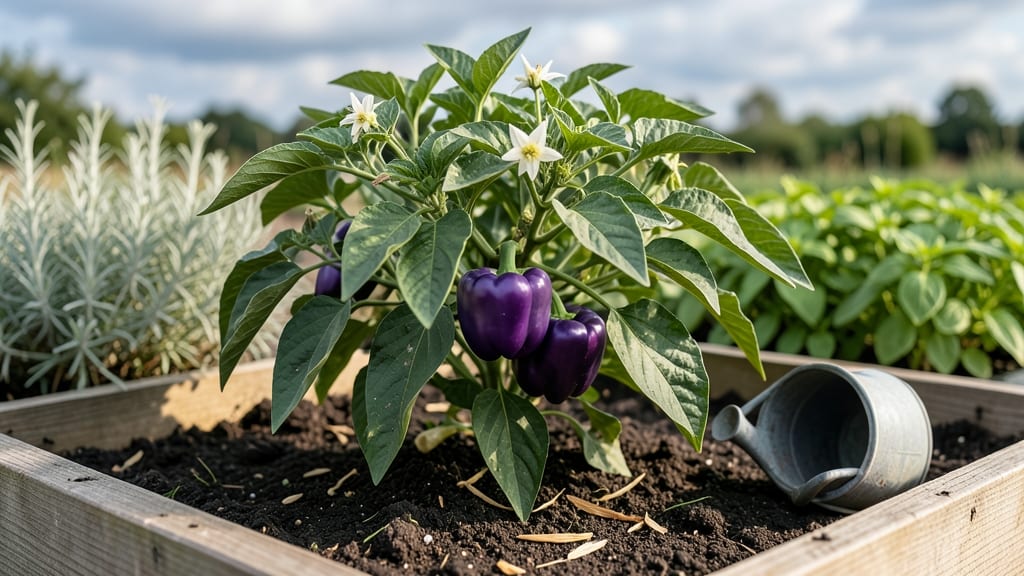
Growing Purple Beauty sweet peppers means harvesting vibrant purple pods that blush red when ripe—like edible jewels in your garden. 🌿 I learned the hard way that these beauties need hotter soil than most peppers, or they’ll sulk and refuse to fruit.
The transformation from deep purple to ruby red is worth the extra effort, though—each bite tastes sweeter than store-bought varieties. Start seeds indoors 8-10 weeks before last frost, using well-draining soil and bottom heat (70°F+) to jumpstart growth.
Transplant after all danger of frost has passed, spacing plants 18-24 inches apart in full sun. The key? Consistent warmth—they’re finicky about temperature drops, so mulch heavily to protect roots. You’ll know you’re doing it right when those first purple buds appear by mid-summer.
Water deeply once a week (2 inches total), keeping soil moist but never soggy—rot is the #1 killer. Feed with balanced fertilizer at planting, then switch to low-nitrogen 5-10-10 once flowers appear. The payoff? Sweet, thick-walled peppers that stay crisp even when fully ripe.
Harvest when fully purple (or let them blush red for extra sweetness), and you’ll have pods that double as garden art and kitchen stars. Common pests like aphids or spider mites love these peppers too, so inspect leaves weekly.
A neem oil spray early in the season keeps them at bay. And here’s the secret: Prune suckers aggressively—it forces energy into fruit production instead of leafy growth.
With the right care, you’ll go from seed to table in 90 days, with peppers so stunning they’ll make your neighbors ask, "What’s that gorgeous plant?" (Spoiler: It’s dinner.)
📚 In This Guide
- What you need
- Instructions
- Tips and common mistakes
- Wrapping up and next steps
What you need
- ● Purple Beauty sweet pepper seeds (5-10 seeds per plant; start with 3-5 plants for a good harvest).
- ● Seed-starting mix (sterile, well-draining; 10-15 cubic feet for seed trays).
- ● Biodegradable seedling pots or trays (2-3 inches deep, with drainage holes).
- ● Grow lights or sunny windowsill (12-16 hours of light daily for seedlings).
- ● Balanced fertilizer (5-10-10 or organic options like compost tea).
- ● Transplanting pots or garden bed (5-gallon containers or 18+ inches of soil depth in the ground).
- ● Mulch (straw, wood chips, or black plastic to retain moisture and suppress weeds).
- ○ Stakes or cages (optional but helpful for support as plants grow 3-4 feet tall).
- ● Climate: Purple Beauty peppers thrive in USDA Zones 9-11 but can be grown in cooler zones with proper care (start indoors 8-10 weeks before last frost).
- ● Temperature: Ideal soil temp for germination: 70-90°F; mature plants prefer 75-85°F.
- ● Sunlight: 6-8 hours of full sun daily (more sun = sweeter peppers!).
- ● Soil pH: 6.0-6.8 (test and amend with lime or sulfur if needed).
- ● Watering: Keep soil consistently moist but not waterlogged (1-1.5 inches per week).
- ● Epsom salt (for magnesium boost, 1 tbsp per gallon of water every 2 weeks).
- ● Copper tape or fungicide (to prevent blight in humid climates).
- ● Pruning shears (for shaping plants and removing suckers).
- ● Row covers (to protect seedlings from pests or cold snaps).
Step-by-step instructions for cultivating purple Beauty sweet peppers
Here’s how to grow these stunning peppers from seed to harvest, ensuring that vibrant purple-to-red transformation everyone loves.
🌱 Step 1: Start Seeds Indoors at the Right Time
Begin seeds indoors 8-10 weeks before your last frost date, as Purple Beauty peppers need warmth to germinate properly. Fill 2-3 inch deep seed trays with a sterile seed-starting mix—never garden soil, which can harbor diseases. I like to use biodegradable pots so I can transplant without disturbing delicate roots.
Plant 1-2 seeds per cell at a depth of ¼ inch, just below the soil surface. Cover lightly with mix and mist gently with water until the soil is evenly moist but not soggy. Place the tray in a warm spot (75-85°F)—a seedling heat mat speeds germination significantly. Expect sprouts in 7-14 days, depending on your home’s warmth.
☀️ Step 2: Provide Optimal Light and Prevent Leggy Growth
The moment seedlings emerge, move them to a bright, south-facing window or under grow lights for 14-16 hours daily. Without enough light, seedlings stretch toward the sun (leggy growth), which weakens them. I use a full-spectrum LED grow light just 2-4 inches above the plants, raising it as they grow to maintain that distance.
Strong seedlings have thick stems, deep green leaves, and compact spacing between leaves. If you notice pale, elongated stems, your light source is too far away—adjust immediately. Rotate trays quarter-turn daily to ensure even growth and prevent leaning.
🪴 Step 3: Transplant Seedlings Outdoors After Hardening Off
Two weeks before your last frost, start hardening off seedlings by placing them outside in a sheltered, shaded spot for 1-2 hours the first day. Gradually increase outdoor time by 1 hour daily over 10-14 days, introducing more sun and wind. This prepares them for the garden and prevents transplant shock.
Choose a sunny location with 6-8 hours of direct sunlight and well-draining soil. Purple Beauty peppers thrive in rich, slightly acidic soil (pH 6.0-6.8). Plant seedlings 12-18 inches apart in rows 24-30 inches apart—this gives them room to grow without competing for nutrients. Water deeply at planting to settle the soil.
💧 Step 4: Maintain Consistent Moisture and Fertility
Purple Beauty peppers hate soggy roots but need even moisture to develop their signature sweetness. Water deeply 1-2 times per week, aiming for 1 inch of water per week, and more during hot spells. I water in the early morning to reduce evaporation and fungal risks. Use a drip irrigation system or soaker hose to keep moisture at root level.
Feed plants with a balanced, organic fertilizer (10-10-10) every 3-4 weeks once flowers appear. Purple Beauty peppers are heavy feeders, so I also top-dress with compost mid-season to boost soil fertility. Avoid over-fertilizing with nitrogen—it promotes leafy growth at the expense of fruit production.
✂️ Step 5: Prune and Support for Maximum Yield
Prune suckers (the small shoots that form in the leaf axils) to direct energy toward fruit production. Remove any yellow or diseased leaves immediately to prevent spread. I also pinch off the first few flowers if the plant looks stressed—this encourages stronger root and stem growth before fruiting.
Use cages or stakes to support plants as they grow, especially in windy areas. Purple Beauty peppers can get heavy with fruit, and proper support prevents breakage. Harvest peppers when they’re 6-8 inches long and still firm, typically 70-80 days after transplanting. The color will shift from purple to red as they ripen—pick them at your preferred stage for the best flavor.
Tips & tricks for perfect purple Beauty sweet pepper cultivation
Took me years of trial and error to master these purple beauties—here's how to avoid my early mistakes and grow peppers that'll make your garden the envy of the neighborhood.
Germination Environment: The 75-85°F warmth range is non-negotiable for Purple Beauty seeds. I've found that placing the seed tray on top of a refrigerator (not inside) creates the perfect microclimate without requiring special equipment. If your home runs cooler, consider using a simple heat mat—just make sure it has an automatic shutoff for safety. The 7-14 day germination window can feel like forever, but patience pays off with stronger seedlings.
Light Source Strategy: Those 14-16 hours daily of light are crucial for preventing leggy growth. I start with LED grow lights just 2-4 inches above seedlings and raise them weekly as plants grow. A key trick: position lights so they're slightly off-center from the tray—this forces seedlings to lean toward the light source, creating stronger stems. Watch for leaves touching the light fixture; if they do, you've got them too close.
Transplant Timing: The 10-14 day hardening off period is your insurance against transplant shock. I've learned to check weather forecasts during this time—if a cold snap is predicted, delay transplanting by a few days. Purple Beauty peppers are sensitive to temperature fluctuations, so aim for nights above 50°F before moving them outdoors permanently. The 12-18 inch spacing gives them room to develop their signature bushy growth habit.
Soil pH Secret: While the instructions mention pH 6.0-6.8, I've found Purple Beauty peppers actually prefer the slightly higher end of this range (6.5-6.8) for optimal nutrient uptake. Test your soil before planting—you can adjust pH by adding lime to raise it or sulfur to lower it. The slightly acidic environment helps prevent blossom end rot, which can ruin your harvest.
Pro Tips for Purple Beauty Sweet Pepper
- Took me years of trial and error to master these purple beauties—here's how to avoid my early mistakes and grow peppe...
- Germination Environment: The 75-85°F warmth range is non-negotiable for Purple Beauty seeds. I've found that placing ...
- Light Source Strategy: Those 14-16 hours daily of light are crucial for preventing leggy growth. I start with LED gro...
Frequently asked questions
Got questions about growing and harvesting your Purple Beauty sweet peppers? We’ve got answers!
Here are some of the most common queries from gardeners eager to cultivate these stunning, flavor-packed peppers.
When do Purple Beauty peppers turn red?
The Purple Beauty starts deep purple but transforms into a vibrant red when fully ripe—typically 60–90 days after transplanting, depending on climate. In cooler weather, the process slows down. Pro tip: Harvest before the first frost to ensure full color change!
Can I eat Purple Beauty peppers when they’re still purple?
While they’re sweeter and milder when red, purple peppers are still edible and packed with flavor. Many gardeners love their earthy, slightly tangy taste at this stage. Just know the sugar content peaks as they ripen to red.
How long does it take to grow Purple Beauty peppers from seed?
From seed to harvest, expect 75–90 days in warm climates (Zone 9+) or 90–120 days in cooler zones (Zone 7–8). Start seeds indoors 8–10 weeks before the last frost for a head start. Pro tip: Use heat mats if your home is chilly!
What can I do if my Purple Beauty peppers stay green?
Green peppers may indicate cool temperatures, lack of sunlight, or overcrowding. Try moving plants to a sunnier spot ( 6+ hours of direct sun/day), thinning foliage for better airflow, or using a row cover to trap heat. If the issue persists, check for pests like aphids.
Are Purple Beauty peppers good for containers?
Yes! These peppers thrive in containers as long as the pot is at least 12–18 inches deep with drainage holes. Use a well-draining potting mix and fertilize every 2–3 weeks. Just ensure the container gets plenty of sunlight—balconies or patios work great!
Wrapping up and next steps
The purple beauty sweet pepper isn’t just a feast for the eyes—it’s a rewarding harvest waiting to happen! 🌱 From selecting the right soil to nurturing your plants through their stunning purple-to-red transformation, every step is a chance to connect with nature’s vibrancy.
With patience and care, you’ll soon be enjoying homegrown peppers that are as delicious as they are beautiful.
Ready to dive in? Grab your gloves, mark your calendar, and start planting! Your garden (and taste buds) will thank you. 🌿✨