
Planting
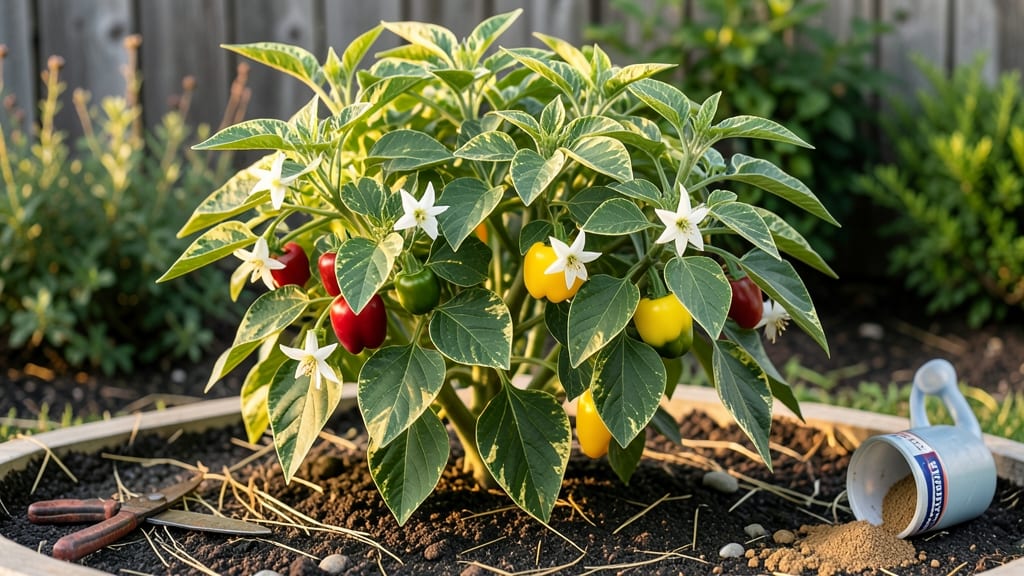
Growing variegated pepper plants means turning your garden into a living work of art—striped foliage that doubles as a heat-producing powerhouse. 🌿 These peppers aren’t just ornamental; their unique color patterns (think white, yellow, or pink stripes on deep green) make them conversation starters while delivering the same fiery kick as their solid-colored cousins.
The key? Trellising them early to support their bushy growth and prevent sprawl, which also makes harvesting easier and improves air circulation to keep those variegated leaves vibrant all season.
Start with well-draining soil rich in organic matter—think compost mixed into garden beds or potting mix for containers—and plant seeds indoors 8-10 weeks before your last frost. Variegated peppers crave full sun (6-8 hours daily) and consistent moisture, but avoid soggy soil, which can rot their delicate roots.
A 5-gallon container works well for one plant, and pruning suckers (those side shoots) encourages energy into fruit production instead of extra foliage.
The striped leaves do photosynthesize efficiently, but they’re also more prone to sunburn in intense afternoon heat, so dappled shade in hot climates helps preserve their striking patterns.
By midsummer, you’ll be harvesting peppers with bold stripes and intense heat, perfect for drying, pickling, or fresh salsas. The plants stay productive longer than standard varieties because their variegated leaves signal to the plant that it’s time to focus on fruit rather than more growth.
Just watch for aphids—those pesky pests love the sweet sap of variegated leaves—and spray with neem oil if you spot clusters. With the right care, these peppers become the star of your garden, blending beauty and bold flavor in one compact package.
Whether you’re growing them for their ornamental value or heat, variegated peppers thrive in containers or garden beds alike. For best results, succession-plant seeds every 2 weeks to extend your harvest, and save seeds from your favorite varieties to grow next year’s striped heat-makers.
The payoff? A garden that’s as visually stunning as it is productive—no compromise needed.
📚 In This Guide
- What you need
- Instructions
- Tips and common mistakes
- Wrapping up and next steps
What you need
- ● Pro tip: 💡 Start seeds indoors 8–10 weeks before last frost for a head start!
Step-by-Step instructions for growing variegated pepper plants on trellises
Here's how to cultivate striking striped peppers that climb, produce, and stay disease-resistant—my foolproof method.
🌱 Step 1: Select and Start Seeds or Transplants
Choose variegated pepper varieties like 'Purple Stripe' or 'Jalapeño Variegated' from a reputable seed supplier. I always start seeds indoors 8-10 weeks before last frost in biodegradable pots (6-inch diameter) filled with sterile seed-starting mix. The variegation comes from chlorophyll-deficient cells, so these plants need more light than standard peppers—place them under grow lights immediately.
Sow seeds ¼ inch deep and maintain 75-85°F soil temperature using a heat mat. Germination takes 10-14 days, but variegated seeds often sprout slower—don't give up after a week. Once seedlings show true leaves, remove the weakest one to leave the strongest plant per pot. Watch for pale yellow stripes emerging on new growth; this confirms variegation is active.
☀️ Step 2: Harden Off and Install Trellises
Two weeks before transplanting, begin hardening off seedlings by moving them outdoors for 1-2 hours daily, gradually increasing exposure. Install 3-4 foot tall trellises (I use bamboo stakes with twine) in full sun locations—variegated peppers need 6+ hours of direct sunlight to develop vibrant color and fruit. The trellis supports 1-2 plants per structure to prevent overcrowding.
Transplant seedlings when night temperatures stay above 55°F. Bury half the stem to encourage root growth and tie the main stem to the trellis with soft plant ties. Water deeply at transplanting to settle soil around roots, and mulch with 2 inches of straw to retain moisture. You'll see new variegated leaves within 7-10 days—this confirms successful acclimation.
💧 Step 3: Train Vines and Manage Watering
Prune suckers (side shoots) below the first flower cluster to direct energy upward. Gently weave vines along the trellis, securing with ties every 6-8 inches. Variegated peppers need consistent moisture—water at the base when the top 1 inch of soil feels dry, avoiding wetting leaves to prevent disease. I use drip irrigation for precision, delivering 1 inch of water weekly during dry spells.
Fertilize every 3-4 weeks with a balanced organic fertilizer (10-10-10) diluted to half strength. Variegated plants may show lighter green or yellowing if nitrogen is insufficient—adjust with a fish emulsion if needed. Watch for first flowers appearing 8-10 weeks after transplanting; these will develop into striped peppers if pollinated properly.
✂️ Step 4: Harvest and Prune for Continuous Production
Harvest peppers when they reach desired size and color—variegated varieties often develop cream, pink, or purple stripes as they ripen. Use pruning shears to cut stems just above a leaf node. Remove spent flowers after harvest to encourage new blooms. I leave 3-4 peppers per cluster to maximize size and flavor.
As fall approaches, reduce watering gradually to prep plants for dormancy. If temperatures drop below 40°F, bring potted variegated peppers indoors to a cool, bright location (50-60°F). With proper care, your trellised variegated peppers will produce throughout the season, delivering unique striped heat to your kitchen.
Tips & tricks for perfect variegated pepper plants
These game-changing strategies will help you nurture vibrant, productive striped peppers that outshine standard varieties.
Lighting is Everything: Variegated peppers need 14-16 hours of light daily—more than regular peppers—to maintain their striking coloration. Supplement natural sunlight with LED grow lights (12-14 watts per square foot) positioned 6-12 inches above plants. The 75-85°F soil temperature during germination is just as critical as light exposure; if your heat mat isn't maintaining this range, try placing pots on a sunny windowsill with a clear plastic dome to trap warmth.
Pruning for Productivity: In Step 3, when pruning suckers below the first flower cluster, leave 2-3 main branches to maximize fruit production. I've found that variegated plants often produce smaller yields than standard peppers, so strategic pruning pays off. Use sterilized pruning shears to avoid introducing disease through cuts. The 6-8 inch spacing between ties creates optimal air circulation—this prevents fungal issues while encouraging upward growth that trellises are designed to support.
Watering Wisdom: The 1 inch weekly watering guideline assumes average rainfall—adjust during heatwaves by increasing to 1.5 inches while maintaining consistent moisture. Water at soil level using a drip system or soaker hose to avoid wetting foliage, which can trigger powdery mildew. I've noticed variegated plants show early signs of stress (yellowing between stripes) when soil dries out, so always check the top 1 inch before watering. Mulching with 2 inches of straw helps maintain even moisture levels.
Seasonal Transition Strategy: When night temperatures drop below 55°F in fall, gradually reduce watering over 2-3 weeks to prepare plants for dormancy. For container-grown variegated peppers, move them to a cool, bright location (50-60°F) with 6+ hours of indirect light to maintain health through winter. I've successfully overwintered plants this way, and they produce again in spring with proper care—though you might see slightly less vibrant variegation until summer sunlight returns.
Pro Tips for Variegated Pepper Plant
- These game-changing strategies will help you nurture vibrant, productive striped peppers that outshine standard varieties.
- Lighting is Everything: Variegated peppers need 14-16 hours of light daily—more than regular peppers—to maintain their striking coloration.
- Pruning for Productivity: In Step 3, when pruning suckers below the first flower cluster, leave 2-3 main branches to maximize fruit production.
Frequently asked questions
Got questions about growing your own variegated pepper plant? You’re not alone! Here are answers to the most common queries—from planting to harvest—so you can grow bold, striped peppers with confidence.
How do I start growing variegated pepper plants from seed?
Start by soaking seeds in warm water for 24 hours to speed up germination. Plant them ½ inch deep in seed-starting mix, keeping soil moist (not soggy) under bright, indirect light. Seedlings typically sprout in 7–14 days. Transplant outdoors after the last frost when soil is at least 60°F (15°C).
How long does it take for variegated pepper plants to bear fruit?
Expect a 90–120 day timeline from transplanting to harvest, depending on the variety. Variegated peppers (like ‘Rainbow Mix’ or ‘Jalapeño Variegato’) may take slightly longer due to their unique genetics. Provide full sun (6+ hours daily) and consistent watering to encourage fruiting.
Can I grow variegated peppers in containers, and what size pot do I need?
Use a 5-gallon pot minimum with drainage holes to accommodate roots and trellis support. Ensure the container has at least 12 inches of depth and width. Variegated peppers thrive in containers but may produce fewer peppers than in-ground plants.
Why are my variegated pepper leaves turning yellow or brown?
Yellowing leaves often signal overwatering or nutrient deficiency. Brown edges? Check for underwatering or salt buildup from tap water. Adjust care: water at soil level (not overhead), use well-draining soil, and fertilize with a balanced 10-10-10 formula every 4–6 weeks.
Are variegated peppers spicier than regular peppers?
Not necessarily! Variegation (the striped pattern) is purely cosmetic—it doesn’t affect heat levels. However, some variegated varieties (like ‘Ghost Pepper Variegated’) may inherit spicier traits from their parent plants. Always check the specific variety’s heat rating (e.g., Scoville units) for accuracy.
Wrapping up and next steps
Growing variegated pepper plants on a trellis isn’t just about adding visual flair to your garden—it’s a rewarding way to maximize space, boost airflow, and harvest vibrant, heat-packed peppers with ease! 🌿 Whether you’re a seasoned gardener or just starting, these striped beauties thrive with the right care, from sturdy trellises to consistent sunlight.
With their unique colors and bold flavors, they’re a game-changer for both aesthetics and harvests.
Ready to dive in? Start small—pick one or two varieties to experiment with—and let your trellis become the star of your garden. Happy planting, and may your peppers be plentiful and spicy-sweet! 🌶️✨