
Picking
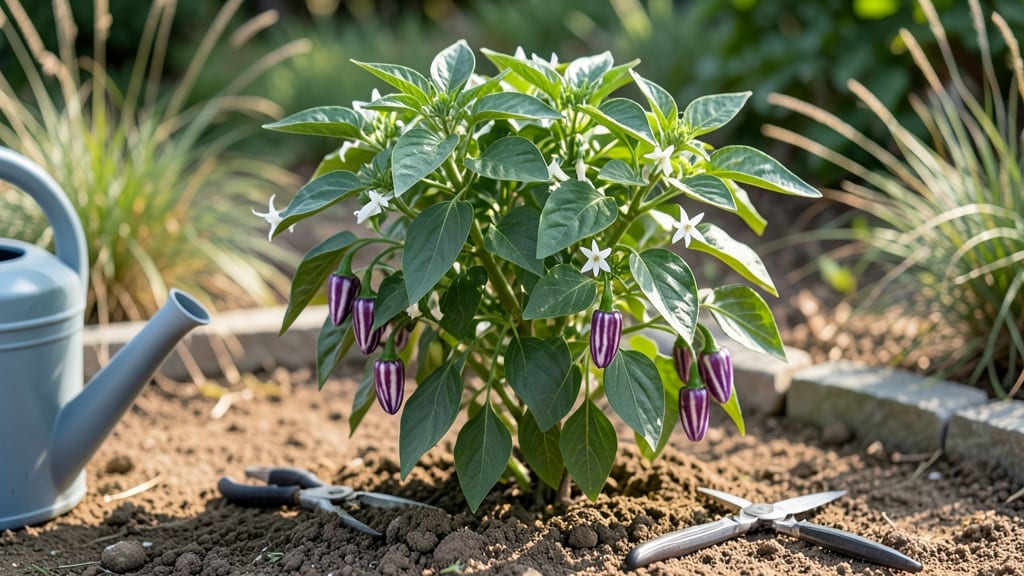
Growing Violet Sparkle peppers is like cultivating edible art—those iridescent purple fruits shimmer under sunlight like tiny jewels. 🌿 I planted my first batch last spring, and the moment I saw the first deep violet blossoms, I knew this pepper was special.
Unlike your standard green or red peppers, these beauties change color as they ripen, starting pale green before transforming into stunning purples and even blues under certain lighting. The secret to their vibrant display?
Warm soil, consistent moisture, and a sunny spot that gets at least 6-8 hours of direct sunlight daily. These peppers thrive in USDA zones 9-11, but with a little extra care—like using black plastic mulch to warm the soil—you can grow them in cooler zones too.
They’re not fussy about soil as long as it drains well, but a balanced fertilizer every 4-6 weeks keeps the plants happy and productive. Once established, these peppers reward you with sweet, crisp fruits that taste like a cross between bell peppers and cherry tomatoes.
The flavor deepens as they ripen, making them perfect for fresh eating or preserving. Just watch for blossom end rot—keep the soil evenly moist to prevent it, and you’ll avoid the most common pepper-growing headache.
Here’s the best part: they’re prolific producers, often yielding dozens of peppers per plant if given the right conditions. Whether you’re growing in containers or in-ground, these peppers bring a splash of color and flavor to any garden. Let’s get those seeds in the ground!
📚 In This Guide
- What you need
- Instructions
- Tips and common mistakes
- Wrapping up and next steps
What you need
- ● Violet Sparkle Pepper Seeds: 3–5 seeds (or 1 seedling if purchasing a starter plant). Look for reputable seed suppliers specializing in heirloom or colorful peppers.
- ● Growing Containers or Garden Bed: Containers: 5–10 gallon pots with drainage holes (1 per plant). Use fabric pots or ceramic for better airflow.
- ● Garden Bed: Full sun exposure (6+ hours/day) and well-draining soil. Amend soil with compost if needed.
- ● Potting Mix: 5–10 gallons of high-quality, well-draining potting mix (e.g., Miracle-Gro Potting Mix or a blend with perlite/vermiculite). Avoid garden soil unless amended.
- ● Fertilizer: Balanced fertilizer (10-10-10 or 20-20-20) for seedlings.
- ● Low-nitrogen, high-phosphorus fertilizer (5-10-10) once flowering begins.
- ● Watering Can or Hose: With a gentle spray nozzle to avoid disturbing seedlings.
- ○ Grow Lights (Optional but Helpful): LED full-spectrum lights (12–16 hours/day) if starting indoors before the last frost.
- ● Gloves: Heavy-duty gardening gloves to protect hands from thorns.
- ● Pruning Shears: Sharp, sterilized shears for trimming excess foliage or dead leaves.
- ● pH Test Kit: To ensure soil pH is between 6.0–7.0 (ideal for peppers). Adjust with lime or sulfur if needed.
- ● Support Stakes or Cages: 4–6 foot tall stakes or tomato cages to support heavy pepper plants.
- ○ Black Plastic Mulch (Optional): Helps retain moisture and warmth (especially in cooler climates).
- ● Insect Spray (Organic): Neem oil or insecticidal soap to deter pests like aphids or spider mites.
- ● Patience! Violet Sparkle Peppers take 90–120 days to mature.
- ● Consistent warmth: Peppers thrive in temperatures between 70–85°F (21–29°C).
- ● Sunlight: Full sun is non-negotiable—these peppers love to bask!
- ● Space: Plants need 18–24 inches of spacing to grow robustly.
Step-by-Step instructions for growing Violet Sparkle peppers
Here's how to coax those stunning purple fruits from seed to harvest with minimal fuss.
🌱 Step 1: Start Seeds Indoors 8-10 Weeks Before Last Frost
Fill seed trays with sterile seed-starting mix and plant 2 seeds per cell at ¼ inch deep. Violet Sparkle peppers germinate best at 75-85°F, so use a seedling heat mat if your home runs cooler. Cover with plastic wrap to retain humidity until sprouts appear.
Keep the soil consistently moist but never soggy—you'll know it's right when the surface stays damp but doesn't pool water. Germination takes 10-14 days, though cooler rooms may extend this to 3 weeks. Once seedlings emerge, remove the plastic immediately to prevent damping-off.
I like to label each tray with the variety and date—these peppers take longer to mature than standard bell peppers, so tracking helps avoid transplanting too early. Place trays under grow lights for 14-16 hours daily to prevent leggy growth. Strong seedlings will have thick stems and dark green leaves within 3-4 weeks.
☀️ Step 2: Transplant Seedlings After All Danger of Frost
Choose a location with full sun (6-8 hours daily) and well-draining soil. Violet Sparkle peppers thrive in 60-85°F temperatures but won't tolerate frost. Harden off seedlings by moving them outdoors for 1-2 hours daily over 7-10 days before transplanting.
Dig holes 12-18 inches apart—these peppers need space to sprawl. Plant seedlings 1 inch deeper than their containers to encourage strong root development. Water deeply at the base immediately after transplanting to settle the soil and reduce shock.
Real talk: If your garden soil is heavy clay, mix in 2-3 inches of compost to improve drainage. Violet Sparkle peppers hate soggy roots, so raised beds or containers work beautifully if your ground stays wet.
💧 Step 3: Water Deeply and Fertilize Regularly
Water at the base 1-2 inches deep every 2-3 days during dry spells, but adjust based on rainfall. Let the top 1-2 inches of soil dry out between waterings—this prevents blossom-end rot, a common issue with peppers. Avoid wetting leaves to reduce disease risk.
Feed plants every 2-3 weeks with a balanced 10-10-10 fertilizer or organic compost tea. You'll notice vibrant purple blooms and fruit within 6-8 weeks of transplanting. These peppers are prolific but need consistent nutrients to maintain their striking color.
Here's the thing—Violet Sparkle peppers produce both male and female flowers. The female flowers (with tiny bumps at the base) develop into fruit, while male flowers don't. If you want more peppers, remove male flowers as they appear to redirect energy to fruit production.
✂️ Step 4: Prune and Support for Maximum Yield
Prune suckers (the shoots that grow between the main stem and branches) to encourage bushier growth. I pinch off the first few suckers when they're 2-3 inches tall, then let the plant focus on fruit production. Remove any yellow or diseased leaves immediately to keep the plant healthy.
Use cages or stakes to support the plants as they grow 3-4 feet tall. The heavy purple fruits can weigh branches down, causing them to snap. Tie vines to supports with soft plant ties every 6-8 inches for stability.
Watch for pests like aphids or spider mites—Violet Sparkle peppers attract attention. Spray with neem oil at the first sign of trouble. Once fruits reach 3-4 inches long and turn a deep purple, they're ready to harvest. Use pruning shears to cut stems cleanly, leaving a small portion attached to the plant.
🌿 Step 5: Extend the Harvest Season
Peppers continue producing until first frost, but you can prolong the season by covering plants with a frost cloth on chilly nights. Bring potted plants indoors to a sunny window or under grow lights if your climate turns cold early.
Store harvested peppers in the fridge for 1-2 weeks or ferment them into hot sauce for a vibrant purple kick. The fruits keep their color when cooked, making them perfect for roasting, stuffing, or drying. Save seeds from your best peppers to grow next year's crop—just let them dry completely before storing in a cool, dark place.
Tips & tricks for growing vibrant Violet Sparkle peppers
These simple strategies will help you coax the most stunning purple fruits from your garden.
Heat Matters: Those 75-85°F germination temperatures are non-negotiable for these peppers. If your home stays below 70°F, invest in a seedling heat mat—it's worth the small cost. I've seen germination times stretch to 3 weeks in cooler homes, so don't rush it. Place your seed trays on top of your fridge or near a sunny window to give them a gentle warmth boost.
Lighting Secret: The 14-16 hours of daily grow light in Step 1 prevents those sad, leggy seedlings we all hate. If you notice stems stretching toward the light source, you're not giving them enough. Use full-spectrum LED grow lights—they're energy-efficient and mimic sunlight perfectly. Position them just 2-3 inches above the seedlings to avoid burning tender leaves.
Transplanting Wisdom: Planting seedlings 1 inch deeper than their containers gives roots a strong foundation, but don't bury them too deep—this can cause rot. I like to make a small trench with my finger, place the seedling in it, then gently firm the soil around it. This creates better root contact with the surrounding soil. The 12-18 inch spacing gives plants room to spread their branches without competing for nutrients.
Pest Prevention: Violet Sparkle peppers attract pests like aphids and spider mites because of their vibrant color. I've found that a preventive spray of neem oil every 2 weeks (starting when plants are 4-6 inches tall) keeps them at bay. The key is consistency—don't wait until you see pests to act. Also, water at the base only to keep leaves dry, which naturally deters many common pepper pests.
Pro Tips for Violet Sparkle Pepper
- These simple strategies will help you coax the most stunning purple fruits from your garden.
- Heat Matters: Those 75-85°F germination temperatures are non-negotiable for these peppers.
- Lighting Secret: The 14-16 hours of daily grow light in Step 1 prevents those sad, leggy seedlings we all hate.
Frequently asked questions
How long does it take for Violet Sparkle Peppers to mature?
The Violet Sparkle Pepper typically takes 70–90 days from transplanting to reach maturity, depending on climate and growing conditions. In warmer regions, you might see earlier harvests, while cooler areas may need extra time. Patience pays off—these peppers are worth the wait!
When is the best time to pick Violet Sparkle Peppers?
Harvest when the peppers are fully purple and firm to the touch, usually 1–2 inches long. For the brightest color, pick in the morning when sugars are highest. Use sharp scissors or pruners to avoid damaging the plant—no tugging!
Can I grow Violet Sparkle Peppers in containers?
These peppers thrive in 5-gallon containers or larger with well-draining soil. Ensure the pot has drainage holes and place it in a sunny spot (6+ hours of light daily). Just watch for root-bound stress and repot if needed.
What should I do if my Violet Sparkle Peppers turn dull or lose color?
Dull purple hues often signal lack of sunlight or calcium. Move the plant to a sunnier spot and amend soil with crushed eggshells or lime for calcium. Overwatering can also wash away nutrients—let soil dry slightly between waterings.
Are Violet Sparkle Peppers hot or sweet?
These peppers are mildly sweet with a subtle heat (500–1,000 SHU), perfect for fresh eating or mild salsas. Their vibrant color fades when cooked, so enjoy them raw or lightly sautéed for the full visual and flavor experience!
Wrapping up and next steps
The Violet Sparkle Pepper isn’t just a feast for the eyes—it’s a rewarding challenge for any gardener!
With the right care, you’ll enjoy its stunning purple hues and unique glow under light, turning your garden into a magical space. 🌱✨ Whether you’re a beginner or a seasoned grower, these tips will help you nurture vibrant, healthy peppers all season long.
Ready to dive in? Start by gathering your supplies and find the perfect spot in your garden or container—your Violet Sparkle Pepper adventure begins now! Plant your first seed today and watch your garden sparkle with color.