
Plants
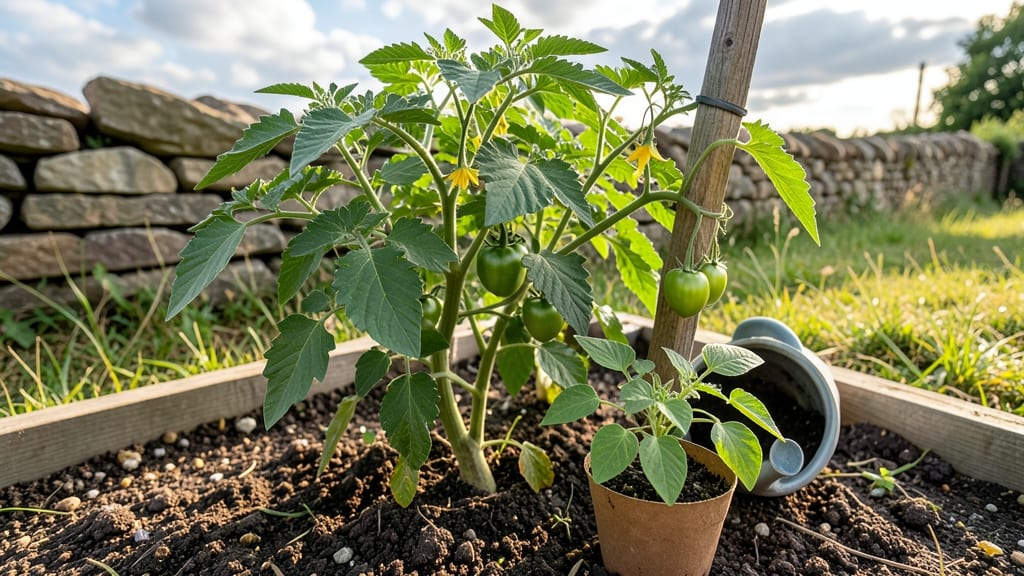
You can plant bell peppers with tomatoes, but avoid direct contact to prevent soil-borne diseases like early blight and fusarium wilt. Space them at least 18 inches apart and use separate rows or containers for better airflow and disease prevention.
Planting bell peppers alongside tomatoes is possible, but their close proximity can create a perfect storm for fungal infections. 🌱 These two plants share common enemies like early blight and fusarium wilt, which thrive in damp soil and spread through spores.
The key is creating separation—whether through staggered rows or individual containers—to disrupt disease transmission while still enjoying their complementary flavors in your garden layout.
For maximum success, consider interplanting them with disease-resistant companions like basil or marigolds. These allies not only improve airflow but also mask the scent of vulnerable plants from pests.
I’ve found that rotating planting zones yearly further reduces pathogen buildup, giving your peppers and tomatoes a fighting chance against these stubborn soil-borne threats.
💡 In This Article
- Disease Risks When Planting Bell Peppers Near Tomatoes
- Optimal Spacing and Companion Planting Strategies for Peppers and Tomatoes
Disease risks when planting bell peppers near tomatoes
The real danger lies in the fungal pathogens these plants share, particularly early blight (Alternaria solani) and fusarium wilt (Fusarium oxysporum). These diseases thrive in moist soil and spread through windborne spores or contaminated water droplets.
When tomatoes and peppers grow too close, their overlapping foliage creates microclimates with high humidity—ideal conditions for fungal growth. Early blight, for example, starts as small brown spots on leaves that expand rapidly under these conditions, eventually killing entire plants.
Fusarium wilt is even more insidious because it attacks the vascular system, clogging a plant's water transport pathways. Once established in the soil, these pathogens can persist for years, making prevention critical. 🌱 The spores often hitch rides on garden tools, water splashes, or even your shoes.
I've seen entire garden beds wiped out when infected tomato plants stood too close to peppers, with the disease jumping between them through shared soil pathogens. This is why professional gardeners treat these plants as "high-risk neighbors" that require careful separation.
What makes this particularly tricky is that both plants belong to the nightshade family (Solanaceae), which means they share similar biological vulnerabilities. Their leaves produce similar chemical signals that attract the same fungal spores, creating a feedback loop where infection spreads exponentially.
Unlike some companion plants that repel pests, tomatoes and peppers don't offer mutual protection—they're essentially competing for the same disease-free space in your garden.
The physical symptoms give clear warning signs: yellowing leaves, wilting despite adequate water, and dark spots with concentric rings (classic early blight). By the time you notice these, the fungal spores have likely already spread to nearby plants.
The key preventive measure is breaking this cycle through proper spacing and airflow, which we'll explore in the next section. This isn't just about aesthetics—it's about creating an environment where these pathogens simply can't establish themselves.
Interestingly, the same soil conditions that make your garden productive—rich organic matter, consistent moisture—also create the perfect breeding ground for these diseases.
The solution lies in disrupting this balance through strategic planting techniques that we'll cover in detail. 💫 Understanding these mechanisms helps you make informed decisions about where to place these valuable crops in your garden layout.