Container Gardens
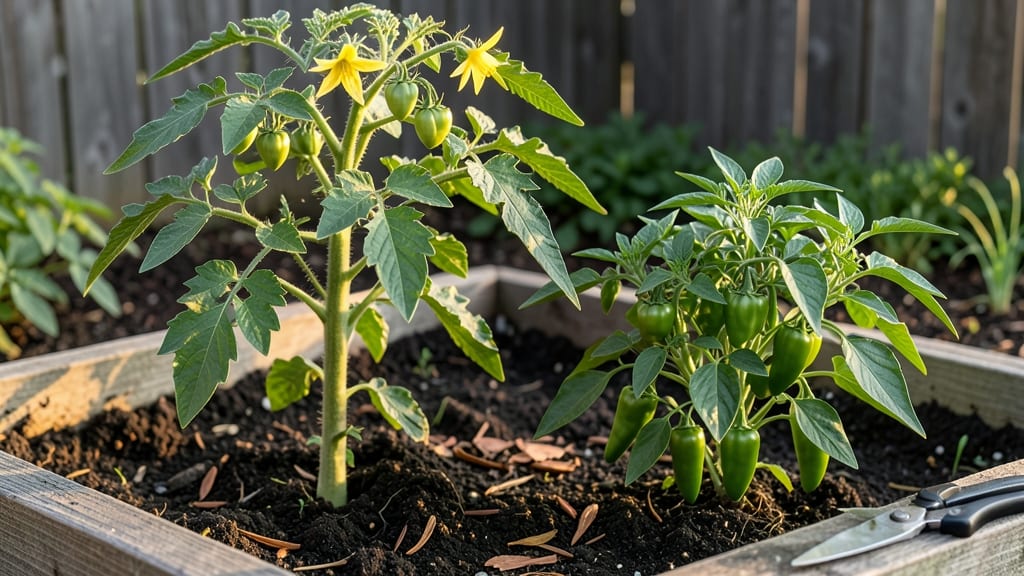
Growing peppers next to tomatoes isn’t just space-saving—it’s a pest-deterring power duo that transforms your garden into a high-yield, low-stress zone. 🌱 I’ve watched my pepper plants thrive alongside tomatoes, their shared roots creating a natural defense against aphids and hornworms while maximizing every square foot of my raised beds.
The secret lies in pole training—both plants climb upward, leaving space for greens or herbs below. Tomatoes need 18-24 inches of vertical space, while peppers stay compact at 12-18 inches, making them perfect companions.
Just avoid planting them too close: 12-18 inches apart prevents disease spread and ensures airflow, keeping both plants healthy and productive.
You’ll end up with bigger harvests than either plant could produce alone. Tomatoes get a boost from peppers’ natural pest-repelling compounds, while peppers benefit from tomatoes’ deep roots that pull up nutrients.
By midsummer, your trellis will be heavy with ripening peppers and plump tomatoes, all without the bitter surprises of overcrowded beds.
Works in raised beds, containers, or ground plots—just ensure well-draining soil and consistent watering. The only challenge? Watching for early signs of blight and rotating crops every few years to keep the soil happy. Let’s get those poles in the ground!
📚 In This Guide
- What you need
- Instructions
- Tips and common mistakes
- Wrapping up and next steps
What you need
- ● Container(s): 1–2 large containers (12–18 gallons each) with drainage holes (e.g., fabric grow bags, wooden barrels, or plastic pots).
- ○ Optional: A 5-gallon bucket for seedling starts if growing from seed.
- ● Growing Medium: 1–2 bags (1–2 cubic feet each) of high-quality potting mix (look for "organic" or "container mix" with perlite/vermiculite).
- ○ Optional: Compost or worm castings (1–2 cups per container) for extra nutrients.
- ● Plants: 1 tomato plant (determinate or indeterminate, disease-resistant varieties like 'Celebrity' or 'Solar Fire' recommended).
- ● 1–2 pepper plants (bell peppers, jalapeños, or hot varieties like 'Carolina Reaper'—choose compact or bush types for containers).
- ○ Optional: Companion plants like basil, marigolds, or onions (1–2 plants) to deter pests.
- ● Support Structures: 1 tall trellis, cage, or tomato stake (4–6 feet tall) for pole-trained tomatoes.
- ○ 1–2 small stakes or clips (optional, to secure pepper plants if needed).
- ● Basic Tools: 1 trowel or small shovel for planting.
- ● 1 pruning shears for trimming and harvesting.
- ● 1 watering can or hose with a gentle nozzle (drip irrigation is ideal).
- ● Soil Amendments: 1 balanced fertilizer (e.g., 10-10-10 or organic options like fish emulsion).
- ○ Optional: Epsom salt (1 tbsp per container) for magnesium boost.
- ● Pest Control: Neem oil or insecticidal soap (for organic pest management).
- ○ Optional: Row covers or netting to protect from pests like hornworms.
- ● Prerequisites: Full sun exposure (6–8+ hours/day) for your containers.
- ● A warm, sheltered spot (peppers and tomatoes love heat!).
- ● Pro tip: If starting from seed, plan for an 8–12 week head start indoors before the last frost.
Instructions for pole-trained peppers and tomatoes: planting and training together
Here’s how to grow these two heavy feeders side by side without sacrificing flavor or yield.
🌱 Step 1: Select Compatible Varieties and Plant at the Right Time
Choose determinate tomato varieties (like 'Celebrity' or 'Roma') and medium-sized pepper varieties (like 'Jalapeño' or 'Bell')—both mature quickly and share similar care needs. Plant seeds indoors 8-10 weeks before your last frost, or buy sturdy transplants from a nursery once nighttime temperatures stay above 55°F. Tomatoes and peppers both thrive in warm soil, so wait until the ground reaches at least 60°F before transplanting outdoors.
I always test soil temperature with a thermometer—cold soil slows root development, and you’ll end up with leggy, weak plants that struggle to support fruit. If your soil runs cooler, lay down black plastic mulch 2-3 weeks before planting to warm it up faster. This also suppresses weeds and retains moisture, which both plants love.
🪴 Step 2: Set Up a Shared Trellis System for Vertical Growth
Install a 5-foot-tall trellis or sturdy cage (like a Tomato Tower or DIY wooden frame) between planting rows to give both plants upward support. Use jute twine or soft plant ties to gently weave tomato vines upward—never wrap tightly, as stems can bruise and crack. Peppers, which are bushier, get light side support from the trellis structure itself; their stems are sturdier but benefit from occasional staking if branches get heavy.
Real talk: Don’t skimp on the trellis. A flimsy setup will collapse under the weight of ripe tomatoes, and peppers will sprawl, making harvests a nightmare. I reinforce mine with bamboo stakes at the corners for extra stability. Space plants 18-24 inches apart—this gives roots room to breathe and prevents fungal diseases from spreading between the two.
☀️ Step 3: Water Deeply and Mulch to Prevent Competition
Both tomatoes and peppers need 1-1.5 inches of water per week, but they hate soggy soil. Water deeply at the base in the morning to encourage strong root growth, and avoid wetting leaves—this reduces the risk of early blight and powdery mildew, which can jump between the two plants. I use a soaker hose for precision, keeping the water flow steady and slow.
Spread 3-4 inches of organic mulch (like straw or shredded leaves) around the base, but keep it 2 inches away from stems to prevent rot. Mulch keeps soil moisture even and suppresses weeds, which compete for nutrients. Watch for yellowing leaves—this often signals overwatering or poor drainage. If you see it, cut back on water and let the top inch of soil dry out before watering again.
✂️ Step 4: Prune and Train for Maximum Airflow and Fruit Production
Prune tomatoes by removing suckers (the small shoots that form in the leaf axils) to direct energy into fruit production. Leave 1-2 main stems for indeterminate varieties, or let determinate types bush out naturally. For peppers, pinch off flower buds if you’re dealing with a hot variety (like habaneros) and want milder fruit—this redirects energy to fewer, sweeter peppers. I also trim any yellow or diseased leaves immediately to stop the spread of pathogens.
Here’s the thing—airflow is everything. Crowded plants develop fungal issues faster. If your trellis gets too dense, thin out some tomato leaves to let light and air circulate. You’ll know you’ve got it right when you can see sunlight hitting the lower leaves and no leaves touch each other. This keeps both plants healthier and your harvests cleaner.
🌿 Step 5: Fertilize Strategically to Avoid Bitter Peppers
Both tomatoes and peppers are heavy feeders, but too much nitrogen makes peppers bitter. Use a balanced fertilizer (like 10-10-10) at planting, then switch to a low-nitrogen, high-phosphorus formula (like 5-10-10) once flowers appear. I mix in compost tea every 2-3 weeks for a gentle nutrient boost without overloading the plants.
Watch for dark green, fast-growing foliage—this is a sign of too much nitrogen. If you see it, flush the soil with water and reduce fertilizer for a week. Peppers need calcium for cell walls, so side-dress with crushed eggshells or lime if you notice blossom-end rot (black spots on fruit). Tomatoes, meanwhile, benefit from potassium (like wood ash) to prevent blossom drop. Balance is key!
Tips & tricks for pole-trained peppers and tomatoes
These practical insights will help you maximize your garden's potential while keeping your peppers from turning bitter.
Soil Temperature is Non-Negotiable: The 60°F soil temperature threshold in Step 1 isn't just a suggestion—it's critical. I've seen gardeners rush planting when soil is only 55°F, and their plants struggle to establish roots. Use a soil thermometer for accuracy, especially in spring. If your soil runs cooler, the 2-3 weeks of black plastic mulch prep before planting is your best friend for warming the ground and keeping moisture consistent.
The Trellis Stability Secret: When setting up your shared trellis in Step 2, think of it like building a mini skyscraper. The 5-foot height is perfect, but the real magic happens in the foundation. Bury the trellis stakes 12 inches deep and use bamboo stakes at corners for reinforcement. I've seen homemade trellises collapse under tomato weight—don't let that be you. Also, leave 6 inches of space between the trellis and pepper plants to prevent stem bruising when tying tomato vines.
Watering Precision Matters: The 1-1.5 inches per week guideline in Step 3 is a starting point, but timing is everything. Water in the early morning when evaporation is lowest, and always at the soil base. I use a soaker hose on a timer for consistency—this prevents the yellowing leaves that signal overwatering. Pro tip: Check soil moisture by hand—if the top inch feels dry, it's time to water. For container growing, you'll need to water 2-3 times per week instead.
Fertilizer Timing Can Make or Break Flavor: That switch from 10-10-10 to 5-10-10 fertilizer in Step 5 is where many gardeners go wrong. Too much nitrogen early on leads to bitter peppers. I apply the low-nitrogen formula immediately after transplanting, not at planting. And that compost tea every 2-3 weeks? Use it as a foliar spray on hot days—it helps prevent nutrient burn while keeping plants hydrated. The calcium boost from crushed eggshells is especially important if you notice blossom-end rot developing on your peppers.
Pro Tips for Growing Peppers Next To Tomatoes
- These practical insights will help you maximize your garden's potential while keeping your peppers from turning bitter.
- Soil Temperature is Non-Negotiable: The 60°F soil temperature threshold in Step 1 isn't just a suggestion—it's critical.
- The Trellis Stability Secret: When setting up your shared trellis in Step 2, think of it like building a mini skyscraper.
Frequently asked questions
Got questions about growing peppers and tomatoes together? You’re not alone!
Here are answers to the most common concerns—so you can plan like a pro and avoid those pesky surprises.
Can peppers and tomatoes really grow well together in containers?
Peppers and tomatoes thrive as companion plants in containers because they share similar needs—sun, water, and soil. Just ensure your pot is at least 18–24 inches deep and wide enough for both plants to spread. They’ll support each other by repelling pests (like aphids) and improving soil health through their different root structures. Pro tip: Use a well-draining mix with compost for the best results!
What’s the best time to plant peppers near tomatoes?
Start both after the last frost when soil temps hit 60°F+ (peppers are sensitive to cold, while tomatoes prefer warmth). For containers, sow seeds 8–10 weeks before the last frost indoors, then transplant outdoors together. If using transplants, space them 12–18 inches apart—peppers need room to bush out, while tomatoes can climb nearby (if pole-trained).
Will peppers and tomatoes attract the same pests or diseases?
They share some risks (like hornworms or blight), but their differences help balance things out. Peppers deter aphids with their scent, while tomatoes’ strong foliage can confuse whiteflies. Still, watch for early blight (common to both)—rotate crops yearly and prune lower leaves for airflow. If pests strike, try neem oil or introduce ladybugs!
What if my peppers taste bitter when grown near tomatoes?
Bitter peppers usually stem from stress (overcrowding, poor soil, or uneven water). Since containers can dry out fast, consistent moisture is key—peppers hate soggy roots but also drought. If bitterness persists, check for nutrient deficiencies (add compost or a balanced fertilizer) or thin plants to reduce competition. Varieties like Sweet Banana or Jalapeño are less prone to bitterness!
Are there better alternatives to peppers if I want to grow with tomatoes?
Yes! If peppers aren’t your thing, try these tomato-friendly companions for containers:
- Basil – Repels pests and boosts flavor ().
- Marigolds – Deter nematodes and add color.
- Onions/Chives – Confuse tomato hornworms.
- Spinach/Lettuce – Shade-sensitive greens thrive in tomato gaps.
Wrapping up and next steps
Growing peppers and tomatoes together in containers can be a rewarding and space-saving adventure—when done right! 🌱 The key is pole training, smart spacing, and monitoring for pests like hornworms.
With the right setup, you’ll enjoy a bountiful harvest of juicy tomatoes and fiery peppers without the bitterness or competition for resources.
Ready to get started? Grab your containers, grab your seeds, and give it a try! If you’re new to container gardening, start small with one or two plants to build confidence. Happy growing—your kitchen (and taste buds) will thank you! 🍅🌶️